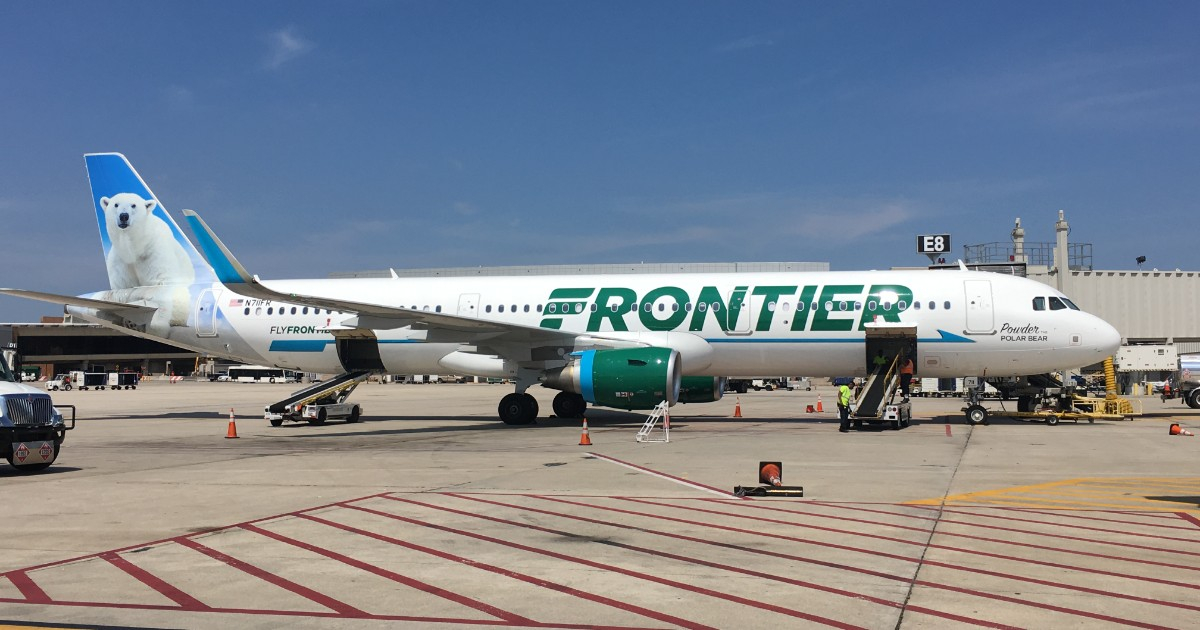
Four flight attendants from Frontier Airlines became ill simultaneously during a recent flight, in a strange incident that raises ongoing questions about the air quality in commercial aircraft cabins.
The flight F9-1046 had taken off from Cleveland Hopkins International Airport in Ohio, shortly before 8 a.m. on Thursday, August 13, heading to Fort Lauderdale-Hollywood International Airport in Florida, with more than 230 passengers on board.
As the aircraft approached South Florida, the pilots contacted the Miami air traffic controllers—who also manage the approaches to Fort Lauderdale—to alert them of a medical situation developing among the cabin crew.
In the recording of the communication, obtained by ATC.com and reported by Fox Business, the pilot requested assistance with these words: "If you could call the tower to have them wait for us at our gate for a developing medical emergency."
When asked about the symptoms, the pilot was straightforward: “All my flight attendants have headaches. Now three, now four... they have nausea.”
The Airbus A321 —a 10-year-old aircraft— landed without incident at 10:15 in the morning, with emergency medical personnel waiting at the arrival gate.
According to CBS News, two of the four affected aides were taken to a hospital.
The possible cause, although not yet confirmed
Neither Frontier Airlines nor the airport authorities have officially confirmed what caused the simultaneous discomfort of four out of the five flight attendants onboard the aircraft.
However, as noted by the New York Post, incidents of this nature are typically classified as "odor events" or "toxic smoke events."
These occur when vaporized engine oil or other contaminants enter the cabin air conditioning system through the so-called “bleed air”, which is the compressed air extracted directly from the engines to pressurize and cool the interior of the aircraft.
The most common symptoms in these cases—headache, nausea, and dizziness—exactly match those reported by the crew of flight F9-1046.
Contamination occurs more frequently after maintenance work on engines when the seals are not perfectly fitted.
The Federal Aviation Administration (FAA) estimates that these events occur at a rate of less than 33 per million takeoffs, although some studies suggest higher figures.
Airbus at the center of the debate
Airbus aircraft have accumulated a history of judicial scrutiny regarding this issue.
In 2018, a class-action lawsuit named Frontier Airlines and Airbus for exposing passengers to toxic fumes during “fume events.”
In 2025, a new federal lawsuit in Denver again involved Frontier, Airbus, and the component manufacturer Honeywell, alleging exposure to compounds such as tricresyl phosphates and carbon monoxide following an incident that occurred in November 2023.
A veteran flight attendant from United Airlines described the cabin air issue in Airbus aircraft as the "dirty little secret" of the industry, in the context of a $30 million lawsuit reported in 2025.
A concerning pattern
The incident involving the Frontier flight is not an isolated case in recent weeks.
On July 25, six flight attendants from American Airlines fell ill on a flight from Rome to Philadelphia, which forced the aircraft to be diverted to Dublin.
In that case, the airline attributed the incident to a smell coming from an oven on board, and none of those affected required hospitalization.
The return flight from Fort Lauderdale to Cleveland, scheduled for 11:30 AM that same day, was canceled, along with another round trip planned for that afternoon.
Frontier Airlines has not issued any public statement regarding the causes of the incident up to the time of this report.
Related videos:
Filed under: