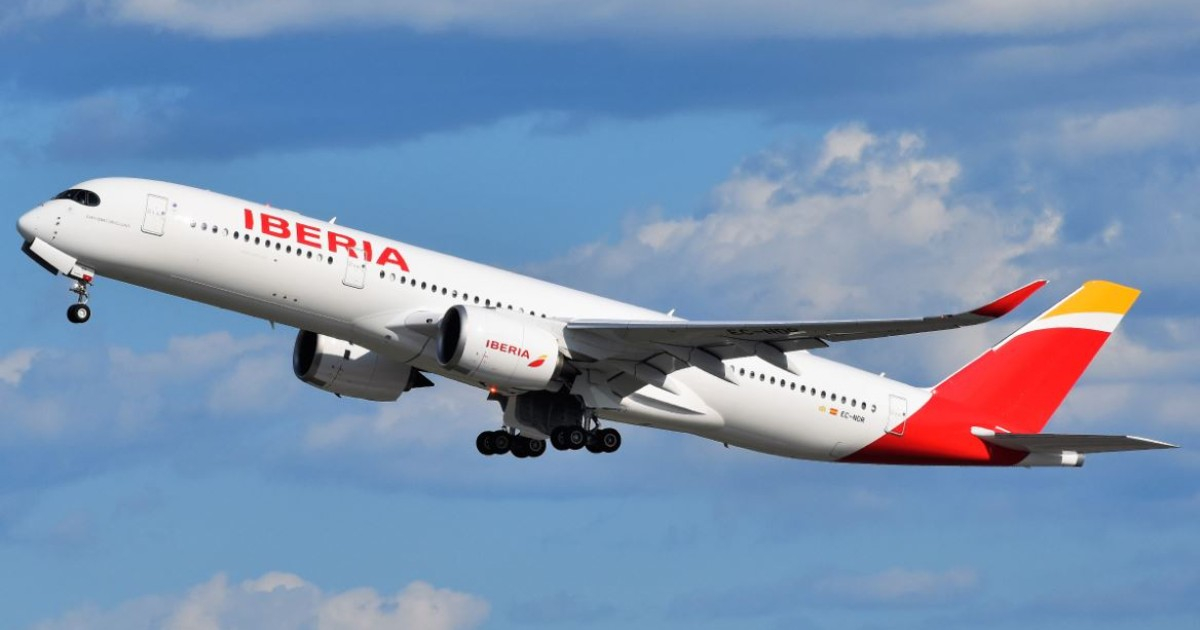
Iberia announced that it will not resume its direct flights to Cuba before June 2027, extending a suspension that has been in effect for over two months and which the company attributes to the energy crisis currently affecting the island.
The resumption of the route will depend on whether the circumstances allow for the operations to be restarted.
The decision, as stated in a statement from Iberia quoted by Europa Press, represents another postponement.
When the company announced the suspension in April, it had left the door open for a return in November 2026, a forecast that is now postponed by another seven months.
According to Iberia, the situation in Cuba has impacted both demand and the necessary conditions to maintain operations "very significantly."
While the suspension continues, customers will be able to travel to Panama and, from there, continue to Cuba thanks to the code-sharing agreement between Iberia and Copa Airlines.
The offices of the Spanish company in Havana will also remain open to assist passengers.
The airline -part of the IAG group- also expanded the flexibility conditions for those who already have issued tickets.
Passengers will be able to request a cash refund or a voucher, or change their destination to Miami, Panama, Santo Domingo, or Mexico.
“Iberia has maintained a historic commitment to Cuba since 1949, the year it made its first flight to the island, and it remains determined to resume operations when possible,” concluded the company.
Air Europa continues its flights to Cuba
Air Europa operates three flights per week to Cuba, although it has also had to adjust its operations due to the fuel shortage on the island.
Since mid-June, the airline has been refueling in Punta Cana for the return flight, instead of doing it in Santo Domingo.
According to a recent update, this measure will be in effect at least until September 13.
The energy crisis that led Iberia to suspend the route
The issues in maintaining the Madrid-Havana connection began months before the suspension.
On February 9, 2026, Cuba issued NOTAM A0356/26, which confirmed the unavailability of Jet A-1 fuel at nine international airports, including those in Havana, Varadero, Holguín, Santiago de Cuba, and Camagüey.
Since then, Iberia had to make technical stops in Santo Domingo to refuel on flights returning to Madrid, a temporary solution that ultimately proved to be unsustainable.
The Cuban energy crisis has a structural component. Cuba produces about 40,000 of the 110,000 daily barrels it needs, and in 2026, it lost its two main sources of external supply: Venezuela and Mexico.
Venezuelan oil, which accounted for two-thirds of imports, was interrupted following the capture of Nicolás Maduro in January, while Pemex halted its shipments under pressure from the sanctions imposed by the Trump administration.
From frequency reductions to the cessation of flights
On April 13, 2026, Iberia formally announced the suspension of its flights to Cuba and emphasized that the measure was due to the island's "exceptional situation."
The withdrawal occurred gradually: the company operated three weekly flights in April, reduced the service to two in May, and finally completely ceased the direct route from Madrid to Havana as of June 1.
Iberia has not been the only airline affected by the crisis. At least 11 international airlines suspended flights to Cuba in 2026, with over 1,700 flights canceled, including Air Canada, Air France, Turkish Airlines, and LATAM Perú.
The collapse of tourism in Cuba
The difficulties in air connectivity arise amid a significant decline in tourism, one of Cuba's primary sources of foreign currency.
During the first half of 2026, only 387,591 international visitors arrived on the island, representing a 60.7% decrease compared to the same period in 2025. Hotel occupancy dropped to 12.9% in May.
The crisis has also impacted the major Spanish hotel chains. Meliá, Iberostar, and Barceló left the island this summer in a situation characterized by the energy crisis, a collapse in tourism, and U.S. sanctions.
Related videos:
Filed under: