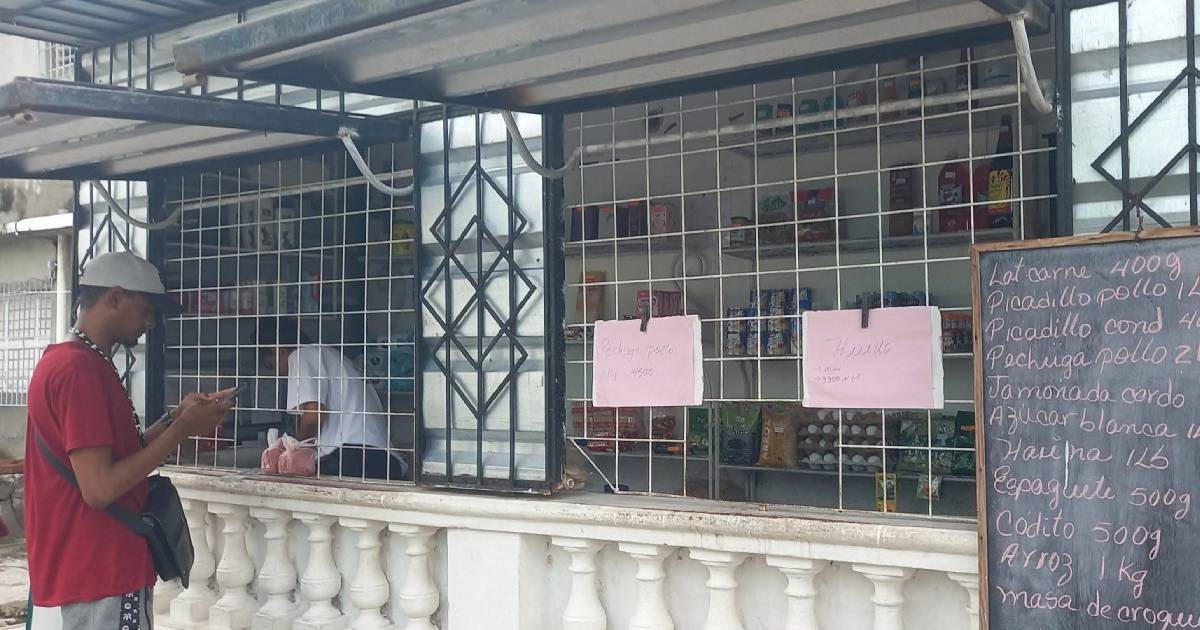
A new enforcement offensive against the private sector in Las Tunas has resulted in the closure of 22 establishments, the withdrawal of eight licenses, and fines exceeding 1.2 million pesos, all within just one week, amid increasing pressure from the regime on self-employed workers and micro, small, and medium enterprises.
The balance was released this Wednesday by the official media Tiempo21, which reported that since August 10, the authorities have conducted 570 inspections of self-employed workers, small and medium enterprises, and non-agricultural cooperatives in the province.
Four task forces were deployed for the operation, consisting of representatives from the Communist Party, the Government, the Prosecutor's Office, the Comptroller's Office, the Ministry of Finance and Prices, the Ministry of the Interior (MININT), and the Revolutionary National Police (PNR).
During those inspections, 230 violations were detected, along with 35 illegalities. Authorities issued 52 warnings, carried out two seizures, and addressed 16 citizen complaints.
Among the irregularities noted by the inspectors are the lack of invoices proving the origin of the goods, the rejection of payments through electronic channels, alleged tax evasion, price alterations, and the deliberate closure of establishments to avoid inspections.
Authorities are also reviewing the difference between the purchase and sale prices of five high-demand products, arguing that they aim to identify potential speculative practices and tax irregularities.
Closures and sanctions from the very first days
The pressure on businesses began to show results as soon as the operation started.
According to a report from Tiempo21 dated August 14, during the first two days, 239 establishments were inspected, with violations detected in 104 of them and four closures.
At that stage, the authorities also identified five economic actors—four individuals and one legal entity—who accumulated nearly 60 million pesos in tax debts attributed to tax evasion.
The new campaign comes just days after another extensive operation carried out in the province itself.
On August 8, authorities reported over 4,000 inspections in the city of Las Tunas, which resulted in more than 2,000 fines, 478 alleged illegalities eradicated, and 24 individuals identified for so-called "abusive prices."
"Thanks to them, some are able to eat."
The new wave of inspections has generated criticism among residents who question the state's response to high prices, opting to close and sanction private businesses instead of ensuring a stable supply of food and other basic products.
On the social media of Tiempo21, several users warned that removing establishments from the market could further reduce an already limited supply.
"The only thing they know how to do is to eliminate those who are fighting, and thanks to them, some people can eat; if the State were to meet the needs, there would be no resellers," commented one person.
Another user directly questioned the government's strategy and demanded conditions for merchants to be able to supply themselves legally.
"Discourage the supplier, transform and build a real and functional wholesale market, and the problem will be solved," he wrote.
The criticisms reflect a contradiction that has become recurrent in Cuba: the state demands that the private sector lower prices and prove the origin of their goods while shortages, inflation, and the lack of a wholesale market capable of regularly supplying these businesses persist.
The offensive spreads across Cuba
Las Tunas is not an isolated case. Operations against private economic actors are simultaneously taking place in several provinces.
In Central Havana, a monitoring day conducted on August 13 reached 232 businesses and ended with 15 definitive closures and 11 forced sales.
In Sancti Spíritus, authorities reported over 200 fines and at least five closures, while in Santiago de Cuba, penalties starting at 16,000 pesos were imposed on self-employed workers.
The so-called national oversight exercise will continue throughout the rest of August and the first half of September, according to information released by state media.
While the regime presents the operations as a battle against illegal activities, tax evasion, and high prices, many Cubans fear that the succession of fines, confiscations, and closures will end up striking one of the few sources of food and products they still find amid state shortages.
Related videos:
Filed under: