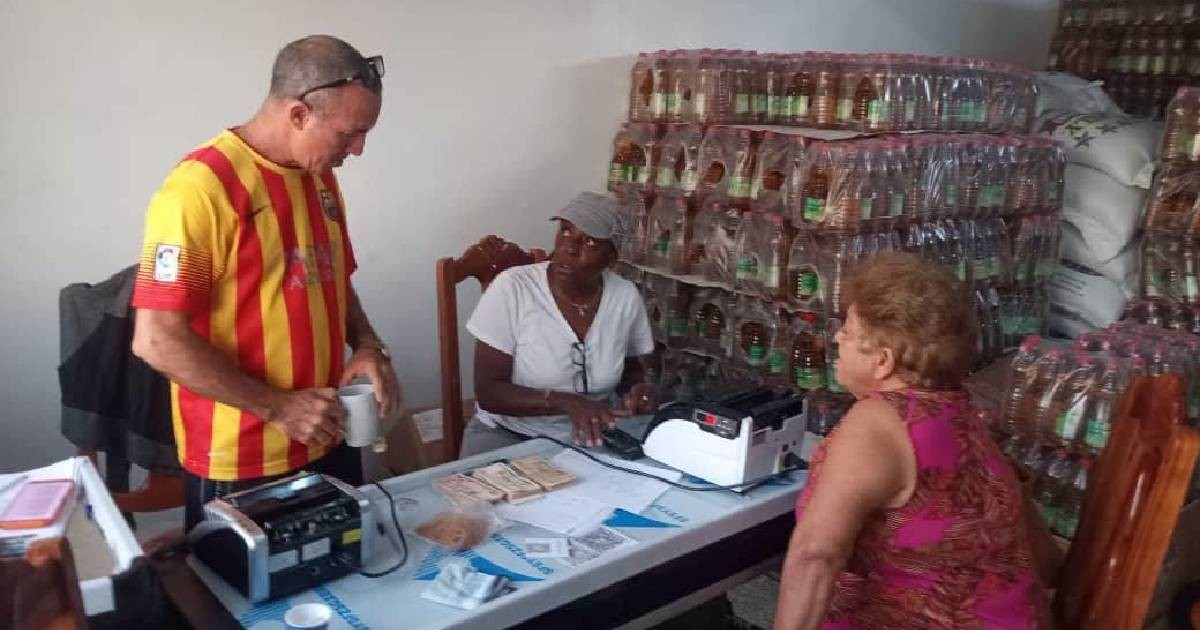
A self-employed worker from Las Tunas began selling vegetable oil for 2,250 pesos per bottle on October 13th Street between Joaquín Agüero and Colón, in the city center, in what the local media Tiempo21Cuba reported as a sales event without speculation following the removal of price caps.
The post, however, sparked a wave of comments questioning whether that price is truly accessible to most Cubans.
The seller justified the amount with a cost sheet that applies a margin of up to 30% on the final cost displayed in the store.
Tiempo21Cuba described it as "the first economic actor to market this product, following the removal of price caps and doing so without speculation," and called for the experience to be generalized.
But the public reaction on social media was far from unanimous applause. "2,250 pesos doesn't seem like a speculative price for a bottle of oil? What madness. To me, it simply doesn't stop being that sudden increase aimed at profiting because the capped price of oil was a maximum of 900 pesos," wrote one user. Another was more succinct: "2,250, who can afford it?"
Indignation is backed by the numbers. The minimum pension in Cuba hovers around 1,528 pesos per month, and the minimum wage in the budgeted sector is 3,210 pesos. A retiree receiving the lowest pension would barely be able to afford a liter of oil per month.
"My father, with the pension he received after working his entire life for a state-owned company, can only afford a liter of that oil and maybe an egg, and nothing more," pointed out another commentator.
The background of this situation is the Resolution 150/2026 from the Ministry of Finance and Prices, published on June 20, which eliminated retail price ceilings for imported cooking oils, cut chicken, powdered milk, pasta, and sausages. Prior to this deregulation, the maximum price for oil was 990 pesos per liter.
The measure triggered an uncontrollable price surge throughout the country: the price of oil rose to 2,500 pesos in Havana by the end of July, exceeded 3,000 pesos in some markets in early August, and reached as high as 7,000 pesos in extreme cases. In Las Tunas, the informal market reported prices ranging from 4,000 to 7,000 pesos per liter.
In the face of chaos, several provinces chose to set local price caps autonomously: Guantánamo set a price of 2,200 pesos, Holguín intervened in the market, Matanzas set a price of 2,500 pesos, and Pinar del Río established a maximum of 2,150 pesos.
Las Tunas, on the other hand, did not set any official cap: local authorities conducted over 4,000 inspections, identified 24 individuals for price gouging, and imposed more than 2,000 fines, but without establishing a maximum price.
Other commentators pointed out additional issues: that the sale is conducted by boxes—which increases the total expenditure and opens the door to resale—and that the long line formed was significant, although it did not appear in the published images. “They didn’t publish the most beautiful part: the line, to show the order, discipline, and education of the people,” one user remarked ironically.
Cuban economists estimate that a person needs around 96,060 pesos per month to cover their basic needs, a figure that makes any discussion about whether 2,250 pesos for a bottle of oil is or is not a "non-speculative price" relatively insignificant.
Related videos:
Filed under: