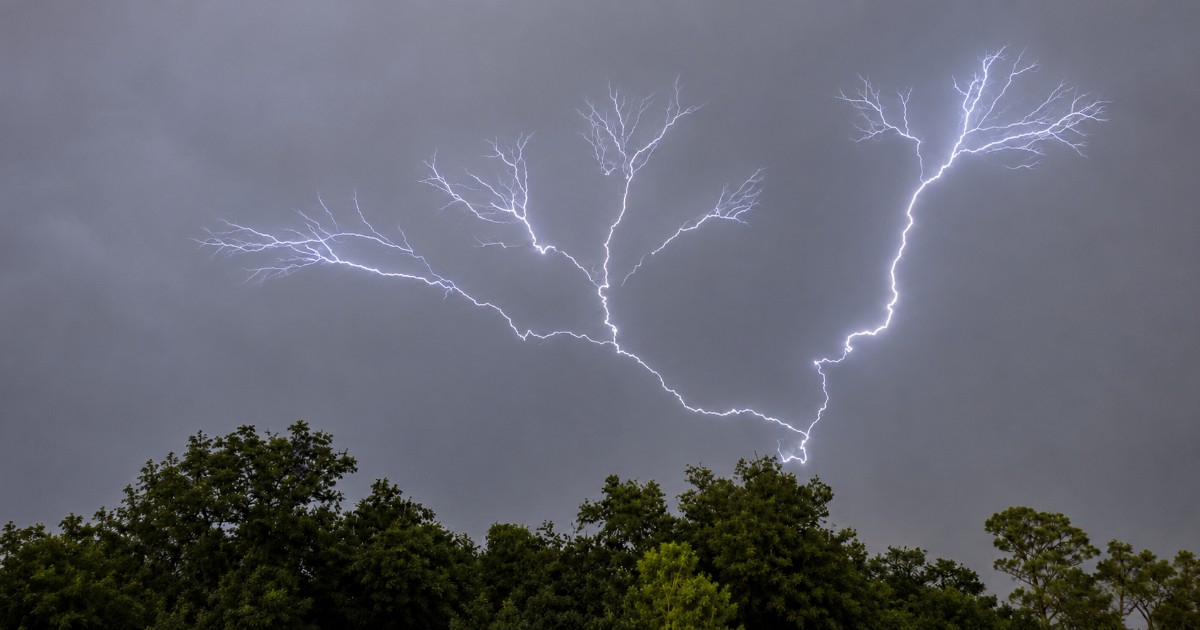
Florida recorded over 90,000 lightning strikes in just 24 hours and raised the total to 2.3 million so far in 2026, according to figures released on Thursday by meteorologist Matt Devitt.
Devitt shared a map with the detected rainfall over the last 24 hours and noted that each yellow symbol represented a recorded lightning strike.
"Florida has definitely lived up to its electric reputation," stated the meteorologist, whose publications serve as a reference for some media outlets in Florida.
The Tampa Bay Times, for example, attributed 90,000 lightning strikes in 24 hours to Devitt and also reported that a thunderstorm affected the Tampa Bay area early Thursday morning.
According to that news outlet, the storm in Tampa Bay began around midnight and lasted until about 2:00 a.m.
Christianne Pearce, a meteorologist with the National Weather Service (NWS) office in Tampa Bay, explained that the event occurred due to the convergence of two atmospheric boundaries and was reinforced by increased instability in the atmosphere.
The new total maintains the trend of strong electrical activity recorded during the summer.
In early July, Florida had already surpassed one million lightning strikes in 2026, with over 200,000 recorded in just one week, according to data released at that time by Devitt himself.
The activity continued during the following weeks. On the weekend of July 25 and 26, more than 80,000 lightning strikes were recorded in Florida in just two days, with discharges spread across much of the state.
Lightning also poses a significant risk to people and properties, and in that regard, Florida led the nation in 2025 in insurance claims for damage caused by lightning, with 5,136 cases amounting to $186 million in insured losses, according to data from the Insurance Information Institute.
The state also holds the highest number of lightning-related deaths in the country over the past decade: the National Lightning Safety Council reported 51 fatalities in Florida between 2016 and 2025, ahead of Texas, which had 21.
The thunderstorm season reaches its peak activity during the summer in Florida, prompting meteorological authorities to emphasize the importance of seeking shelter indoors when thunder is present and avoiding staying outdoors while the storm persists.
Related videos:
Filed under: