The 'revolution' of 1959 did not only transform the Cuban political system. It radically changed the economic structure of the country. Within a few years, a large part of private enterprises disappeared, banks, industries, businesses, and large properties were nationalized, and the State came to control practically all fundamental sectors of the economy.
The official explanation portrayed that process as a historical necessity: to put an end to exploitation, to reclaim national wealth for the people, and to build a society based on social justice. However, behind those slogans lay a much deeper decision: to gradually replace the market economy with a state-directed economy.
The process began in 1959 and reached a decisive point in 1960, when a new wave of nationalizations placed nearly the entire significant business sector under state control. Banks, refineries, sugar mills, large industries, and numerous commercial establishments came into the hands of the State.
It wasn't just a matter of changing who owned a factory or a bank. The entire operational logic of the economy was being altered.
The entrepreneur ceased to freely decide what to produce. The merchant stopped determining which goods to import. The farmer began to increasingly depend on administrative decisions regarding prices, supplies, and marketing. The State took over deciding what to produce, how much to produce, to whom to sell, and, progressively, at what price. Centralized planning replaced much of the market mechanisms.
Nationalization as an Instrument of Power
Nationalization also had an immediate political consequence: it concentrated a vast amount of economic resources in the hands of the new revolutionary power. The state became the owner of companies, land, banks, businesses, means of transportation, and numerous productive facilities. This concentration allowed the government to have extraordinary instruments to transform society, but also to control employment and establish wages, prices, subsidies, and productive priorities.
Managing an economy, however, is much more complex than seizing power. A factory can be nationalized in a day. Making it function efficiently for decades is another matter. The departure of numerous entrepreneurs, technicians, managers, and professionals during the early years exacerbated the problem. Cuba lost a significant portion of its human capital precisely when it needed expertise the most to manage the new economy.
The State attempted to quickly replace the former administrators with officials and revolutionary cadres. In some cases, there were capable individuals; in others, political loyalty ended up being more important than economic experience. This would be one of the initial structural problems of the new system.
The commitment to planning
During the 1960s, Fidel Castro intensified the socialist orientation and completely reorganized production. The Cuban economy became increasingly linked to the Soviet bloc. The Soviet Union became the main buyer of Cuban sugar and a crucial supplier of oil, machinery, raw materials, and other essential products.
The paradox was evident: a revolution that had proclaimed the need to diversify the economy ultimately found itself, to a large extent, once again dependent on sugar. The difference was that now the sector was controlled by the state.
The planning aimed to replace competition with coordination. In theory, the State could rationally determine the needs of the population and organize production to meet them.
In practice, a problem emerged that would accompany the Cuban economy for decades: when economic decisions are concentrated in a central administrative structure, mistakes also become centralized.
The most dramatic example was the Ten Million Harvest in 1970. The government mobilized huge human and material resources to achieve ten million tons of sugar. The goal was not reached, and the concentration of resources during that campaign impacted other sectors of the economy. The experience revealed the limits of an economy subjected to large national campaigns dictated by political power.
Soviet dependency
After the initial difficulties, Cuba deepened the adoption of mechanisms inspired by the Soviet model. In 1972, it joined the Council for Mutual Economic Assistance (CMEA), an economic organization that included the Soviet Union and several socialist countries in Europe.
The incorporation provided Cuba with preferential markets, credit, oil, and trade conditions that were extraordinarily favorable for years. Cuban sugar could be sold under preferential conditions, while Cuba received oil and other essential products.
This allowed a system to sustain itself for years despite having serious difficulties functioning autonomously. But it also created an extraordinary dependency. The Cuban economy had not built a truly self-sufficient model. It had swapped one dependency for another.
While the Soviet Union existed, many structural weaknesses could remain hidden behind credits, subsidies, and preferential trade relations. When that support disappeared, the reality was laid bare.
1991: the collapse of external support
The collapse of the Soviet Union in 1991 caused an unprecedented economic shock in revolutionary Cuba. The country lost a significant portion of its markets, supplies, and sources of funding. This marked the beginning of the so-called Special Period. Fuel was scarce. Transportation decreased. Industrial production contracted. Agriculture faced enormous difficulties. Imports were reduced, and shortages of basic goods increased.
The crisis was not simply caused by the Soviet collapse. This served as a trigger for an economic structure that had developed an extraordinary dependency on that system.
The historical question is unavoidable: Why did a supposedly independent economy so decisively need a foreign power to function?
The answer lies in the characteristics of the model established since the 1960s: concentration of ownership, centralized planning, limited business autonomy, price controls, low productivity, and a strong dependence on foreign trade.
The Cuban state survived the Soviet collapse, but it did not fully address those weaknesses.
The economy of control
In the following decades, partial reforms were introduced. Some private activity was permitted, self-employed workers emerged, remittances developed, and limited space was opened for foreign investment. However, the reforms never represented a complete transformation of the model. State ownership continued to dominate fundamental sectors.
The Cuban economy found itself caught between two realities: a state sector that was unable to generate sufficient wealth and a limited private sector subjected to controls. The contradiction was evident. The official discourse advocated for planning and state control, but periodically it needed to resort to mechanisms associated with the market: small businesses, joint ventures, international tourism, remittances, and new forms of private activity. The essential problem remained: an economy needs incentives to produce, invest, innovate, and take risks.
A structural crisis
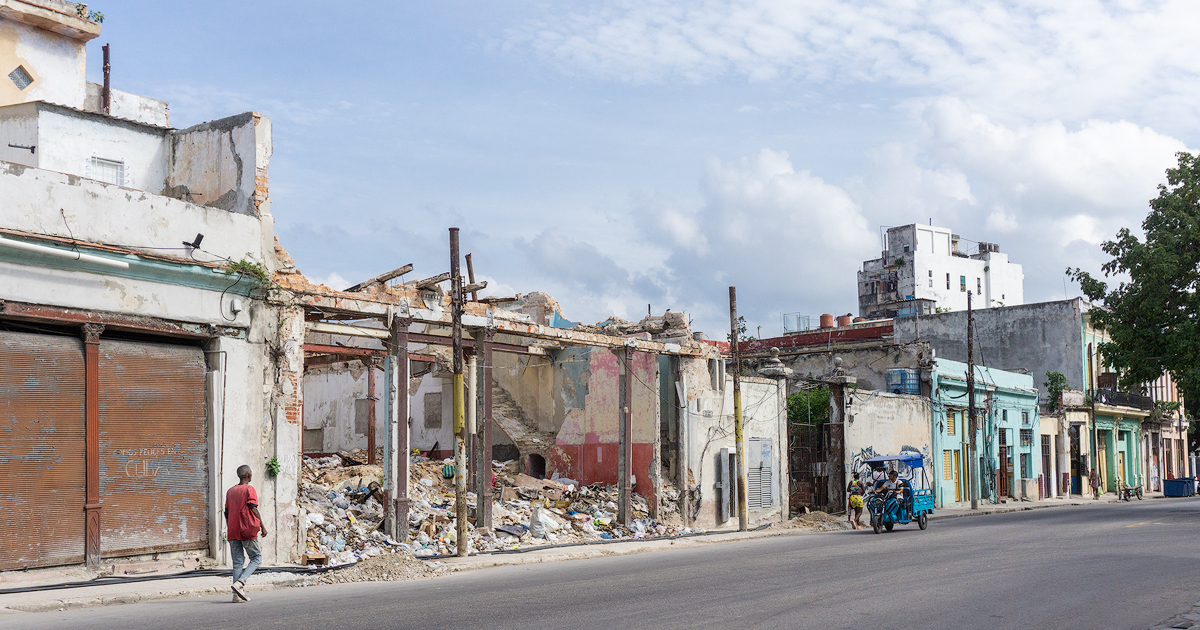
Over the decades, the problem shifted from being a temporary crisis to a structural one. The scarcity of food, the deterioration of infrastructure, insufficient investment, low productivity, the emigration of workers and professionals, and the aging population accumulated over time.
The economy has stopped producing enough wealth to meet the needs of society. There is no need to exaggerate reality; simply observing it is sufficient. The U.S. embargo has had real effects and has complicated Cuba's economic relationships. To deny this would be historically incorrect.
But attributing the entire Cuban crisis to the embargo does not explain why the economy was already facing deep difficulties before the most recent stages of U.S. policy, nor does it alone account for the consequences of decades of centralized planning and external dependence.
The Myopia of Fidel Castro
Fidel Castro had an extraordinary understanding of the political power of the economy. However, he understood much less—judging by historical outcomes—the economic limits of his own decisions. His vision was shaped by the conviction that political will could surpass economic laws.
Large mobilizations, productive campaigns, national goals, and administrative decisions attempted to replace the normal incentives of a modern economy. However, a society cannot produce indefinitely through slogans. The economy has its own rules. It is not enough to simply order an increase in production. Motivated workers, efficient companies, investment, technology, capital, and incentives for making economic decisions are all necessary.
The Cuban revolution succeeded in concentrating property and economic power in the hands of the state. What it did not achieve was to transform that concentration into a dynamic economy that is productive and capable of generating sustainable prosperity. This is one of the major dilemmas in the economic history of the revolution.
An extraordinarily powerful state was built, but not an equally powerful economy. And when an economy does not produce enough wealth, the state can distribute scarcity for a certain time. It can subsidize, control, ration, and demand sacrifices. But it cannot indefinitely abolish economic reality. The history of the Cuban socialist economy is ultimately the history of that contradiction.
A revolution that aimed to radically transform society ultimately led to the creation of a dependent economy, rigidly managed and vulnerable to external changes.
The crisis facing Cuba did not begin yesterday. Its roots lie in the economic decisions made during the early years of the revolution. Therefore, understanding those decisions is essential to understanding contemporary Cuba.
Related videos:
Filed under:
Opinion piece: Las declaraciones y opiniones expresadas en este artículo son de exclusiva responsabilidad de su autor y no representan necesariamente el punto de vista de CiberCuba.