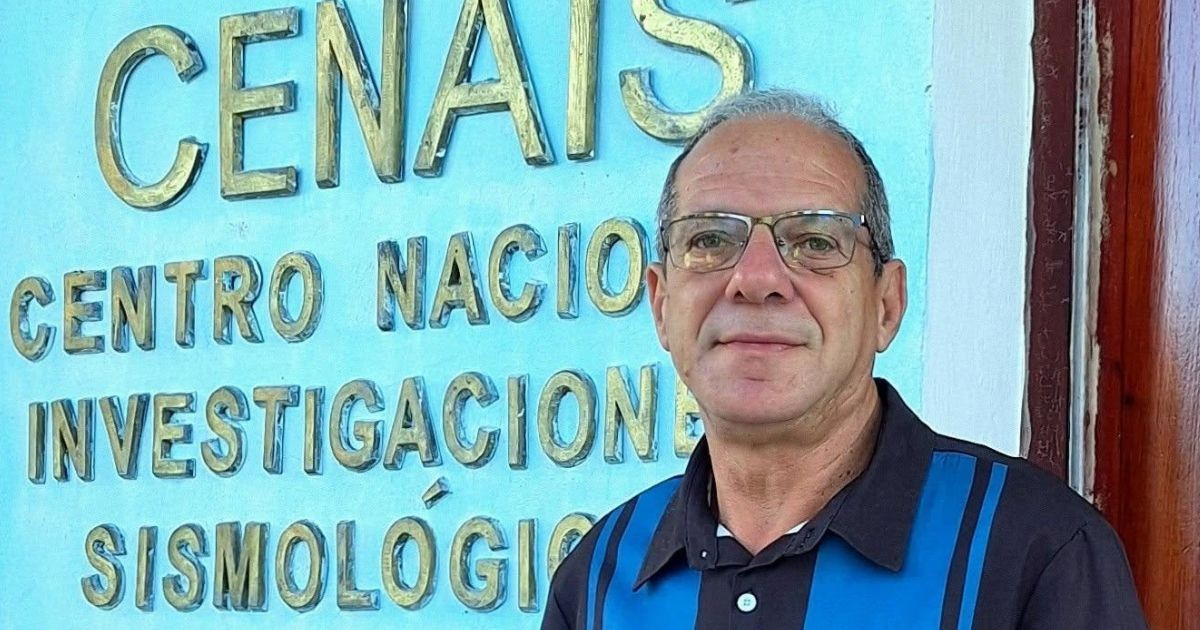
Dr. Enrique Diego Arango Arias, Head of the National Seismological Service, warned this Thursday about the consequences that the false earthquake alert which reached numerous phones in Cuba could have, and questioned why it has not yet been clarified who was responsible for the alert.
In a post on Facebook, Arango asked: "So, what happened? Who is responsible for and takes accountability for this 'error' that alarmed the population of the country with a false earthquake message?".
The specialist explained that they continue to receive requests for explanations, even though the National Seismological Service did not record any earthquakes that would justify the alarm.
"A continued to request explanations, and we respond that, in addition to the fact that there was no earthquake to justify that alarm, we also do not have any established protocol for sending alerts or alarms regarding earthquakes with any national or foreign communications entity," he stated.
Arango assured that there are still "many unanswered questions" and warned about the damage that an episode like this could cause to the credibility of future warnings.
The alert appeared shortly after 3:00 p.m. on Tuesday on phones and tablets and caused panic among many users.
Shortly thereafter, Arango confirmed that it was a false warning and that no seismic activity had been recorded to support it.
The National Center for Seismological Research later confirmed that its network of stations had not detected any seismic events during the afternoon of August 18, while the exact causes of the notification remained unknown.
However, Cubadebate suggested as a possible explanation the functioning of the Android Earthquake Alert System.
According to the official portal, this mechanism uses the accelerometers in phones to detect movements that may have characteristics compatible with an earthquake. When numerous devices register similar signals, it can estimate that a seismic event is occurring and issue a warning to users in a specific area.
The final blow to that theory came on Thursday after Google denied that its Android Earthquake Alerts System had generated or sent the alert in Cuba.
The company assured that its system detected no earthquakes and issued no alerts on the Island.
A source claiming to hold a position in the upper management of ETECSA told Martí Noticias that the alert originated during an internal test conducted at the Technological Center of 19 and B, in El Vedado, and that the trial was supposed to be confined to a controlled environment, but ended up exceeding that scope.
Until this Thursday, the state telecommunications monopoly had not publicly provided an explanation regarding the source of the false alert on its broadcast channels.
Related videos:
Filed under: