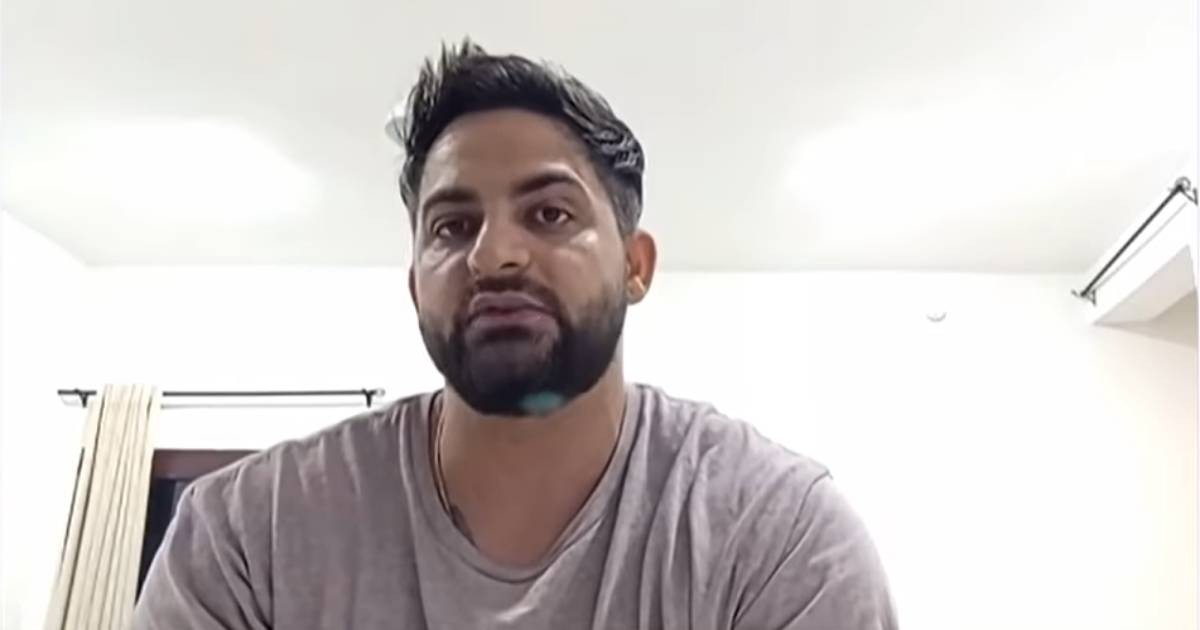
Arístides Fernández García, a 37-year-old Cuban deported by the United States to the Central African Republic, asserts that he remains in Bangui without documents, without the freedom to leave the place where he is staying, and without knowing what his immigration status is.
“It’s like a kidnapping. I still have nothing,” he stated in an interview with Noticias Telemundo broadcast on August 20.
Fernández García arrived in Bangui at the beginning of August as part of a group of migrants deported by the administration of Donald Trump to that African country. According to El País, the flight included people from various nationalities, including Cubans, Ecuadorians, Turks, and Afghans.
The Cuban recounted that he had lived in the United States for five years, where he was awaiting a decision on his asylum application. He had a valid work permit until 2030 and was trying to set up a freight transportation business.
However, he was arrested after leaving an immigration hearing in Miami. According to his testimony, he spent seven months in immigration custody afterward. Additionally, he assured Telemundo that he has no criminal record in the United States.
Before ending up in Africa, he ensured that he was transferred nine times between detention centers. When he was finally put on the plane, he stated that he did not know what his destination would be.
"They told me it was for reunification. I thought it was a game," he recalled.
"They don't know what to do with us."
In Bangui, Fernández García claims that he remains with other Latin Americans in a building from which they cannot leave freely. According to his account, they have been warned that they could be arrested if they leave the premises.
The UN provides them with three meals a day, but according to the Cuban, it has not been able to offer them a solution to their situation either.
"They are the UN, but the agreement was made by Donald Trump with this country, and they don't know what to do with us," he explained.
The migrants even had to share a single mobile phone to communicate with their families and went almost three days without being able to talk to them.
Fernández García affirms that one of the proposed alternatives is to sign an exit back to their countries of origin, something that he rejects in the case of Cuba.
"Cuba does not accept us. And I don’t want to go to Cuba either, because I left... how am I supposed to go back?" he noted.
Fernández García did not specify why Cuba does not accept his return, although he did share that he left the island after facing reprisals for being the son of a political prisoner, a circumstance that, according to his testimony, closed the doors for him to pursue the university studies he desired.
Now, her greatest distress is not even knowing what her legal status is.
"I am not mentioned in this country, nor was I taken out of the United States. Am I still being recognized in the United States? What am I currently being recognized for?" he questioned.
The case comes to light days after another Cuban deported by the United States to Liberia ended up being detained in Equatorial Guinea after being rejected by the Liberian authorities.
"I'm in an unsafe country, away from my family, with mental disorders that make me question whether this is real life or not," Fernández García summarized. "They steal all your rights, they take away your humanity."
Related videos:
Filed under: