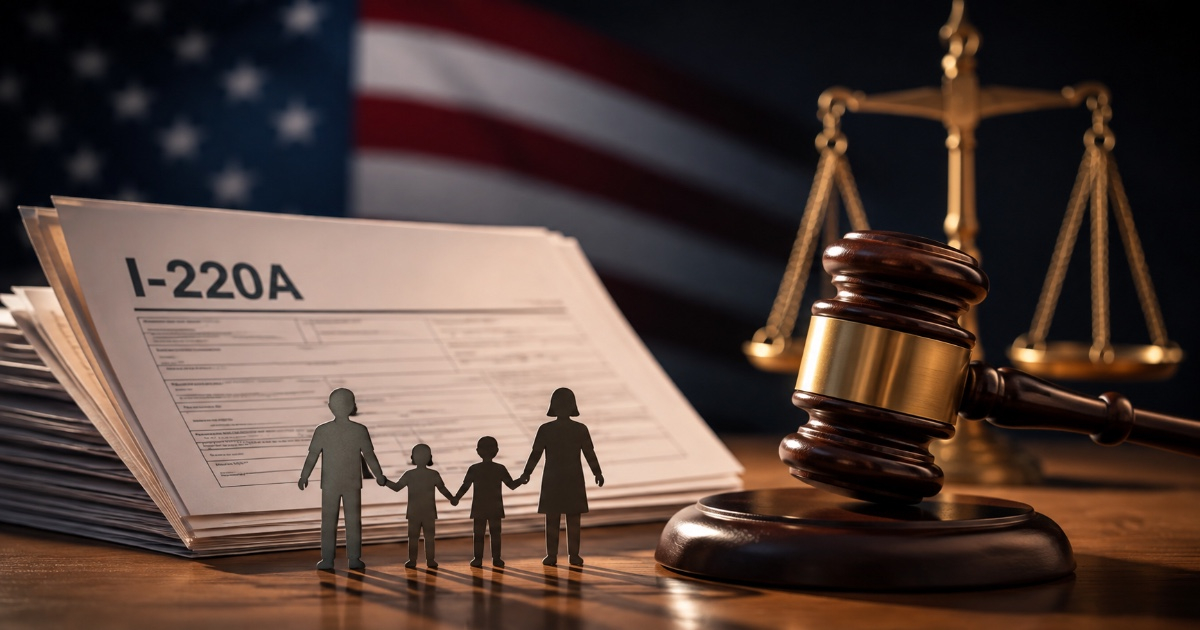
A federal court in Miami has postponed until September 2 the hearing that was scheduled to take place this Wednesday at the Wilkie D. Ferguson Jr. building in downtown, which could determine the legal future of hundreds of thousands of Cubans with I-220A documents trapped in a migratory limbo in the United States.
The judge Jacqueline Becerra, assigned to the case, announced the change of date. Attorney Mark Prada leads the representation of the plaintiffs and explained that the postponement is likely due to adjustments in the judge's schedule.
«For some reason, the judge needed a bit more time; it could be that another case took longer than expected, which happens frequently in courts at this level,» Prada explained to Café Fuerte.
The view is not limited to a single lawsuit. According to the attorney, the judge will examine three cases with several pending motions, including the main one: the file known as Bello-Rubio vs. Department of Homeland Security (DHS), filed by 992 Cubans who received an I-220A upon crossing the Mexican border.
A favorable resolution could unlock the situation for around half a million people who remain without a defined immigration status in the country.
The crux of the debate is whether the I-220A —a supervised release order issued by the Immigration and Customs Enforcement (ICE)— can be equated to a parole, the I-94 form that activates the Cuban Adjustment Act of 1966 and would allow its holders to apply for permanent residency after one year and one day in U.S. territory.
"The judge wants to hear the motions presented by the government that aim to dismiss the lawsuits, and the government is claiming that there is a lack of jurisdiction in the court to grant the legal remedies we are requesting," Prada detailed.
The DHS also challenges the idea that an I-220A can be retroactively converted into parole by court order, while the plaintiffs request that the case be certified as a class action, which would extend any favorable ruling to all Cubans in the same situation.
Alongside Prada, the lawyers Claudia Cañizares from Canizares Law Group LLC, and Maitte Barrientos from Legal Services of Catholic Charities will be present at the hearing.
The litigation has a history of precedents on several fronts
In February 2026, a panel of the Eleventh Circuit Court of Appeals in Atlanta overturned decisions made by the Board of Immigration Appeals regarding two Cuban individuals with I-220A and returned the cases for new administrative review.
In January, Prada also presented arguments before the Second Circuit in New York for the document to be recognized as an admission record; that decision is still pending.
In July, Cubans with I-220A began to receive deportation orders after attending appointments with ICE or immigration courts, which heightened the uncertainty among those affected.
Lawyers are urging their clients not to have unrealistic expectations about what might happen on September 2.
"This hearing will neither be the beginning nor the end of anything; we must simply accept it as part of the process of what is already happening," stated attorney Willy Allen. He added, "I do not expect final results, but rather a good intermediate step to clarify the path towards the legalization of all Cubans with I-220A."
Related videos:
Filed under: