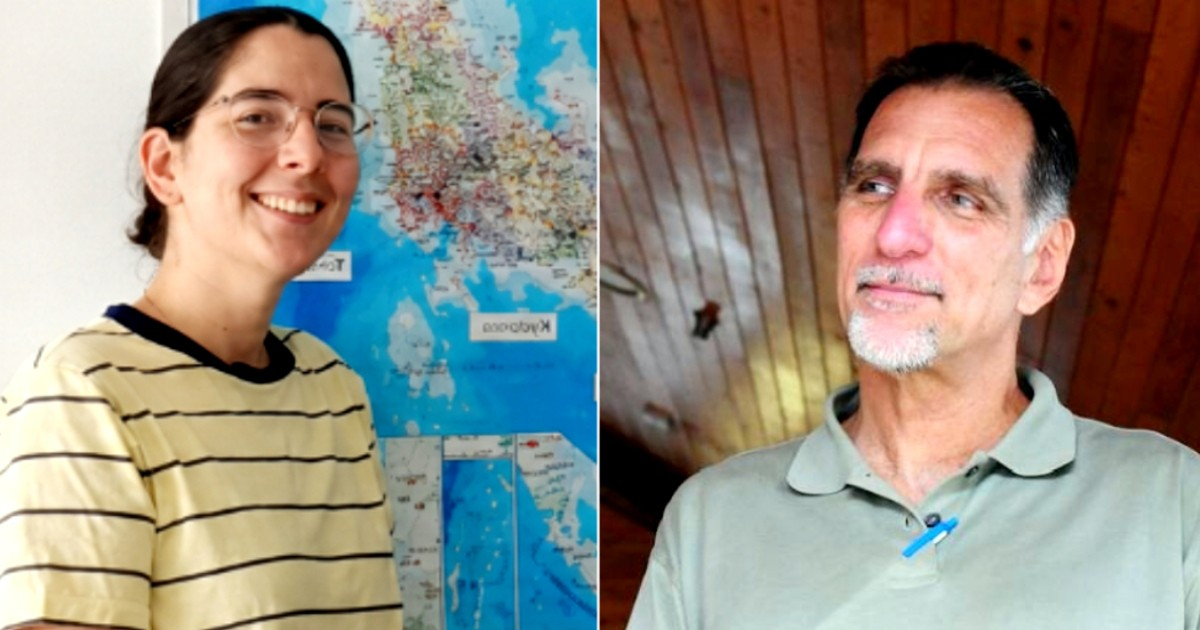
The former Cuban spy René González took to Facebook on Tuesday to defend his daughter Ivette González Salanueva following the criticism stemming from the scholarship she received to study in Japan, and he did so in the same manner that characterizes him: discrediting those who ask questions instead of addressing the underlying issues.
In his post on Facebook, González referred to the journalists covering the news as a "flock of scavengers" and a "pack of abnormal individuals", accusing them of "monetizing at the expense of his daughter".
"To stay in the game, yesterday the usual pack of vultures swooped down on my daughter Ivette for having been awarded a scholarship in Japan," wrote the former member of the Red Avispa, sentenced in 2001 to 15 years in prison in the United States.
The bulk of her response was not an argument about institutional transparency, but rather a family anecdote: Ivette's mother, Olga Salanueva, allegedly demanded that she get a hundred in all subjects since she was little.
"The only grade I will accept is 100. I will never discuss a grade with a teacher, even if you were right, because no one will ever be able to say that I fought for you at your father's expense," González stated, presenting the maternal demand with a high dose of sentimentality as sufficient proof that his daughter does not benefit from any privilege.
What González did not answer is the central question: if Ivette is as grown-up, capable, and meritocratic as he claims, why is it her father—a "national hero" of the regime—who publicly defends her against criticism?
The former spy claims that "the scholarship was managed by his workplace" —the Office of the Historian of the City of Havana— because a project designed by Ivette met the requirements of the JICA call, the Japan International Cooperation Agency, and that she won "in open competition, among other proposals."
What the long-suffering father omitted is that the Office of the Historian is one of the Cuban organizations with the greatest financial autonomy, access to foreign currency, and international networks, with legal capacity to contract with foreign entities, which makes it a privilege in itself within the Cuban system.
González Salanueva, who worked as a specialist in international organizations at that office, will pursue a master's degree at Ritsumeikan University under the Global Leaders for the Achievement of the Sustainable Development Goals program. JICA Cuba announced her departure on August 21.
The case is not isolated. The daughter of ex-spy Ramón Labañino studied in Spain, where she was confronted by Cuban activists. The stepson of Díaz-Canel studied at private universities in Madrid and managed a Spanish company. The children of former Economy Minister Alejandro Gil have been linked to strategic positions in foreign trade. All of this while millions of Cubans face an unprecedented crisis without access to similar opportunities.
González has a documented history of attacks on the independent press. In March 2021, he called for the prosecution of those who served as instruments in activism and independent journalism. His post this Tuesday follows the same pattern: insulting those who report to avoid having to address issues of transparency and privilege.
"Fortunately, whether I studied in Japan or Cuba, one lacks the gene to prostitute what they learn or to use it for intrigue, shady dealings, lies, or gossip; something none of the tabloids that decided to make their bread at her expense can brag about," González concluded, without ever explaining how it can be verified that the selection process was truly open when the one managing it is the workplace of the daughter of a hero of the regime.
Related videos:
Filed under: