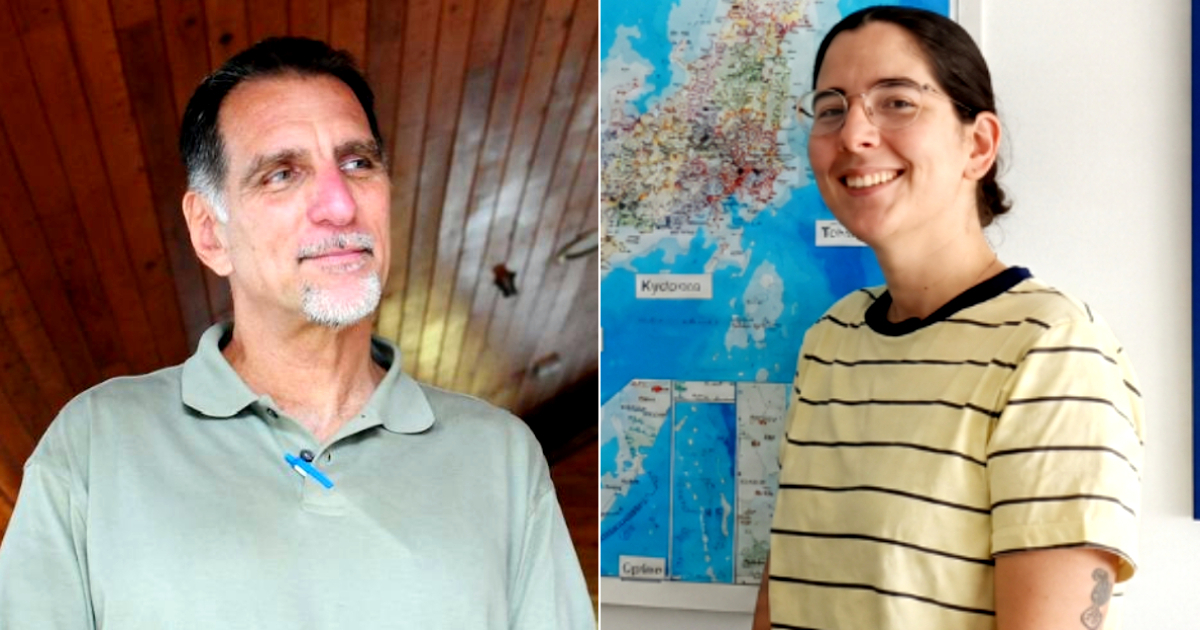
Ivette González Salanueva, daughter of former Cuban intelligence agent René González, will travel to Japan to pursue a master's degree at Ritsumeikan University thanks to a scholarship from the Japan International Cooperation Agency (JICA), as announced by the agency's office in Cuba.
The scholarship corresponds to the program "Global Leaders for Achieving the Sustainable Development Goals," aimed at young public officials capable of influencing public policies, and covers tuition, a monthly stipend, and travel expenses for two years.
According to the official publication from JICA Cuba, González Salanueva serves as a Specialist in International Organizations and International Collaboration at the Office of the Historian of the City of Havana, one of the Cuban organizations with the greatest access to foreign currency and international resources, managing the historical heritage and cultural tourism of Old Havana.
The case has not gone unnoticed, as Ivette was turned into a symbol of the regime's propaganda during the years her father was imprisoned in the United States.
The Cuban Institute of Art and Cinematographic Industry (ICAIC) produced the documentary "Ivette" in 2005, featuring music by Silvio Rodríguez, which depicted the story of a seven-year-old girl who could not visit her father because Washington repeatedly denied her mother's visa, Olga Salanueva.
Now, more than two decades later, that same girl whom the regime used as a banner for its international campaign has received a scholarship funded by a foreign government to study abroad.
René González was part of the so-called Wasp Network, a Cuban intelligence structure dismantled by the FBI in September 1998 in Miami and involved in the downing of the Brothers to the Rescue airplanes.
He was sentenced in 2001 to 15 years in prison, was released in October 2011, and in 2013 obtained judicial permission to reside in Cuba, prior to renouncing his U.S. citizenship. The regime turned him, along with the other four agents, into a national hero.
Ivette's case fits into a documented pattern of privileges for relatives of the Cuban nomenclature.
Within the environment of the members of the Avispa Network, another well-known case is that of Lizbeth Labañino Palmeiro, daughter of the former spy Ramón Labañino, who studied at the International University of Andalusia (UNIA) in Huelva, Spain.
In 2023, Cuban activists Iliana Hernández and Avana de la Torre confronted her on the university campus and questioned the contrast between the opportunities she enjoyed in Spain and the situation of young people, mothers of political prisoners, and the general population in Cuba.
Labañino, like González, was convicted in the United States for his involvement in the Wasp Network and returned to Cuba in 2014 after being released as part of the negotiations between Washington and Havana.
The most recent and notable example is that of Manuel Anido Cuesta, stepson of Miguel Díaz-Canel, noted for studying at an expensive private university in Madrid with tuition fees exceeding 12,300 euros per year, and more recently linked to the control of a business in the Spanish capital.
Cases have also been documented, such as those involving the children of former Minister of Economy Alejandro Gil Fernández, linked to foreign trade and currency exchange areas, as well as the privileges and trips of relatives of other senior officials.
The contrast is hard to ignore: while millions of Cubans lack access to training opportunities abroad and face an unprecedented economic crisis, the children and associates of those who support the regime accumulate scholarships, studies at private European universities, and strategic positions in organizations with access to foreign currency.
Related videos:
Filed under: