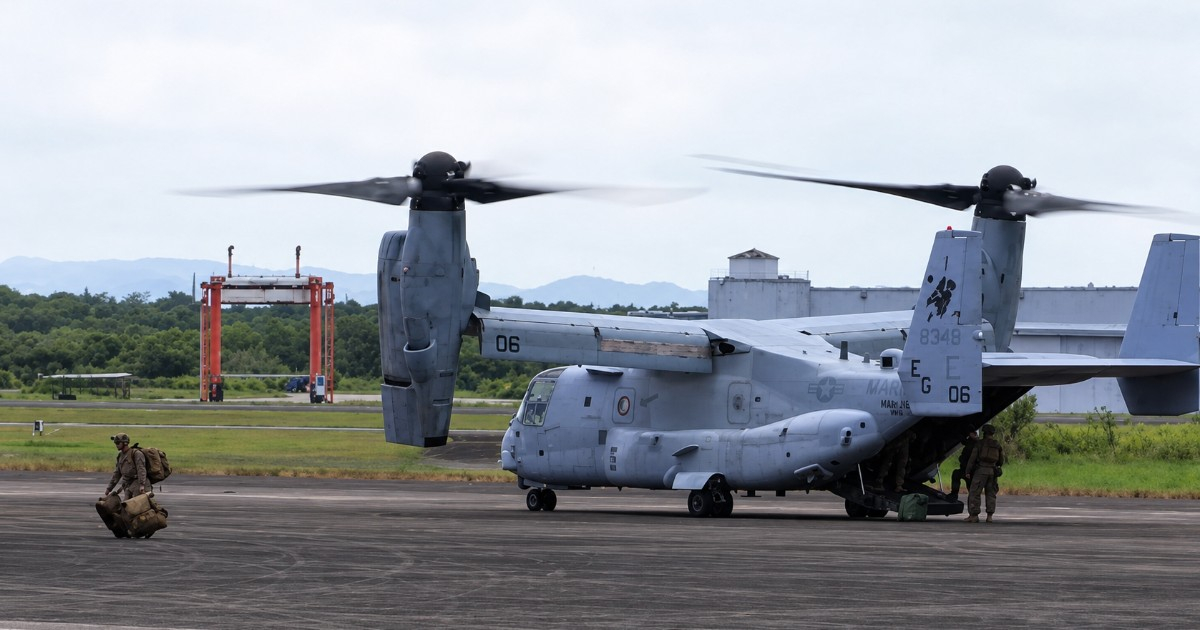
The former naval base Roosevelt Roads in Ceiba, Puerto Rico, is back to full operation with thousands of U.S. military personnel, according to a report from El Mundo published this Wednesday, amid rising tensions between Washington and Havana.
The facility, closed in 2004 after years of protests over the use of Vieques Island as a firing range, was reactivated in November 2025 with a projected investment of 79 million dollars.
Now, the neighbors claim that maneuvers are carried out there daily since the beginning of summer. "They start the planes almost every day, even at night. It seems like it's to have them ready for combat, and everything comes to a standstill when they're doing those practices," recounts Manuel Martínez, a resident of the municipality of Ceiba, in the east of Puerto Rico.
Its reopening, initially linked to tensions with Venezuela before the capture of Nicolás Maduro, now places Cuba at the center of geopolitical focus.
The governor of Puerto Rico, Jenniffer González Colón, confirmed in June that the exercises would mobilize more than 8,100 soldiers between May and August, although she described the maneuvers as logistical and without the use of weaponry.
The deployment is part of Operation Southern Lance, a campaign by U.S. Southern Command (SOUTHCOM) aimed at the interdiction of drug trafficking and the deterrence of hostile actors in the Caribbean.
On June 17, marines from the 24th Marine Expeditionary Unit conducted night exercises for quick response at Roosevelt Roads, just days after Secretary of War Pete Hegseth visited the Guantanamo naval base.
During that visit, Hegseth warned that Washington "is ready to act" if Cuba acquires weaponry capable of reaching the base or U.S. territory, and stated that "the future of Cuba is in the hands of its leadership."
In early June, the Litoral Combat Force-24 conducted training missions from the USS Fort Lauderdale to the Cuban coasts, as reported by SOUTHCOM itself.
The rhetoric from San Juan has been no less forceful. González Colón has publicly backed any action by President Trump to "liberate" Cuba, and in May, she went so far as to mention the possibility of a war with Cuba "in the coming weeks."
From Havana, Foreign Minister Bruno Rodríguez rejected in May the characterization of Cuba as a threat to the national security of the U.S. and warned that military aggression would be "disastrous."
For his part, President Miguel Díaz-Canel promised in March an "impregnable resistance" against any military action.
The report from El Mundo also highlights the concern of Puerto Rican organizations regarding what they describe as a new militarization of the island, with protests recorded outside several military bases in February of this year.
The Puerto Rican government also signed an agreement with the U.S. Navy for the logistical use of Roosevelt Roads alongside the Ramey and Muñiz bases, solidifying Puerto Rico as the main U.S. military enclave in the Caribbean during this time of heightened tension with the Cuban regime.
Related videos:
Filed under: