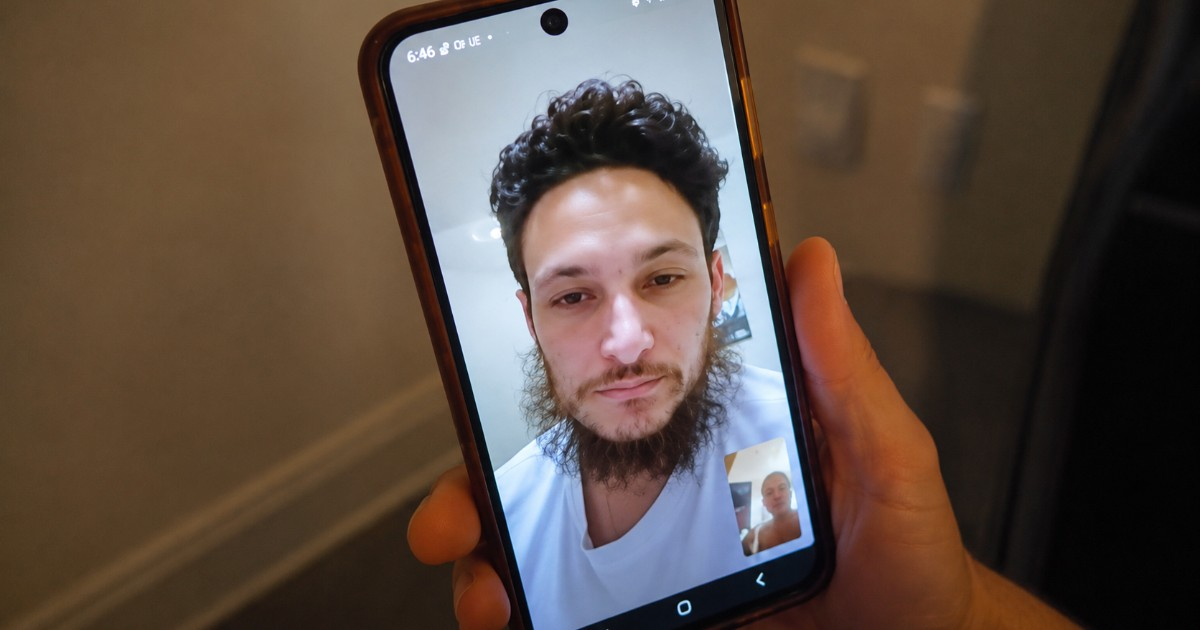
Carlos Rodríguez, a 35-year-old Cuban who lived in Miami and was deported to Africa, reported that U.S. authorities trafficked with his life by sending him, without prior notice, to Equatorial Guinea.
The Cuban remains detained in a hotel converted into a detention center in Malabo. In statements to EFE, he expressed: "Do you want me to tell you the truth? What crossed my mind was that I was being trafficked for human purposes, that they were trafficking with my life. That's how I felt, a lot of fear, a lot of dread, because it's the other side of the world, where you see different people, with weapons waiting. I am still afraid, here I am fearing for my life."
Rodríguez was on the first flight of deportees sent by the United States to Liberia, an African nation that agreed to accept up to 1,200 people from third countries under a bilateral agreement. Upon arriving in Monrovia, he and four other immigrants resisted disembarking. He claims that the response from the American officials was immediate and violent.
"They violently forced us off the plane and kept us on the ground with their boots on the chains we had on our feet and hands, and it seems that the government of Liberia didn't like that and ordered us to turn back," the Cuban recounted.
Liberian authorities rejected the group and returned them to the plane. On board, they were informed that they would be returning to the United States. Three hours later, the reality was different.
"We appeared in the middle of the night at a dark part of the airport in Equatorial Guinea, with a team of 50 guards waiting for us at the bottom of the plane. They were ready to board the plane to take us out," described Rodríguez.
He closed his testimony with a plea for help: "I have been separated from my family, from my wife, from my little daughter, both of whom are American citizens. It's an injustice, a violation of human rights on a scale not seen in the United States. If you can, please help me because Africa operates differently than the rest of the world."
Their case and that of other Cubans stranded in Africa
Carlos Rodríguez arrived in the United States in 2013 and was detained by immigration authorities in April 2025 in Tennessee. For over 16 months, he was transferred between detention centers in various states, including the well-known "Alligator Alcatraz" in Florida.
He had a deportation order from 2019, but his wife, Igrayne Ribot, a U.S. citizen, argues that a habeas corpus petition filed in a federal court in November 2025—unresolved after ten months—should have prevented his removal.
Alongside him, his compatriots Darwin Hernández, Emilio Destrade, and Leonardo Sánchez are also being held in Malabo, along with the Brazilian Pietro Graza de Lima.
The case of Sánchez is particularly severe. The 49-year-old Cuban suffers from a severe ventral hernia and uses a colostomy bag. Currently, he has no access to adequate medical care.
The hotel where they are staying operates as a detention center under a contract of 7.5 million dollars between Washington and the government of Equatorial Guinea, and is owned by the family of President Teodoro Obiang Nguema Mbasogo. According to reports, food is sometimes denied, and guards have threatened or physically assaulted migrants.
Since July 2025, several Cubans have been deported to Eswatini and the Central African Republic, countries with which they have no ties. The Havana regime has historically refused to accept some deportees, leading Washington to seek alternative destinations on the African continent.
Related videos:
Filed under: