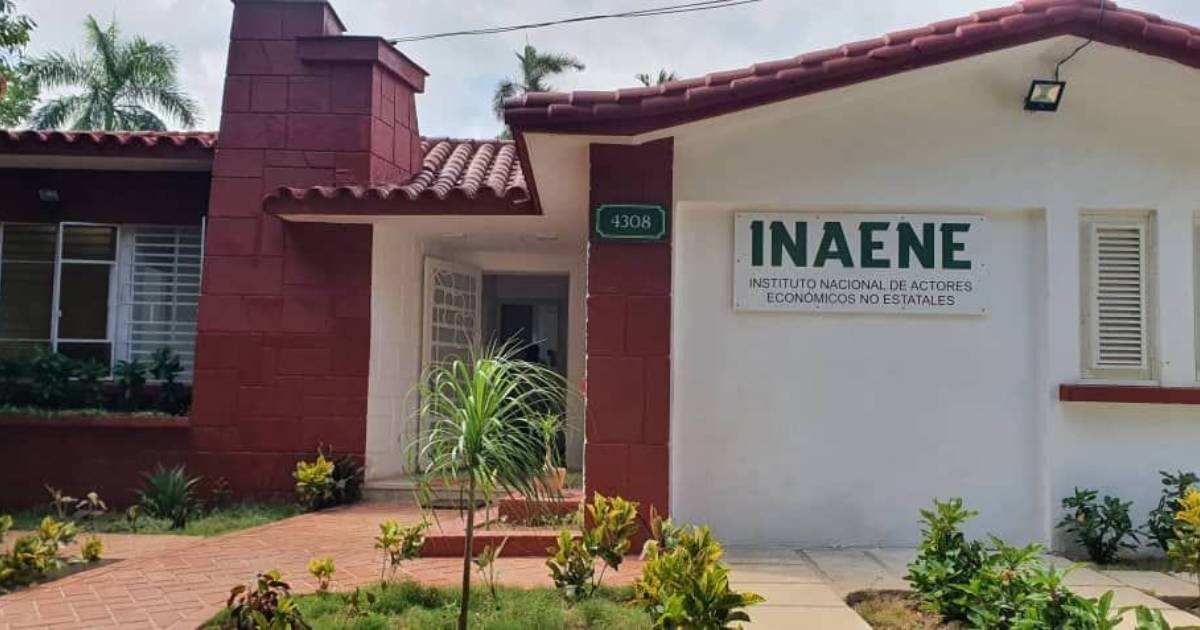
The National Institute of Non-State Economic Actors published this Wednesday the , which establishes the new procedure for the creation, merger, division, and dissolution of micro, small, and medium enterprises (mipymes), private companies with more than 100 employees, and non-agricultural cooperatives (CNA) in Cuba.
The regulation, included in the , stipulates that the procedures must be carried out digitally through the Economic Actors Platform, although it provides for an exceptional manual procedure when prolonged power outages or connectivity issues prevent the use of the system.
The Resolution 2/2026 was issued in compliance with the dated August 19, 2026, which amended the legal frameworks for micro, small, and medium enterprises (mipymes), non-agricultural cooperatives, and self-employment, and tasked the Institute with adjusting the corresponding procedures.
One of the key aspects of the provision is the digitization of the process. "The procedures for the establishment of micro, small, and medium-sized enterprises, as well as private companies with more than one hundred employees and non-agricultural cooperatives, are carried out digitally through the Economic Actors Platform," states Article 2.
The platform will also serve as a centralized digital file: it will collect both the documents submitted by applicants and those generated later by the involved institutions. From the system, the file will be sent to the Ministry of Justice, financial institutions, the National Office of Tax Administration (ONAT), the authorities of heritage cities when applicable, and other agencies involved in the process.
Up to 20 days to approve or deny a business
The Municipal Development Directorate of the Municipal Administration Council will be responsible for receiving and processing the requests.
The aspiring founding partners must appoint one of their group or a representative to manage the file and include, among other information, personal details of the partners, main economic activity and other planned activities, registered office, establishments, number of employees, a written declaration regarding criminal records, and a draft of the bylaws.
Once the documentation is received, the application may be suspended if it does not meet the established requirements, if documents are missing, or if the data was not entered correctly into the platform. In such cases, the interested parties must be notified so that they can correct the deficiencies and resubmit the information.
The resolution states, in its literal wording, that the request is denied when the partners are "repeat offenders or multiple repeat offenders, with outstanding debts in tax or banking compliance."
In such cases, a new request will undergo a process of "thorough verification" to demonstrate the effective settlement or renegotiation of the debts.
The Municipal Development Directorate will have up to 20 business days from the receipt of the application to approve or deny it. If approved, a digital signature will be used on the document certifying the establishment and its corporate purpose.
The decision must be communicated through the platform to the applicants and the other involved institutions. Additionally, the Municipal Development Directorate must inform the Municipal Administration Council of the outcome within a period of 72 hours.
Additional authorizations based on location
The regulation imposes additional requirements for certain businesses.
Companies and cooperatives intending to engage in activities in prioritized areas for conservation must obtain authorization from the offices of the Historian or the Conservator of the heritage cities.
Those wishing to operate within the area of the Mariel Special Development Zone will need prior authorization from their Office. The Municipal Development Directorates of Artemisa, Bauta, Caimito, Mariel, Bahía Honda, and Guanajay will be responsible for managing that permit.
Blackouts necessitate preparing for manual procedures
Although the new procedure emphasizes digitization, the resolution itself outlines what to do when the energy crisis or Internet issues prevent the use of the platform.
In the event of "extended energy disruptions or lack of connectivity," the Municipal Administration Councils may provisionally authorize the Municipal Development Offices to validate and approve requests through a manual registry.
The procedures must be added to the platform later when the service is restored.
Five days to deposit the capital
Once the creation is approved, the platform will notify the corresponding financial institutions to open a checking account by default, intended to receive the share capital.
When the account number appears on the platform, prospective partners will have up to five business days to make their contributions.
Once the total share capital has been deposited, the bank will digitally issue the corresponding certification and incorporate it into the file.
This procedure is complemented by Resolution 98/2026 from the Central Bank of Cuba, also published this Wednesday, which specifically regulates the deposit of monetary contributions and the subsequent opening of bank accounts for these economic actors.
Up to 20 days for the deed and 15 for the Commercial Registry
The establishment of the company does not end with municipal approval.
The digital file will be sent to the provincial justice offices for assignment to a notary in the area corresponding to the registered office. The assignment must occur within one business day from the receipt of the file.
The interested party may select a notary, provided that the notary's office is located in the area corresponding to the company's registered address.
The public deed must be authorized within a period of up to 20 days from the time the notary receives the digital file. Once formalized, the notary will send an authorized copy of the deed, with their certified electronic signature, to the Commercial Registry via the platform.
The Mercantile Registry will thereafter have up to 15 business days to issue the registration certification, which will be incorporated into the digital file and sent to the participating institutions, as well as to the National Office of Statistics and Information and the Central Commercial Registry.
ONAT will have another 10 days
After the commercial registration, the ONAT will review the file and will have up to 10 business days to register the new company or cooperative in the Taxpayer Registry.
Once that process is completed, the tax authority must provide the relevant documents to the new economic actor and send the registration information to the bank through the platform.
The bank will then notify the partners of the date and time when they should go to the branch to sign the current account opening contract.
In order to subsequently register with the Central Commercial Registry, the regulation requires that the company or cooperative must first have a bank account as a legal entity.
Existing businesses will be able to retain their licenses
The resolution makes a distinction between newly established businesses and those arising from pre-existing businesses, including self-employed workers.
In this latter case, they may retain the licenses and permits that had already been granted to them, as long as they continue to carry out the same activities.
The regulation also governs subsequent modifications. A new authorization from the Municipal Development Directorate is required to change the corporate purpose or registered office, create new establishments, transform a CNA into a company, transition from the categories of micro, small, or medium enterprises to a private company upon surpassing 100 employees, or carry out merger or split processes.
In these cases, the municipal authority will have up to 10 business days to approve or deny the modification.
Modifications that do not require municipal authorization must also be managed through the platform, in the "Other Procedures" section, and will be processed digitally by the relevant institutions.
Another important element is that a business reorganization will not allow for the shedding of previous obligations. Small and medium-sized enterprises (mipymes), private companies with more than 100 employees, and CNA that have been transformed or derived from processes of transformation, merger, or spin-off must assume "the debts and obligations of the business from which they originate."
Resolution 2/2026 is part of the package of reforms for the Cuban private sector announced by the government in June, within a set of 176 economic measures.
Among the changes formalized in the new legal framework is the creation of the category of private company with more than 100 employees, while micro, small, and medium enterprises (mipymes) are classified as microenterprises with 1 to 10 employees; small enterprises from 11 to 35; and medium enterprises from 36 to 100.
The new framework also allows an individual to be a partner in more than one micro, small, and medium-sized enterprise (mipyme) or private company, removing one of the restrictions that burdened the sector.
Resolution 2/2026 will come into effect on September 9, seven days after its publication in the Official Gazette.
Related videos:
Filed under: