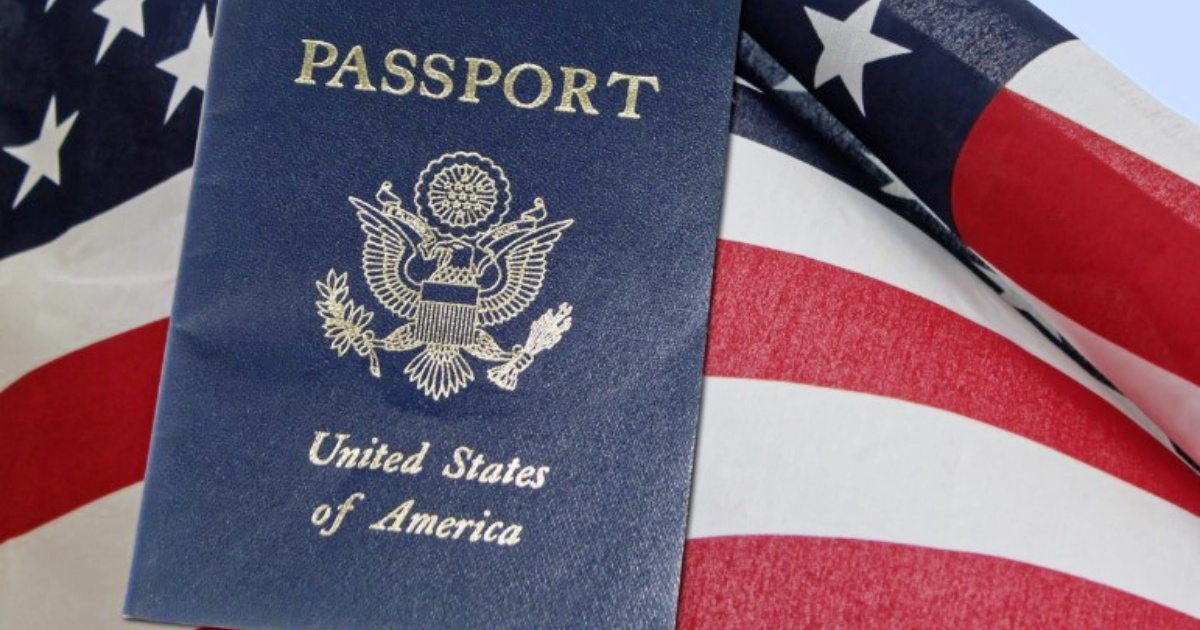
The U.S. Department of State has prepared a draft internal guide that would require parents or legal guardians to provide proof of their own citizenship or immigration status when applying for passports for their minor children, according to a recent investigation by Reuters.
The proposal is the first detailed vision of how the Trump administration could implement Executive Order EO 14418, signed on August 6, 2026, which targets the so-called “birth tourism” and expands the historical exceptions to birthright citizenship.
What would change in the current process?
Under current regulations, parents of children born in the United States only need to prove their relationship and provide a photo ID when applying for a minor's passport, without any documents certifying their own immigration status.
If the draft becomes official regulation, all parents or guardians would need to provide documents such as a valid U.S. passport, a birth certificate, an I-94 form, or a permanent resident card when submitting the application.
The goal is for the government to determine if the child is subject to EO 14418.
According to the text of the draft cited by Reuters: "The Department will require parental information and proof of citizenship or immigration status of the parents as part of its determination of whether the applicant is subject to EO 14418."
Who would be affected by the new executive order?
The EO 14418 would remove automatic citizenship from the children of individuals who work for a foreign government in the United States, who have engaged in fraud or a business transaction to obtain citizenship, or who are classified as "foreign enemies".
The spokesperson for the State Department, Tommy Pigott, defended the measure:
"President Trump has been unequivocal that this administration will protect the meaning and value of American citizenship, without exception, and that includes ensuring that our passport adjudication process fully reflects that standard."
A lengthy legal battle
Trump's offensive against birthright citizenship has been facing judicial obstacles for over a year.
His first executive order, signed on January 20, 2025, was immediately blocked and ultimately overturned by the Supreme Court in a 6-3 decision on June 30, 2026, in the case Trump v. Barbara, which reaffirmed the Citizenship Clause of the 14th Amendment as protection for nearly all children born on U.S. soil.
After that setback, Trump signed two new, more targeted executive orders on August 6: EO 14418 and another that instructs to strengthen actions against maternity tourism, including the denial of visas to those who travel to the United States with the primary purpose of giving birth.
A judge has already blocked the new order
One day before Reuters published the draft, federal judge Deborah Boardman of the District of Maryland issued a preliminary injunction blocking the enforcement of EO 14418, prohibiting its application to any child born after February 19, 2025.
Boardman described the administration's argument as a "distorted interpretation" of the Supreme Court ruling and was direct in her resolution:
"The Supreme Court has spoken. Its decision from June is the law of the land. The president must abide by it."
The lawyers from the Department of Justice had argued that a restraining order would be inappropriate and that the legal challenge was premature, as federal agencies had not yet issued public guidance on the implementation of the directive.
The case is still in litigation, and it is expected that the government will appeal Boardman's decision, which could bring the matter back to the Supreme Court.
Esta medida forma parte de una serie de cambios migratorios que están redefiniendo las reglas para quienes viven o quieren vivir en Estados Unidos. Sigue de cerca todos los desarrollos en nuestra sección de
Related videos:
Filed under: