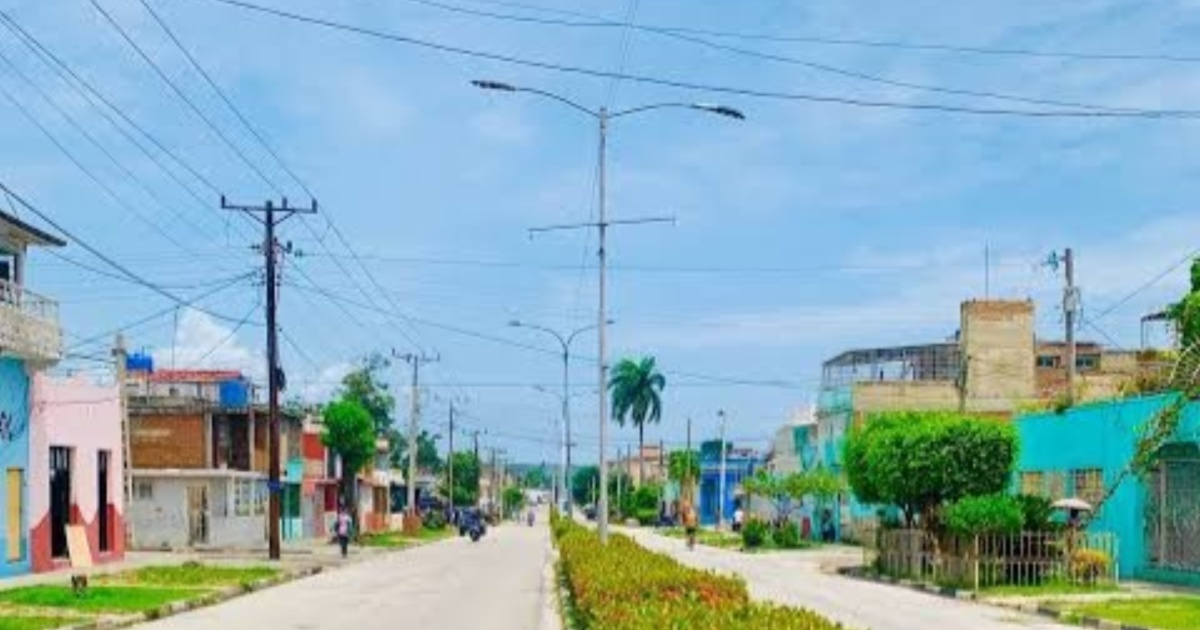
The National Revolutionary Police (PNR) conducted an operation in the Sueño neighborhood, in Santiago de Cuba, where several individuals were caught allegedly selling medication illegally, including domestically produced drugs and those controlled for sale in state pharmacies.
According to the report from the Santiago de Cuba Hoy profile, linked to the MININT, those involved could not prove the legal origin of the confiscated products, which included blister packs of various types of pills.
Authorities announced that the investigation will continue to determine the origin of the medications and whether there are other individuals connected to the case.
However, the reaction of the people from Santiago on social media was one of irony and weariness, not surprise. Most comments agreed that street sales of pharmaceuticals are an old phenomenon, widespread and out in the open throughout the city, far from being limited to the Sueño neighborhood.
"All the medication in Cuba is out on the street. The sale of domestically produced drugs has been happening for a while now in plain sight throughout the city. If this operation is recent, they were already behind schedule," wrote a citizen.
Others pointed out that drugs are openly advertised on walls, sidewalks, and bus stops. "In pharmacies, there are no medications; they are on the street, shouted out loud, without fear. Medications on the walls, on the sidewalks, becoming contaminated. Where is the control of the drug distributor, where is the control of the pharmacies? The action comes too late, when the problem is deeply rooted. Right now, as I write this comment, someone is offering me hospital masks and urinary catheters," another internet user reported.
Several comments pointed directly to corruption within the state distribution chain. "We all know that medications come in through one door at pharmacies and go out the other, and the patient suffers, because they have to buy from the criminals," stated a user.
A neighbor described the situation accurately: "An itinerant vendor passes by here almost every day, acting as a mobile pharmacy."
Another commentator mentioned vendors set up on the exterior walls of buildings. A citizen reported that spironolactone—a medication for blood pressure and heart failure—was being offered for 700 Cuban pesos in the informal market.
Far from condemning the vendors, many residents defend them as the only alternative in the face of chronic shortages. "What's the news? Let them keep selling, because if not, we’ll die, since the pharmacies are empty," summarized an internet user.
The backdrop is a national-level pharmaceutical crisis: in April 2026, only 190 out of 651 medications on the national essential drug list were available, approximately 30% of the total.
In Villa Clara, provincial authorities acknowledged that "all pharmacological families are affected," with 368 out of 636 medications missing.
The regime has responded with over 5,000 inspections and joint operations between the Ministry of Public Health and MININT in various provinces, yet none of these actions have resolved the structural shortage that fuels the black market.
The official press acknowledged in March 2026 that the informal sale of medications had spread to social media, digital platforms, and public spaces throughout the country.
Related videos:
Filed under: