
Related videos:
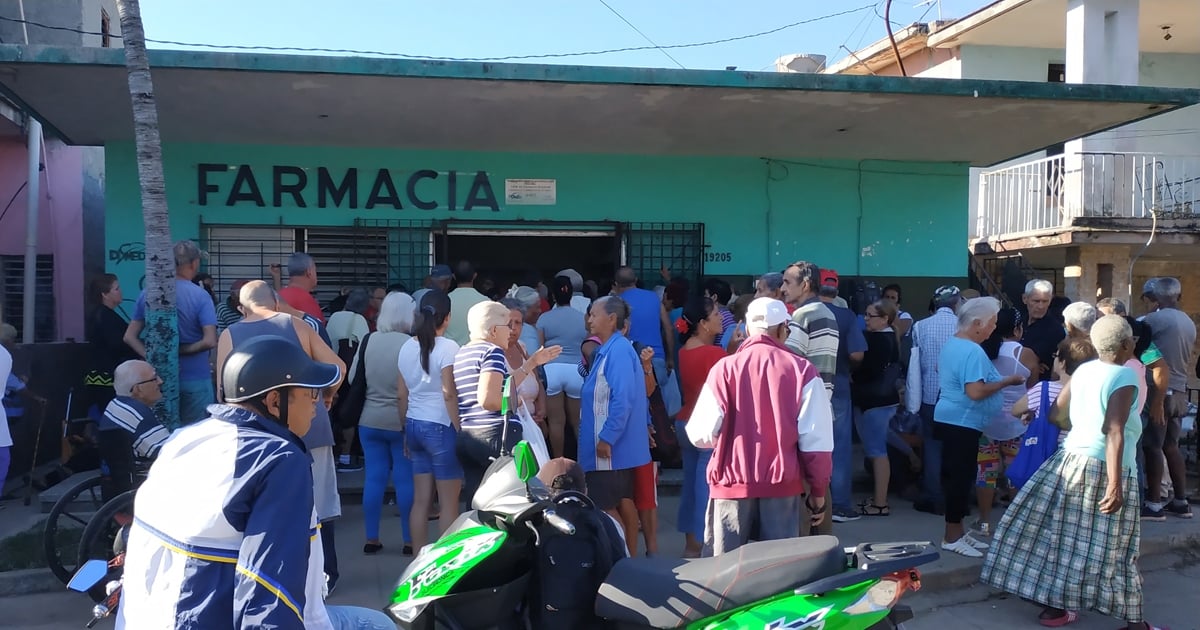
Officials from the MINSAP acknowledge that the country is facing a "rather complex situation" with only 40% availability of the medications that should be in circulation.
In a report by the official media Cubadebate, the authorities continue to attribute the medication crisis to the U.S. embargo and the international "financial siege," without mentioning the industrial paralysis caused by the lack of investment and maintenance of domestic factories.
Maylin Beltrán Delgado, head of the Department of Pharmacies and Optics at MINSAP, reported that as of October, 33 "extraordinary incidents" had been detected in the pharmacy network, including 18 thefts and 10 cases related to controlled substances.
The regime, to address the situation, conducted more than 5,000 inspections and joint operations with the Ministry of the Interior in the island's pharmacies.
However, the official media itself admits that "the lack of medications is practically total" and the State does not even guarantee the supply of treatments for chronic patients.
Instead of providing structural solutions, the official discourse emphasizes surveillance, control, and the criminalization of drug reselling, which many Cubans use as the only means to access essential treatments.
The MINSAP maintains that the sale of medications outside the state network "constitutes a crime," while the informal market continues to grow in response to scarcity.
At the same time, the official distribution cycles of pharmaceuticals have been extended to 60 days, and the restocking in community pharmacies has become irregular and unpredictable.
The regime's emphasis on oversight, rather than on production and supply, reflects a familiar pattern: responding with more control to a crisis caused by its own inefficiency.
While the government strengthens surveillance, Cubans continue to wait for medications that do not arrive and end up buying them on the black market, without labels, without certified boxes, and without medical oversight, putting their lives at risk.
Filed under: