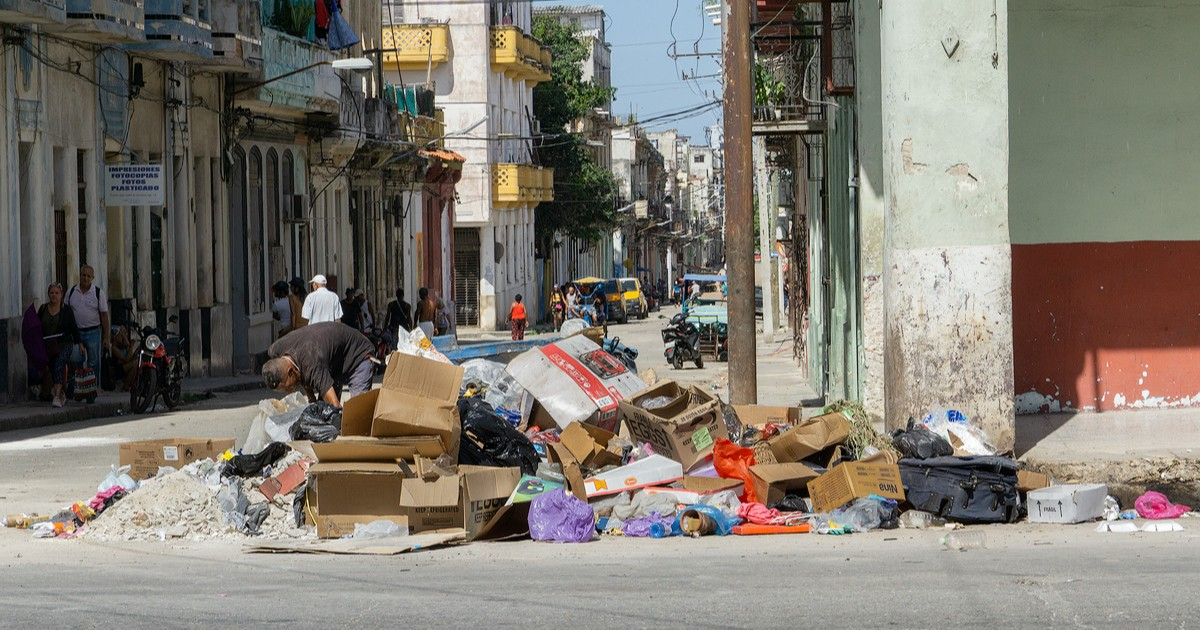
The singer-songwriter and officialist deputy Raúl Torres published a text titled “Do Not Confuse the Altar with the Crypt. Part 1” on Facebook this Friday, in which he defends Cuban socialism as a system in survival—not in defeat—and offers, with his usual blend of lyricism and slogans, a philosophical justification for the disaster that 67 years of communist dictatorship have produced.
The text begins with a confession that sounds like an epitaph: "I cannot deny the evidence, because evidence is a mirror that reflects a tired, wounded, sometimes unrecognizable face back to us." From there, Torres unfolds medical and nautical metaphors to explain why the regime has had to embrace what it claims to detest.
“Cuba has not embraced pieces of capitalism out of conviction; it has injected it in controlled doses to avoid the total collapse of the socialist organism,” writes with the solemnity of one who has just discovered penicillin. A distinction that, for the Cubans who have been on their knees before a pound of rice that right now exceeds 300 pesos in the informal market, may seem somewhat imprecise.
Torres openly acknowledges the existence of "new millionaires, exclusive clubs, private schools" and labels them as "the gangrene of capitalism." But he quickly brings out the on-call surgeon: "Cut the leg, mourn the loss, and save the life. That is what we are doing: amputating pieces of our utopia so that utopia does not die on the operating table." The problem is that the patient has been on the table for decades and the surgeons continue to weep while getting paid in foreign currency.
The nautical metaphor does not fall behind: "We are a socialist ship forced to navigate in capitalist waters. To avoid sinking, we have had to throw some of the cargo overboard. We have discarded 'the piano and some dreams'." What Torres omits is that, alongside the piano, they also threw away electricity: outages exceed 20 hours daily in many areas, with generation deficits frequently surpassing 2,000 MW.
The troubadour goes so far as to describe the party's bureaucracy as a "miracle": "this administrative skeleton is the only barrier that will prevent the neoliberal tide from sweeping away the historical memory of this people." The fact that this skeleton has produced an economic contraction exceeding 15% since 2020 is a detail he prefers to omit.
Regarding the money flowing in from abroad, Torres is blunt: "We do not celebrate the arrival of dirty money. We manage it with disgust, but we manage it, because a dead man manages nothing." In everyday Cuban terms: the regime accepts the dollars from emigrants — the same emigrants who have fled en masse from the revolution — with their noses held but their hands outstretched.
The text is inscribed in a well-documented saga of the necrotrovador. On August 16, Torres admitted that "the people are there, fighting their last breath" and the following day proposed raising jicoteas, water buffalo, and hutias to solve the food crisis. On August 21, he published a poem in defense of ICAP and its officials sanctioned by Washington. The pattern is always the same: acknowledge the disaster, blame the "Empire," and close with a rallying cry.
And what a closing. Torres wraps up with a variation of the classic "Homeland or Death" that unintentionally reveals the weariness of the moment: "Homeland or Death. And if we must live, let it be!! We will overcome."
According to the National Food Security Survey "There is Hunger in Cuba 2025," from the Food Monitor Program, 97.65% of the surveyed households reported difficulties accessing essential products, while 33.9% stated that at least one member had gone to bed hungry at least once in the 30 days prior due to lack of food. The study, conducted between May and July 2025, was presented in May 2026.
For those families, the question of whether to live is neither rhetorical nor poetic: it is the agonizing question of every night.
Related videos:
Filed under: