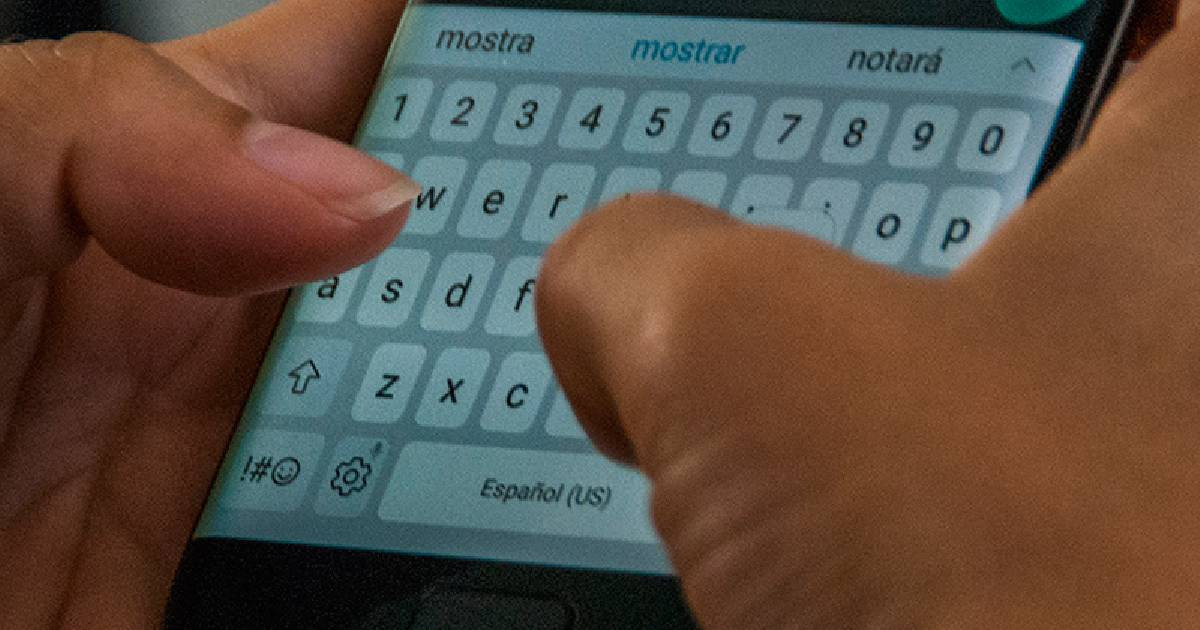
The journalist Jesús Álvarez López from the station CMHW in Villa Clara reported on Facebook the ongoing rise of digital scams in Cuba, and described how someone attempted to deceive him by pretending to be a friend whose WhatsApp account had been hacked.
The pattern is already recognizable: criminals take control of a WhatsApp account, impersonate the legitimate owner, and message their contacts offering cash in exchange for bank transfers, taking advantage of the chronic shortage of physical money that the Cuban population suffers from.
"Attempts at electronic scams are daily occurrences. Since this crime has affected even my own family, I have created an infallible shield: I do not transfer even 10 pesos to anyone unless I speak with them personally," wrote journalist Jesús Álvarez López in his post.
In the case he recounted, the scammer —using his friend's hacked account— was asking for transfers to a bank card and requesting confirmation to a phone number different from that of the real contact, promising to deliver the cash in person.
It was precisely that detail that revealed the deception: the confirmation number was not the one belonging to the true friend.
Minutes later, the message from the legitimate account owner arrived: "My WhatsApp was hacked, but I've recovered it. Don't send money to anyone who asks you using my number; I've already filed a report with the police."
The post unleashed a flood of testimonies from citizens who described identical experiences and expressed outrage at the impunity with which those responsible operate.
Several commentators reported having filed complaints with the Revolutionary National Police providing all available information —card number, phone number, and even the identity card of the alleged scammer— without receiving any response.
"The reality is that it is the easiest crime to prove: phone number and card number, both with official contracts at ETECSA offices and banks. Nothing is done about it," remarked one of the participants in the thread.
Another commentator was more direct: “Even when scammed, you report it, provide all the details including the bank statement that shows the trail of the damned scam. It’s easy for the bank to identify the owner of the card where the money went, and yet, nobody does anything.”
The question that many are asking is the same: how is it possible that in a country with a single telecommunications company and state banks there is no coordination between the PNR, ETECSA, and the banking entities to track down and stop those responsible?
One citizen recounted that her neighbor was on the verge of falling victim to the same scheme, but technical issues at the bank prevented the transfer and inadvertently thwarted the fraud.
Another commentator described a different attempt: they offered him liquefied gas at an appealing price, asked for personal information, and then a code that would be sent to his phone via message. "At that point, I was convinced it was an act of vandalism," he wrote.
The technical mechanism is consistent: the criminal enters the victim's number into WhatsApp, the platform sends a six-digit code via SMS, and if the person shares it, the account gets registered on another device.
The Cuban Penal Code classifies these offenses with penalties ranging from six months to two years in prison, but citizens are unequivocal: "So far, I haven't seen a single exemplary trial related to this issue," summarized a commentator, in a phrase that encapsulates the widespread sentiment.
The Credit and Commerce Bank (Bandec) warned in April 2026 that no legitimate process requires sharing that code.
Throughout this year, hundreds of documented cases have accumulated across Cuba.
In May, victims reported losses of up to 70,000 pesos without any investigation by the police; in July, five Cubans lost over 300,000 pesos under similar circumstances; and in August, a Cuban woman lost the equivalent of 1,900 dollars after her account was hacked.
Related videos:
Filed under: