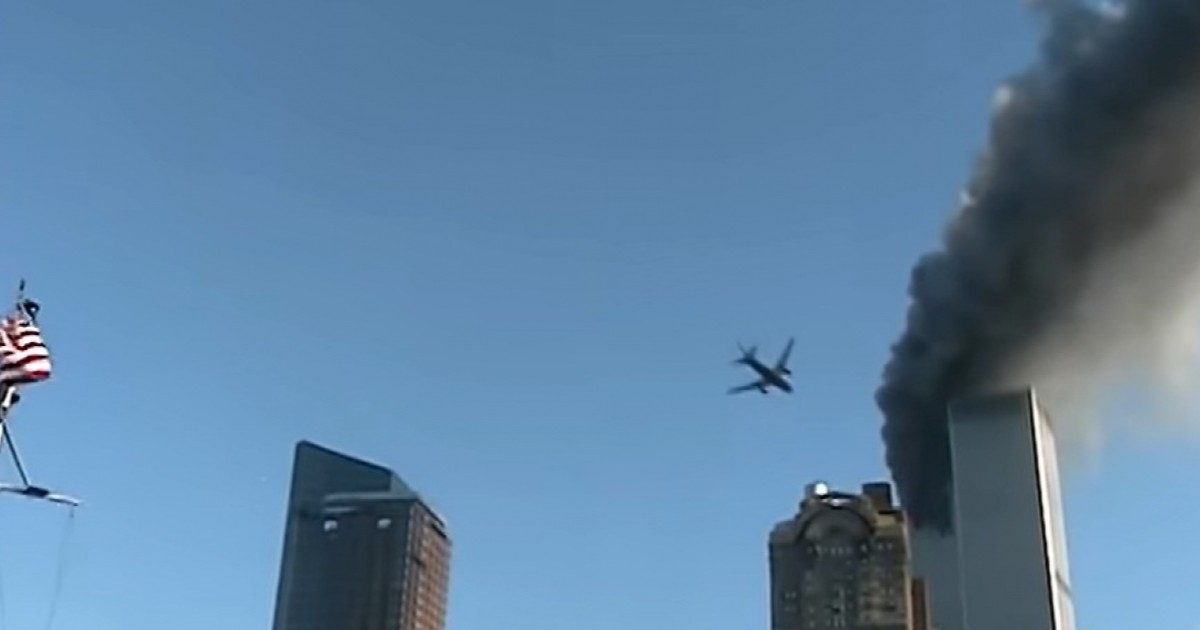
After 25 years since the September 11, 2001 attacks, Cuban-American pilot George Fariñas recalled in an interview with Telemundo 51 the moments of uncertainty he experienced that day while operating Delta flight 575 to New York.
The aircraft was about 100 miles (161 km) south of New Orleans when the control center disrupted the route without prior notice.
"The center tells us: Delta 575, prepare to land immediately and urgently in New Orleans," Fariñas reported.
When asking for an explanation for the sudden change in itinerary, the air traffic control's response left no room for questions: "That order comes from the Department of Defense, and you do not need to know why. It is simply an order, and you must land."
Neither the crew nor the passengers yet understood what was happening in the country.
The magnitude of the attacks became apparent upon arriving at the airport in New Orleans, where television screens displayed images of the impact against one of the Twin Towers.
"All the people were in disbelief; no one knew what was happening until we went out to the terminal where there were some TV screens showing that a plane had crashed into a tower," he recalled.
It was the second impact, against the remaining tower, that dispelled any doubt: "We realized that it was a terrorist attack."
On that September 11, 2001, 19 members of Al Qaeda hijacked four commercial airplanes with passengers on board. Two were crashed into the Twin Towers of the World Trade Center in New York, causing both buildings to collapse; a third struck the Pentagon, and a fourth fell in Pennsylvania after passengers attempted to regain control.
The attacks caused the death of nearly 3,000 people.
The Federal Aviation Administration issued a nationwide takeoff ban at 9:25 AM; by noon, commercial airspace was fully cleared, with over 4,500 aircraft having to make emergency landings across the country.
What changed in air security after 9/11
Fariñas, now an inspector of civil aviation, emphasizes that the attacks marked a definitive break in commercial aviation protocols.
"At that time, airport security was not very good. The TSA did not exist. Many times, we, as pilots, would go through security and no one would ask us anything," he explained.
Following the attacks, the United States established the Transportation Security Administration (TSA), which federalized passenger screenings that had previously been handled by private companies.
Among the changes implemented are stricter baggage inspections, identification controls, access restrictions to airport areas, and the reinforcement of cockpit doors to prevent unauthorized entry.
In his daily work, Fariñas witnesses these transformations firsthand: "I see the new procedures in place when a flight attendant wants to enter the cockpit. She has to call the pilot and provide a code."
Among the victims of the attacks were also Cubans and Cuban Americans who had built their lives in the United States.
The 25th anniversary was commemorated last Friday with ceremonies in New York, the Pentagon, and Shanksville, Pennsylvania, and for the first time included a seventh minute of silence for those who have died since 2001 from illnesses related to exposure to the toxic ash from Ground Zero.
Related videos:
Filed under: