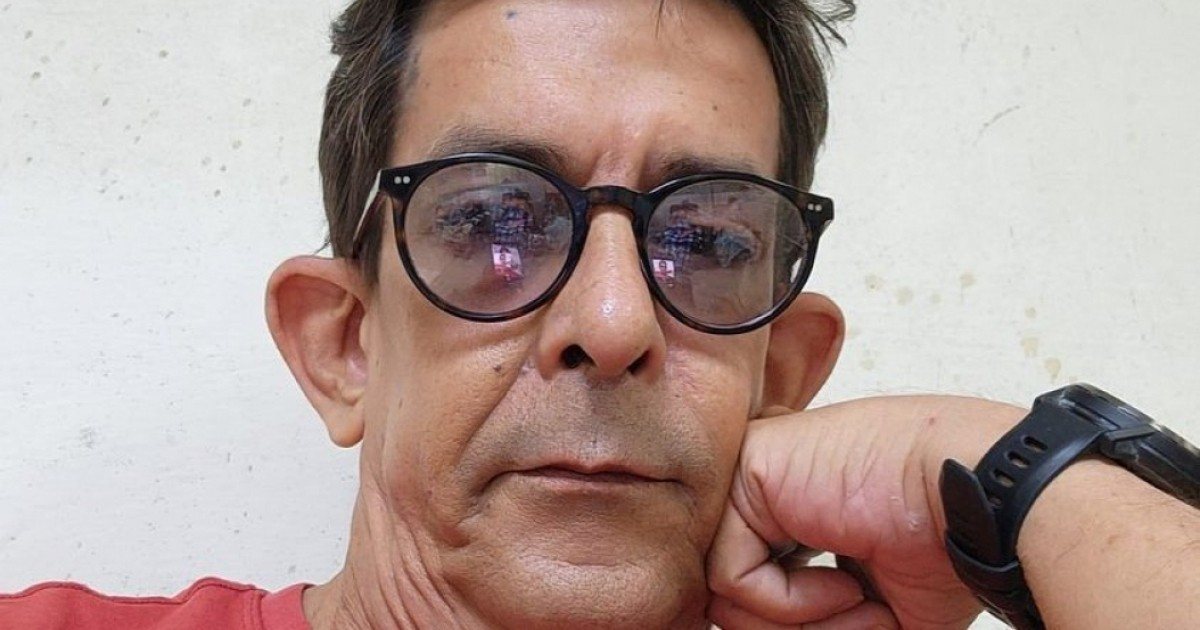
The Cuban comedian and actor Ulises Toirac posted on his Facebook account a reflection on freedom of thought that summarizes a stance he has maintained throughout 2026: “Freedom begins in the brain, and when one is free, there is a thirst for new ideas and for recognizing another's perspective.”
In the post, Toirac called for respectful dialogue and outright rejected verbal aggression on social media: "I always appeal to respect, to enriching conversation, to objective and informed discussion. There are no reasons to attack, insult, or defend what...".
The idea is not new in his discourse and directly connects to what he expressed days ago in the podcast "Todos Hablan" from Cubamastv, where he stated that he does not want to get used to the precariousness imposed by the Cuban crisis.
"I don't want to get used to being without electricity for 20 hours a day," he said in that interview, also mentioning the reliance on a riquimbili and the need to walk to avoid spending money.
Toirac emphasized that this refusal does not stem from desperation, but from a conscious decision not to normalize what is not normal. This stance, as he himself has explained, is precisely rooted in exercising the freedom of thought that he advocates in his most recent publication.
Throughout this year, the screenwriter and director has intensified his criticisms of the Cuban government with an unusual frequency and forcefulness for figures in the artistic world of the Island.
In the early days of September, he held the government accountable for the electrical collapse, stating that the energy crisis is a result of decades of poor internal decisions and a lack of future-oriented planning.
Earlier, at the beginning of that same month, he described the blackouts as a "crime" and condemned the inequality in electricity distribution and the corruption surrounding it.
In July, he requested that all those imprisoned for their ideas be released and described living in Cuba as "a nightmare."
Toirac has insisted that his Facebook account is not "the profile of a politician," but rather the space of a citizen and artist who refuses to remain silent in the face of the crisis.
That same coherence between thought and word is captured in the phrase that concluded his most recent publication: for Toirac, freedom does not begin in the streets or in the laws, but in the individual choice to think without constraints.
Related videos:
Filed under: