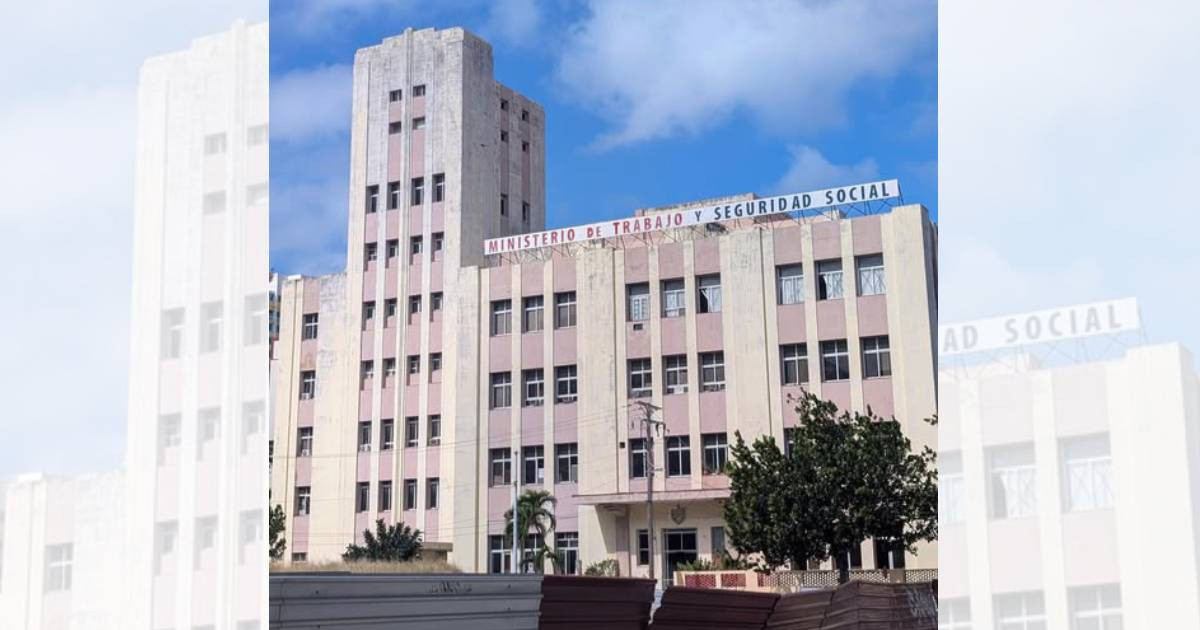
The National Assembly of People's Power published this Friday in the Official Gazette of the Republic of Cuba No. 78 the full text of the , approved on July 30 and intended to replace the legislation that governed labor relations in Cuba since 2013.
The regulation was promulgated by Juan Esteban Lazo Hernández, president of the National Assembly, and aims to regulate individual labor relations between workers and employers in the production of goods and the provision of services.
One of the main changes involves incorporating the non-state sector, including micro, small and medium enterprises, cooperatives, and self-employed workers, into the same legal labor framework as the state sector.
The Code also establishes judicial, institutional, and union mechanisms for the defense of labor rights and systematizes the principles that govern collective labor relations.
Among the new developments is the regulation of teleworking, including the possibility of continuing to work from abroad when the employer authorizes it through an addendum to the employment contract.
The regulation also recognizes the right to digital disconnection and eliminates the concept of the "available worker."
The Code authorizes the elimination of positions for economic, technological, or structural reasons, with a compensation equivalent to six basic salaries paid in a single payment.
It also defines work as "a right, a social duty, and a source of honor," establishing it as the main source of income for the enhancement of the material and spiritual well-being of the population.
The contains 13 supplementary regulations directly linked to the Code, including Decree 179 from the Council of Ministers regarding the Regime of Offenses and Sanctions in Labor and Social Security matters, as well as resolutions from the ministries of Public Health, Labor and Social Security, Education, Higher Education, Culture, and Finance and Prices.
The legislation has been criticized for not recognizing the right to strike, preserving the union monopoly of the Cuban Workers' Central, and not allowing independent unions.
Critics argue that these provisions move it away from the international standards of the International Labour Organization regarding freedom of association.
Law 189 will come into effect 90 days after its publication in the Official Gazette, which means it will be applied effectively in mid-December of this year.
Critics point out that the regulation does not recognize the right to strike, preserves the union monopoly of the Central de Workers of Cuba, and does not allow independent unions, distancing it from the international standards of the International Labour Organization regarding freedom of association.
The new Labor Code will come into effect 90 days after its publication in the Official Gazette, which places its effective implementation in mid-December 2026.
Related videos:
Filed under: