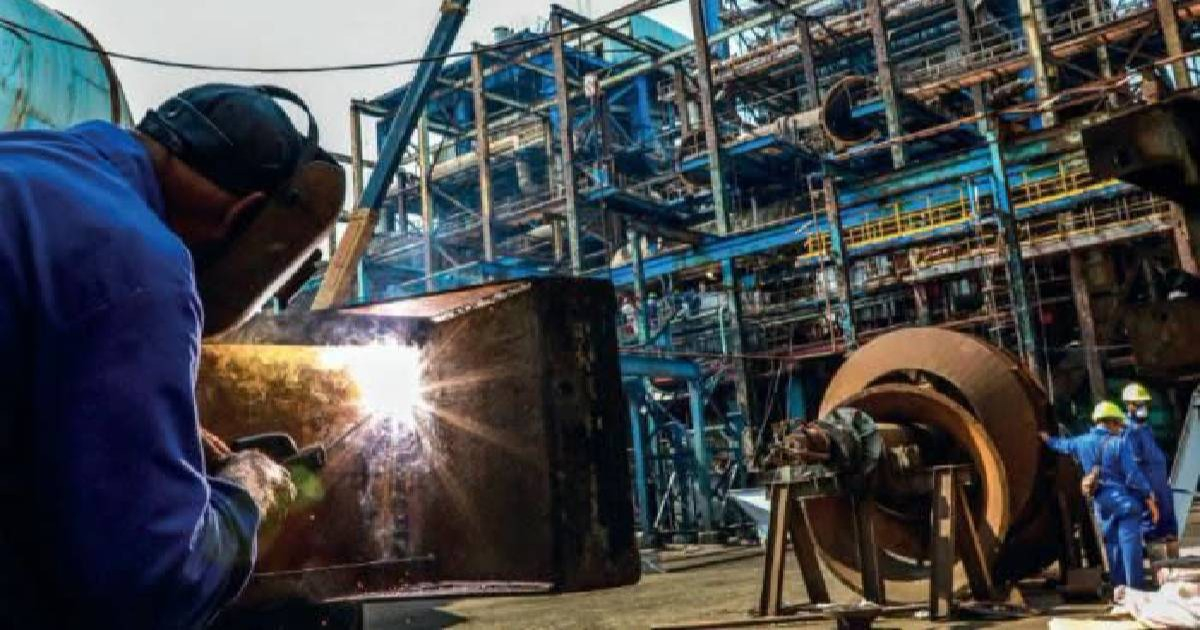
The Electric Union (UNE) reported this Saturday that Unit 4 of the Carlos Manuel de Céspedes Thermal Power Plant (CTE) in Cienfuegos has been synchronized to the National Electric System (SEN), while its Unit 3 was in the startup phase, as part of the slow recovery process following the eighth total blackout of the year, which occurred on Friday.
In a second Facebook post, the state agency announced that the SEN had managed to extend to the province of Holguín, which represented a step forward in the gradual reconnection of the system from the west to the east of the country.
The collapse on Friday occurred around one in the afternoon, when the simultaneous failure of two 220 kV transmission lines—Matanzas-Cienfuegos and Matanzas-Santa Clara—resulted in a complete shutdown of the grid.
According to a report by Reuters, the blackout left approximately 9 million people without electricity across the island.
The restoration progressed partially and unevenly. Havana recorded only a 44.2% recovery rate on the morning of this Saturday, with 126 out of 286 active distribution circuits.
This was compounded by a new complication: the CTE Antonio Guiteras experienced a boiler failure following the disconnection, with "punctures in several points of the steam generator."
The repair could not begin immediately because the equipment required almost 72 hours of cooling down. The Matanzas plant, the largest thermoelectric plant in the country, has experienced at least 17 unplanned outages so far in 2026.
The Ministry of Energy and Mines (MINEM) stated that the national electricity grid was connected "from Pinar del Río to Nuevitas," but this declaration was met with skepticism: dozens of Cubans were still without electricity while the system was officially listed as "in the process of recovery."
Instead of acknowledging the dictatorship's responsibility for the deterioration of the electrical infrastructure, the UNE took advantage of its updates to spread a propaganda message.
The state agency described the work of its workers as being carried out "amid a genocidal siege that prevents the arrival of spare parts, technology, and fuels," and characterized each blackout as "a battle against forced obsolescence and the scarcity imposed from outside."
The language of the regime contrasts with the reality faced by Cubans: September 2026 has recorded maximum generation deficits exceeding 2,000 MW on multiple days, and the CTE Carlos Manuel de Céspedes reported breakdowns in its units for at least six days during the first half of the month.
Analysts and citizens indicate that the energy crisis is primarily the result of decades of mismanagement and neglect of infrastructure by the regime, rather than the U.S. embargo that Havana systematically invokes to evade its responsibilities.
Related videos:
Filed under: