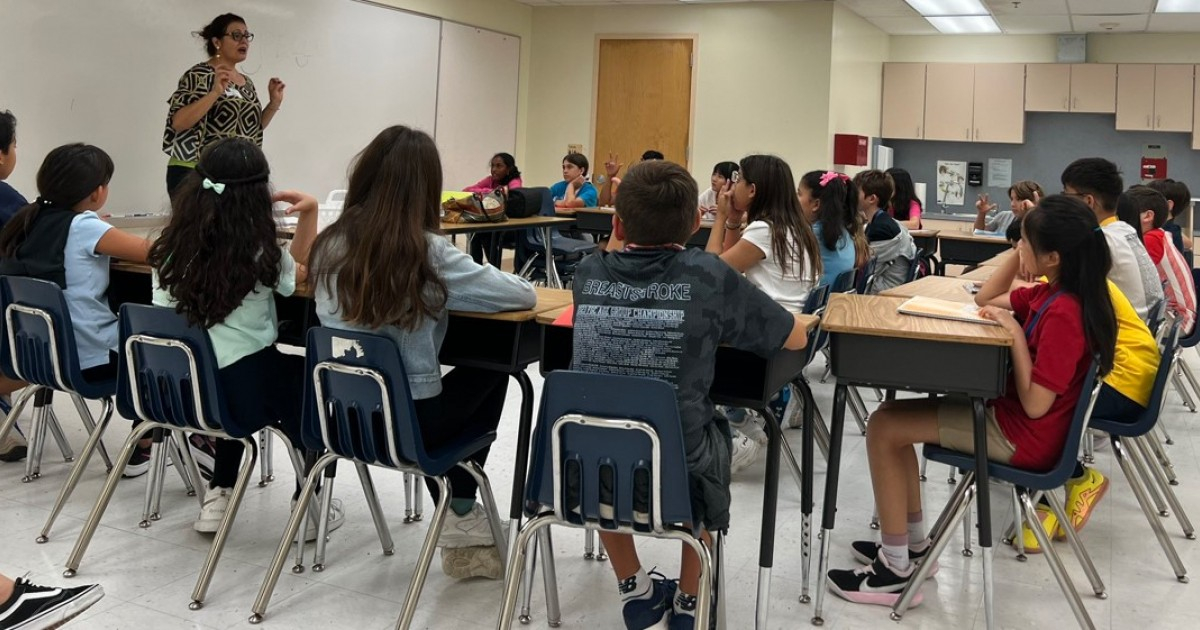
An annual survey by Telemundo 51 and NBC6 published this Friday consulted more than 1,200 teachers from South Florida and found nearly unanimous support for the ban on cell phones in classrooms, along with rising concern over the advancement of artificial intelligence in the school environment.
The 87% of participating teachers said they support banning the use of cell phones by students throughout the entire school day, regardless of grade. At the same time, 94% expressed concern about the impact of social media on their students' mental health.
"The phones are very good, but phones in the classroom must be put away. We need them to give us that opportunity to teach during that hour and a bit that we have in class," stated Nany Howard, a teacher from Miami-Dade Public Schools.
Another educator, Marlén Lanza, pointed out the phenomenon of constant comparison fostered by social media: "What happens is that children compare themselves: 'Oh, look at the life she has, the things he has, look at what they do, I do nothing and I don't have this, I don't have that.' That's when depression begins."
The teacher Thais García added another dimension to the problem: "We see bullying at school due to social media, and we observe issues and even fights over things that happen on social media."
Despite both Miami-Dade and Broward having device restriction policies in place, 52% of respondents acknowledged that enforcing these rules in practice is challenging.
In Broward, devices must remain turned off or in airplane mode from kindergarten through eighth grade, and in high school, they are only allowed during lunch with educational exceptions. In Miami-Dade, students from kindergarten to eighth grade are not permitted to use personal devices, while in high school, they are allowed for academic purposes with prior teacher authorization.
The survey also gathered opinions from teachers about artificial intelligence. 79% expressed concern about the use of AI tools for cheating on assignments and exams. García described it clearly: "Children cheat on exams if you're not paying attention. They use Meta Glasses or their phones, or they switch to another tab to look for answers."
64% of teachers also reported that their school is not providing sufficient guidance on the responsible use of artificial intelligence by students.
The survey comes just days after the Florida Board of Education approved new state rules regarding the use of AI in public education, from kindergarten to twelfth grade. The new regulations—considered among the most restrictive in the country—require parental consent before students engage with AI tools, impose mandatory human supervision, and prohibit the use of systems designed to simulate emotional companionship or conduct covert psychological profiling.
This regulatory framework complements the law that prohibits cell phones in Florida's elementary schools since July 2025, which established restrictions on devices for students from kindergarten to eighth grade throughout the school day, along with additional limitations for high school students.
The new rules on artificial intelligence will not come into effect until the 2027-2028 school year, a timeline that, judging by the survey results, many teachers consider too far off.
Related videos:
Filed under: