A few days ago, I learned about the situation of the renowned Cuban actor Roberto Perdomo, who, after decades of work, is living on a pension of just 6,000 pesos per month. His income is not even enough for him to commute to theater rehearsals, and he lacks the funds to travel to Spain and meet his grandson in person. There are so many grandparents and grandchildren suffering extreme hunger in Cuba, who cannot travel from Guantánamo to Havana!
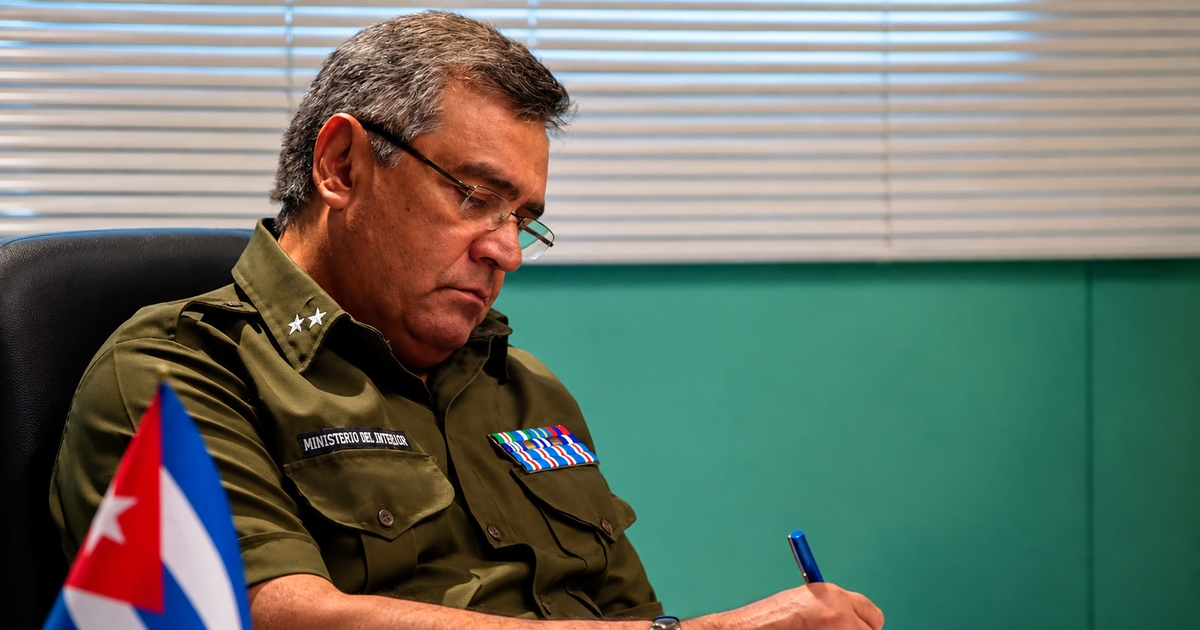
His case sparked a wave of solidarity: 63 people raised $1,531 to assist him. Perdomo portrayed Lieutenant Colonel Fernando for about 14 years in the television series "Tras la huella." His character, a high-ranking official in the Ministry of the Interior, is depicted as an honest, upright, kind, and dedicated man committed to protecting the people. The actor himself has publicly expressed his pride in embodying this role.
This contrast raises a fundamental ethical question: how far does the responsibility of an artist extend when participating in productions aimed at creating a favorable image of institutions linked to serious human rights violations?
Series such as "Tras la huella" and "LCB: La otra guerra" present favorable versions of the institutions of an undemocratic state and recount historical facts and the Cuban reality according to the narrative and interests of a tyrannical regime.
Prestigious organizations such as Human Rights Watch and Amnesty International have documented systematic restrictions on fundamental freedoms, arbitrary detentions, beatings, persecution of opponents, independent journalists, and artists, imprisonments for political reasons, torture, and deaths in Cuban prisons, carried out by the true “Fernandos” of the Ministry of the Interior and the prosecutors and judges of the communist regime.
A series may depict investigators clarifying crimes and protecting citizens. The problem arises when it seeks to convey a general image of an institution while systematically omitting its well-documented blatant and severe repressive actions.
There is an essential difference between portraying a character and legitimizing the narrative it represents. An actor can embody a Nazi officer in a film that rigorously exposes the crimes of Nazism without implying that they share those ideas. It would be quite different to participate in a production aimed at glorifying the perpetrators of atrocities and concealing their victims.
Not all participants hold the same level of responsibility. Producers, directors, screenwriters, and actors possess varying degrees of influence. Additionally, one must consider the work pressures, censorship, and the repercussions of turning down specific roles in a society without artistic freedom.
However, professional difficulties do not automatically eliminate individual moral responsibility, especially when someone publicly advocates for a representation that contradicts documented facts.
The crucial question is not only what character an artist portrays, but also what story the work tells, what hidden reality it conceals, who controls its message, and what freedom its participants had.
Up to this point, I have been quite moderate, and since I believe one cannot be tepid or neutral in the face of the tragedy of an oppressed people, I must be clear about my thoughts on the directors, producers, screenwriters, and artists who serve the tyranny.
Roberto Perdomo and many others are harvesting today a crop from which they were once wage workers. Characters like Lieutenant Colonel Fernando do not exist in real life in Cuba. No one reaches high ranks without demonstrating loyalty to the Communist Party. For the PCC, repression against opponents, dissidents, human rights defenders, independent journalists, and dissatisfied citizens is more important than combating crime.
Everyone uses their resources as they see fit. It is their right. Personally, as long as there is a political prisoner or a repressed and desperate opponent in Cuba, I would not send a dime to any artist, no matter how good they may have been in their profession, who until yesterday served the propaganda of the criminal dictatorship that has plunged them into misery. Obviously, I would make an exception for assistance with medications if they are ill.
There are many elderly people and children in our homeland who go to bed hungry and lack medicine when they fall ill. Their suffering does not concern either the lieutenant colonels of real life or many artists who continue to play along with those responsible for oppression, hunger, and misery in Cuba.
What has been said also applies to artists and comedians who serve the propaganda of the dictatorship and then we see them complaining about the serious crisis facing our homeland in less controlled spaces. If you serve the cause of your problems and those of your people, you are also guilty of what is happening.
“When one does not enjoy freedom, the only excuse for art and its sole right to exist is to serve it. 'Everything to the fire, even art, to feed the bonfire!'” said José Martí.
Related videos:
Filed under:
Opinion article: Las declaraciones y opiniones expresadas en este artículo son de exclusiva responsabilidad de su autor y no representan necesariamente el punto de vista de CiberCuba.