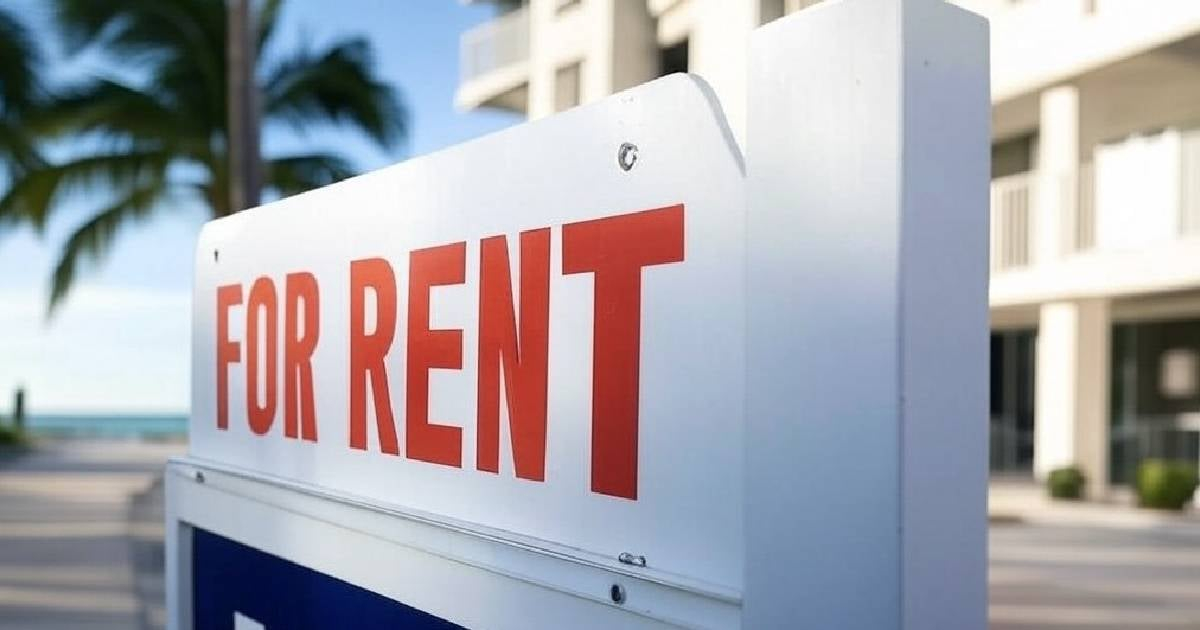
The Florida tenants could end up bearing part of the cost of a reform aimed at reducing home owners' taxes if voters approve Amendment 3 in November, according to a new analysis of its potential effects on rental properties.
The calculations, attributed by Florida Politics to Jared Walczak, a senior researcher at Tax Foundation, suggest that increasing the tax exemption for primary residences could shift a greater portion of the tax burden onto properties that do not qualify for the homestead exemption, including those designated for rental.
The Tax Foundation had already warned in an analysis of the proposal that a substantial reduction in the taxable base of primary residences could lead to higher rates on properties that remain subject to taxes, including apartment complexes and other non homestead properties.
According to Walczak's projections, the average property tax on an apartment building could increase by about $406 annually by 2028, while in rental homes the increase could reach approximately $1,081 per year.
For owner-occupied homes that do not qualify for the homestead exemption, the projected increase would be $1,196.
However, these figures do not represent automatic increases. The calculation is based on the assumption that local tax authorities will raise the rates, within legal limits, to offset some of the revenue they would lose due to the expansion of the exemption.
Under this scenario, the Tax Foundation estimates that the total burden of the residential rental property tax could increase by 14.1% when the new exemption is fully in effect in 2028, while the portion corresponding to non-school taxes could rise by 22.6%.
Walczak believes that a significant portion of those increased costs would gradually be passed on to tenants through rents, and warned that they could also impact the construction of new housing and the development of affordable projects.
What is Amendment 3?
The Amendment 3 is a proposed modification to the Constitution of Florida that will be voted on in the general elections on November 3, 2026. To be incorporated into the state constitution, it requires the support of at least 60% of voters.
According to the official text, the proposal would increase the homestead exemption for property taxes not related to school districts to $150,000 in 2027 and $250,000 in 2028, with subsequent adjustments for inflation.
The homestead exemption benefits the property that serves as the owner's primary residence. Therefore, rental properties, second homes, and commercial properties would not receive that extension of the exemption.
The proposal includes, however, another modification that directly affects those properties: it would reduce the annual limit on the growth of their assessed value for tax purposes from 10% to 5%.
It also establishes a mechanism so that, in the future, counties and municipalities can further expand the exemption on primary residences, eventually reaching the full assessed value, and sets certain rules regarding the use of revenue from local property taxes.
The measure would not affect the taxes allocated to school districts and, if it receives the necessary approval at the polls, would begin to take effect on January 1, 2027.
Those who support the proposal argue that it would relieve the tax burden on property owners who use their homes as their primary residence.
Florida Realtors, one of the groups that has publicly supported Amendment 3, also emphasizes that reducing the cap on the growth of assessments for non-homestead properties could provide greater predictability for commercial and rental property owners.
Critical analyses, including those from the Tax Foundation and other organizations focused on fiscal policy, suggest that a significant reduction in the taxable base of primary residences could force local governments to cut spending, seek alternative revenue sources, or increase rates on properties that remain taxable.
Rentals already high in South Florida
The debate takes place at a time when the cost of housing continues to place significant pressure on many households in South Florida.
In July 2026, the median rent in Miami was around $2,957 per month, while for the entire metropolitan area it was approximately $2,279, 5% lower than a year earlier.
The figures also reveal significant differences within the market itself. In Brickell, the median rent was around $3,986 per month in August, according to data from Realtor.com.
The high costs of housing are also impacting the independence of younger residents.
At the beginning of the year, young people and adults in South Florida reported difficulties in leaving their family home due, among other factors, to the high rental prices and the significant cost of living.
This context makes any fiscal change that may affect rental property owners, and potentially the price paid by residents, particularly relevant.
What do the polls say?
A poll by St. Pete Polls conducted from September 15 to 17 among 913 likely Florida voters recorded a 44.9% support for Amendment 3, compared to a 30.4% opposition and 24.8% undecided voters. The survey had a margin of error of ±3.2 percentage points.
The measurement reflects only the opinion recorded during those days. The proposal will need the support of at least 60% of voters in November to be incorporated into the Florida Constitution.
Related videos:
Filed under: