The State Council published this Thursday the updated and concordant version of the , which appears in the , pages 2 to 13, signed by Juan Esteban Lazo Hernández, president of the organization.
The publication does not introduce a new substantive norm but rather consolidates into a single text the changes incorporated by Decree-Law 126 of July 22, 2026, whose Second Final Provision ordered the Minister of Justice to update, review, and harmonize Decree-Law 50 within a period of 30 business days.
The same special edition includes the , which serves as the regulation for the Decree-Law and was subsequently updated by Decree 172 of 2026.
The objective of the regulation, according to Article 1, is "to establish the general regulations for the conservation, improvement, and sustainable management of agricultural and forest soils, as well as the use of fertilizers."
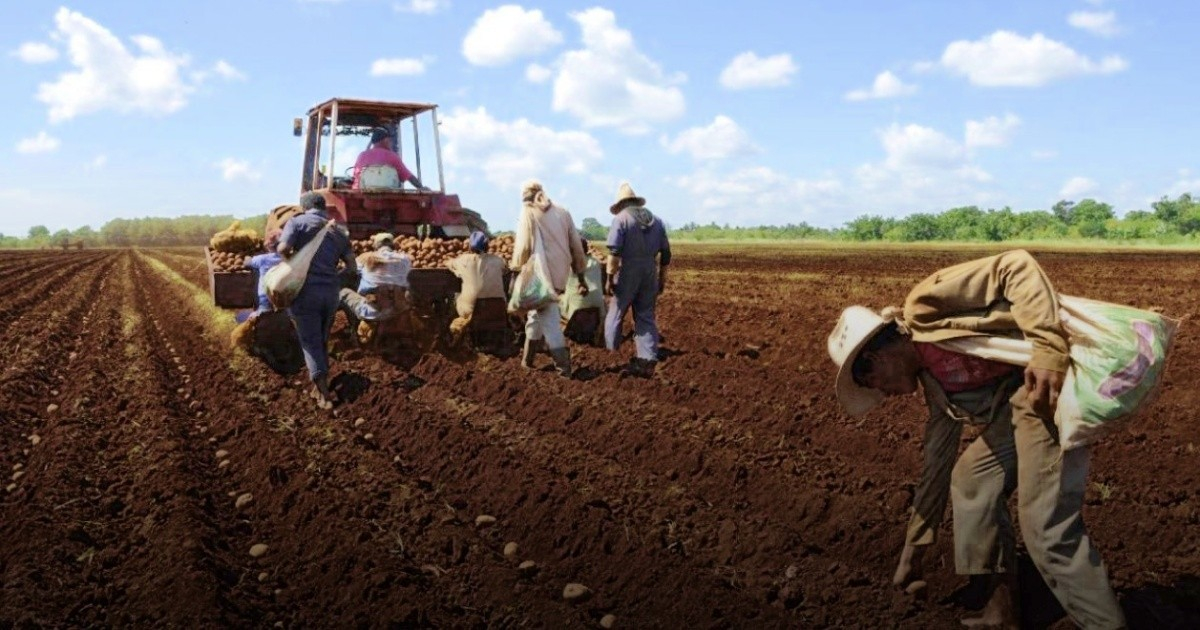
The provision applies to all natural and legal persons—owners, usufructuaries, or holders of land—who use soils for agricultural, sugarcane, forestry, fruit-growing activities, or in protected areas.
Among its central elements, the Decree-Law defines six guiding principles: sustainability, prevention, progressiveness, responsibility, subsidiarity, and cooperation.
Regarding the principle of responsibility, the text states that "the generator of degrading effects on the soils is responsible for the costs of preventive and corrective rehabilitation actions."
The norm also establishes the National Soil and Fertilizer System, sets categories of agricultural productivity for different types of soil, and regulates the use and commercialization of fertilizers.
Additionally, it aligns the Cuban regulatory framework with the Sustainable Development Goals and the UN conventions on climate change, biodiversity, and the fight against desertification and drought.
Decree-Law 50 has its direct precedent in Decree 179 of 1993, which governed the protection and conservation of soils on the island for nearly three decades, until it was replaced by the original version of this regulation, issued in August 2021.
The update is part of a broader regulatory agrarian reform promoted by the Cuban regime in 2026, which included several provisions aimed at encouraging agricultural recovery and aligning legislation with the so-called Economic and Social Transformations approved that year.
The backdrop of these measures is the severe degradation of Cuban agricultural land: according to data from the Ministry of Agriculture itself for 2023, 70% of the agricultural area has low organic matter content, 71% is affected by erosion, and over 1 million hectares are experiencing salinization or sodification, factors that the regime acknowledges as a direct threat to the country's food security.
Related videos:
Filed under: