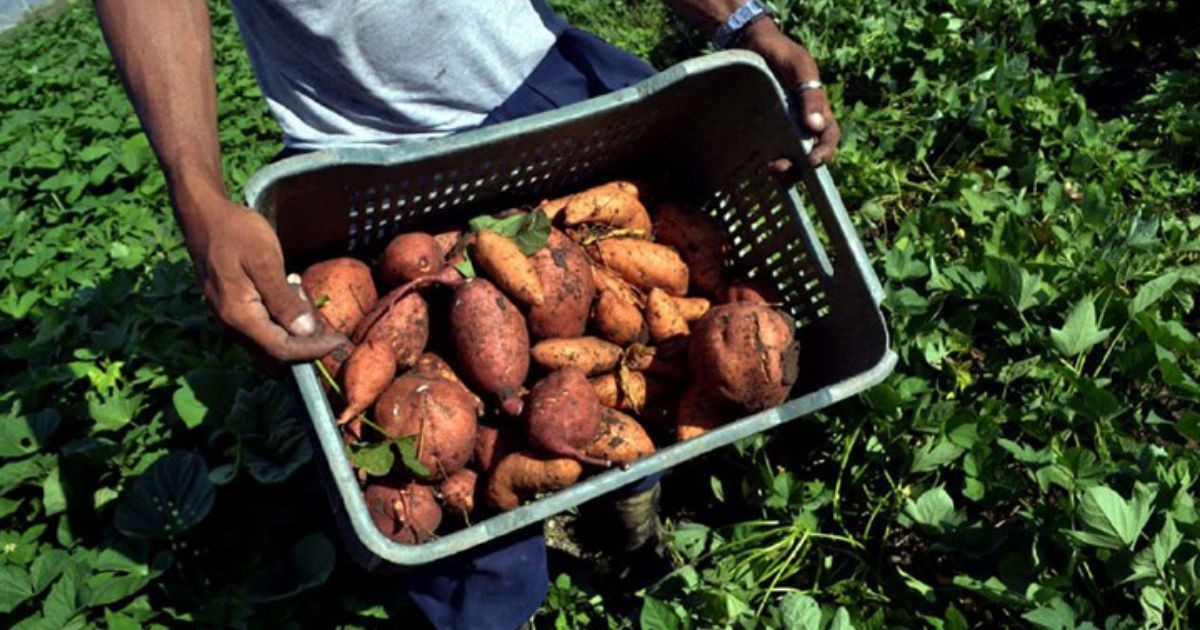
The Council of Ministers of Cuba published this Wednesday the updated text of the , a regulation that sets the rules for the wholesale and retail trade of these products on the island and covers everything from harvesting to storage and final distribution.
The revised and agreed version appeared in the , published on September 23, in compliance with the mandate contained in the Third Final Provision of Decree 161, approved on July 23, 2026, and published in Official Gazette No. 75 on September 9, 2026.
The Decree 143 was originally issued on December 30, 2025, and signed by Prime Minister Manuel Marrero Cruz. Its first publication occurred in the Official Gazette No. 33 Ordinary on April 9, 2026. The special edition published this Wednesday includes the modifications introduced by Decree 161 and spans pages two to 16 of that gazette.
According to its first article, the decree aims to "establish regulations for the wholesale and retail marketing process of agricultural and forestry products, its principles, the parties involved, their powers and obligations, as well as the infractions and the penalties to be imposed for their commission."
The regulation applies to a wide range of actors: state entities, micro, small and medium-sized state, private, and mixed enterprises, agricultural and non-agricultural cooperatives, self-employed workers, legitimate landholders, and agricultural and forestry producers.
Among its objectives are to streamline marketing for various destinations, support this process with a value chain approach, and encourage production and collection. The decree also mandates the establishment of public procurement committees for social consumption supply "with the use of tenders and the establishment of a supplier evaluation system," as well as the creation of new types of markets "that will make an impact with a new image, cleanliness, organization, and a variety of offerings and services."
In terms of safety, the standard requires "ensuring good practices to promote the management of food quality and safety, as well as the prevention and reduction of food losses and waste and the proper management of waste with a circular economy and 'One Health' approach."
All actors who market these products are required to operate through authorized tax bank accounts and to channel all collections and payments resulting from their operations through them.
Decree 143 repealed Decree 35 of 2021, which regulated agricultural marketing under a scheme of greater state centralization, and Decree 71 of 2022 concerning the decentralization of collection prices. The regulation is based on Law 148, "Law of Food Sovereignty and Food and Nutritional Security," from May 2022, and was supplemented by Resolution 16 of 2026 from the Ministry of Agriculture, which issued its implementation regulations.
The modifications introduced by the include the establishment of prices by agreement between the contracting parties and the introduction of differentiated prices for certified organic products and for those endorsed by the Participatory Agroecological Guarantee System.
Related videos:
Filed under: