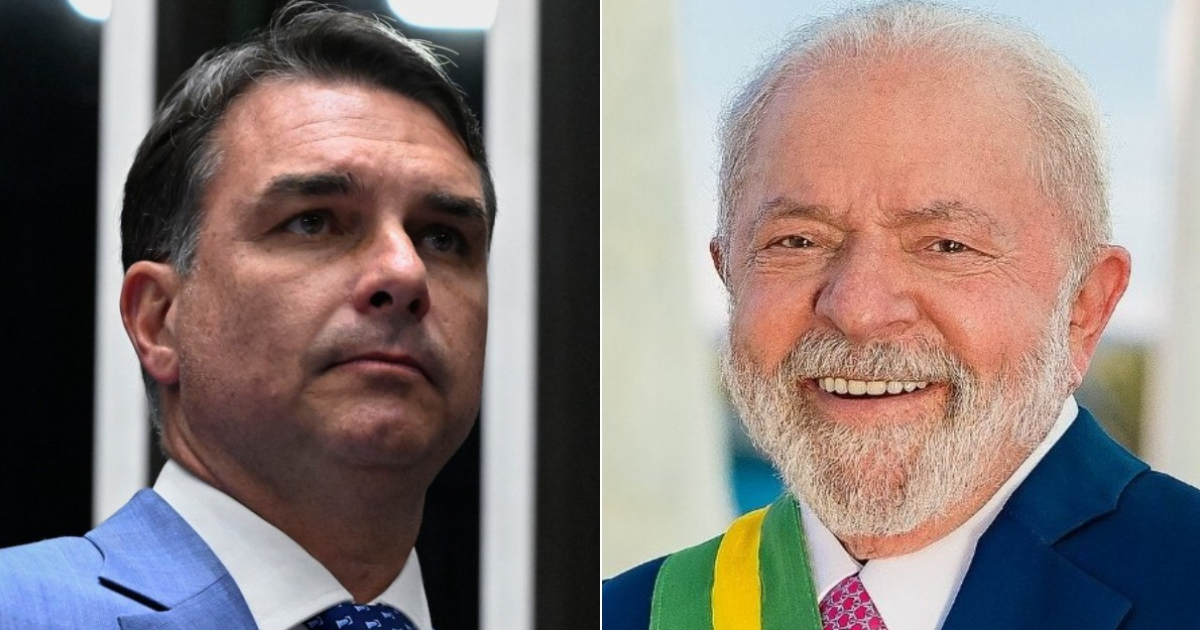
Less than two weeks before the first round of the presidential elections in Brazil, scheduled for October 4, three polling firms agree on a diagnosis that is shaking up the campaign: a technical tie between Lula and Flávio Bolsonaro, with a result that no poll dares to predict with certainty.
The polling company Quaest, in its measurement taken on September 21, gave President and reelection candidate Luiz Inácio Lula da Silva a 37% intention to vote in the first round, compared to 33% for Senator Flávio Bolsonaro of the Liberal Party.
The margin of error of two percentage points renders that difference statistically insignificant.
For a potential second round—scheduled for October 25 if no candidate achieves an absolute majority—Quaest positioned Flávio Bolsonaro at 42% and Lula at 41%, also in a technical tie.
The BTG/Nexus firm, which interviewed 2,006 people between September 18 and 20, reported similar figures: 40% for Lula and 37% for Flávio in the first round, and 46% against 45% in the second round, as noted by Bloomberg Línea.
A Datafolha survey published on September 17 also placed the president numerically ahead, although the difference remained within the margin of error.
The most concerning data for Lula's environment is the trend: according to the agency EFE, "Bolsonaro's voting intention has increased by four points while Lula's has remained stable" since the beginning of September.
In the race, there are other candidates, although at a considerable distance: psychologist and self-help author Augusto Cury stands at 6% according to Quaest, and the former governor of the state of Goiás, Ronaldo Caiado, at 4%.
8% of those surveyed identify as undecided, and 7% state that they will not vote or will cast a blank vote, making this segment a decisive factor.
Flávio's rise in the polls is partly explained by the political-judicial scandal surrounding the Banco Master case.
Its owner, Daniel Vorcaro, currently imprisoned, is linked in messages and documents to magistrates of the Federal Supreme Court, which has triggered an institutional crisis that the candidate from the Liberal Party has tried to exploit to fuel opposition to the system.
However, this strategy has been complicated by Flávio's own relationship with Vorcaro: the Federal Police is investigating him for negotiating with the banker to finance the film Dark Horse, a documentary about his father Jair Bolsonaro, for up to 24 million dollars.
Flávio denies having committed any irregularities, but the investigators are examining possible crimes of corruption and money laundering.
Lula, 80 years old, tried to regain electoral momentum by announcing a 15% increase in the benefits of the Bolsa Família program in mid-September, raising the average benefit from 675 to 777 reais.
The opposition labeled the measure as an electoral maneuver; the government argued that it is a response to the accumulated inflation.
Flávio Bolsonaro was officially announced as the PL candidate on July 25 at the Pacaembu Stadium in São Paulo, while Lula was proclaimed as the PT candidate on August 2 with the moderate Geraldo Alckmin as the vice-presidential candidate, under the slogan "Together for Brazil."
Jair Bolsonaro, father of Flávio, was sentenced to 27 years in prison for attempted coup d'état and is currently under house arrest, which prevents him from actively participating in the campaign.
In July, the polls showed Lula with a five-point lead in the second round; that margin has evaporated in just a few weeks, turning the race for the presidency of the largest nation in Latin America into an open contest, the outcome of which will depend on undecided voters and any scandals that may arise before October 4th.
Related videos:
Filed under: