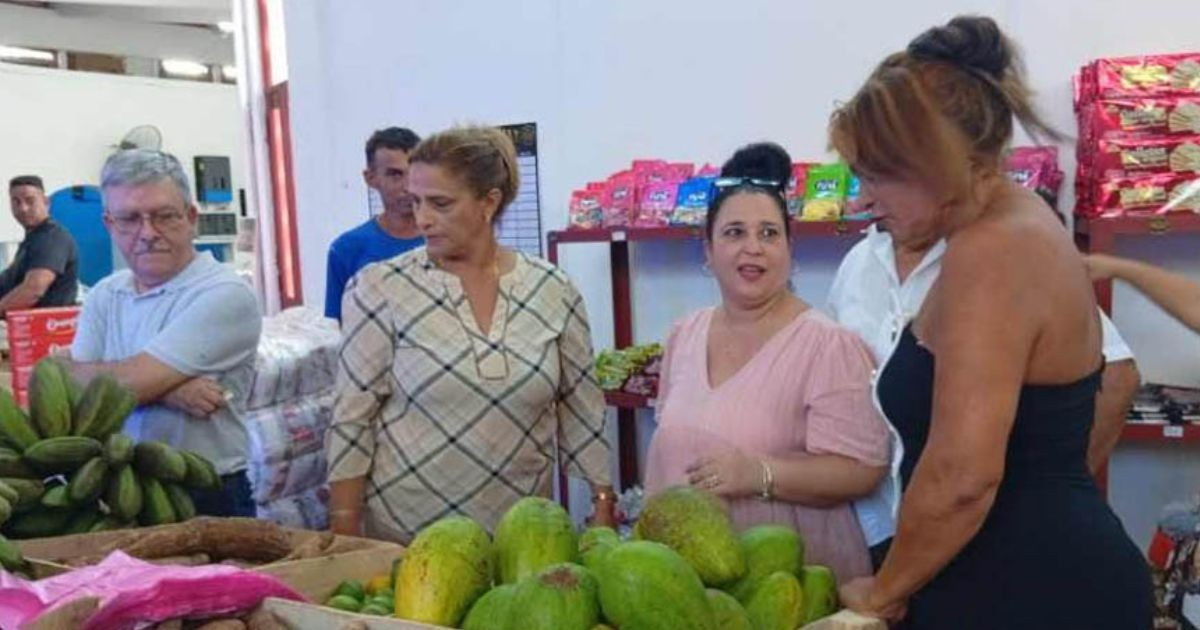
The Cuban regime inaugurated a new «neighborhood market» in Boyeros, Havana, with the promise of offering food and hygiene products at prices 10% to 15% lower than those of other establishments, at a time when difficulties in accessing basic products persist.
The establishment opened in the Reparto Sierra Maestra of the Popular Council of Nuevo Santiago, and was inaugurated by the Minister of Domestic Trade, Betsy Díaz Velázquez, as reported this Sunday by Tribuna de La Habana.
The official publication states that this mode aims to transform the network of bodegas, markets, and butcher shops and “partially address the deficit of products that were previously provided through the basic basket”.
The included foods are powdered milk, ground meat, hamburgers, chicken, sausages, eggs, vegetable oil, rice, sugar, wheat flour, coffee, grains, pasta, noodles, canned tomatoes, and instant soups.
It also includes the sale of hygiene products such as detergent, soap, toilet paper, deodorant, and toothpaste.
According to the authorities, these products should be sold with a price reduction of between 10% and 15% compared to other establishments, although the published information does not specify the exact prices of each item nor does it establish a product-by-product comparison.
The new establishment is the third of its kind opened in Boyeros. Similar markets previously began operating in Santiago de las Vegas and in the Popular Council Armada.
Michel Rodríguez Najaro, deputy director of the government’s municipal distribution program, explained that the location aims to specifically benefit communities that are far from the town center and have a significant presence of elderly individuals.
"The aim is to progressively expand the offerings and variety of products, as well as achieve more accessible prices," he stated.
The Sierra Maestra establishment could incorporate that wholesale sales model in the future. According to the authorities, the program is being extended to all provinces, with Guantánamo and Havana as the areas currently hosting the highest number of these establishments.
The market is part of the 176 economic and social measures approved in June 2026 by the Cuban authorities, a package that includes changes in state-owned enterprises, property and management, agriculture, subsidies, prices, commerce, the private sector, and foreign investment, among other areas.
Among these transformations, there was increased participation of private actors in trade, gastronomy, and services, along with a gradual decentralization of prices and new relationships between state-owned enterprises and non-state businesses.
In the case of neighborhood markets, the government offers incentives to private economic actors interested in managing or supplying these establishments.
The minister explained that they will be able to benefit from a 5% discount on the sales tax and, in certain cases, from the exemption of that tax when they engage in wholesale trading with selected entities of the Domestic Trade system.
The contracts also include the exemption from lease payments for the first two years and a priority to retain employees who were already working at the converted establishments.
The opening in Boyeros continues a process through which old warehouses, butcher shops, and other state-run establishments are being transformed into "neighborhood markets", with an increasing involvement of non-state management forms.
The Ministry of Domestic Trade also promotes the so-called wholesale markets, designed to conduct wholesale sales under conditions of supply and demand, allowing self-employed workers and other economic players to supply their businesses.
Related videos:
Filed under: