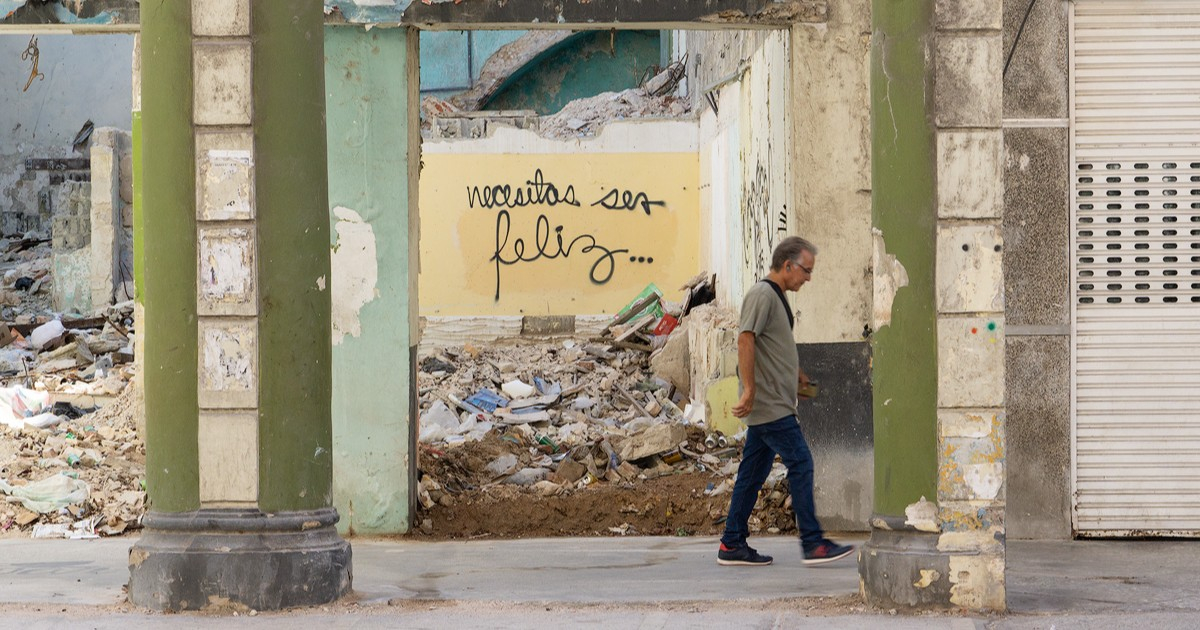
The Cuban religious sister Sor Nadieska Almeida Miguel described what she calls a "fallen hands syndrome" as the exhaustion, frustration, and resignation that, in her view, have spread among people who have been subjected for years to shortages, difficulties in accessing basic services, and a lack of prospects for change in Cuba.
The reflection was shared this Monday on Facebook by priest Alberto Reyes and in it Almeida, the superior of the Daughters of Charity in Cuba, clarified that the term does not correspond to a medical diagnosis or a study, but rather to the way in which a person described their own frustration.
“Accessing the essentials has become increasingly difficult, consuming all our energy and we are falling into a kind of resignation that is hard to accept,” wrote the religious figure.
According to what he described, someone defined that experience as "the syndrome of the fallen hands": "It doesn't refer to a physical illness; it speaks of a sort of exhaustion with reality that leads us to say: I'm giving up, I won't try anything else."
Almeida acknowledged feeling identified at certain moments with that description due to the “despair,” “frustration,” and “fatigue” accumulated after years of demanding political and social changes.
«We have been denouncing for some time and [...] we are not a priority for this government», she stated.
The religious sister placed that feeling of exhaustion amid a deterioration of living conditions that, as she reported, includes unsanitary conditions, difficulties in obtaining medication and drinking water, shortages of hygiene products, and inadequate food.
Almeida also mentioned the epidemiological situation and stated that dengue, hepatitis, and other diseases are affecting the population.
Your complaint coincides with the recent acknowledgment by the Ministry of Public Health of an increase in diarrheal diseases, hepatitis, respiratory infections, and arbovirosis, in a context characterized by problems related to environmental sanitation, water treatment, and waste collection.
The religious sister cited the Parish of San Judas Tadeo and San Nicolás de Bari, in Centro Habana, where the accumulation of garbage has caused repeated fires this year.
For Almeida, however, the issue goes beyond that specific case. "The pain continues to gain ground," he noted before describing a growing sense of powerlessness and fear among those who feel that publicly expressing their discontent may have consequences.
"Protesting is a risk, because fear embraces us, and sadly we are moving towards paralysis," he wrote, while asserting that Cubans have been living "more and more with fewer opportunities for a dignified life."
The reflection then revisits a biblical passage about Moses to suggest that those who feel exhausted need support from others to carry on.
Almeida specifically requested to support those facing desperate situations and families who cannot find alternatives to their difficulties.
In his message this Monday, Almeida once again urged his fellow citizens not to be overcome by fear and advocated that everyone should assert their rights based on their own circumstances, while calling for support for young people and those who have lost hope.
"Although we may feel powerless, let us choose what is right time and again," he concluded in a reflection that combined his criticisms of the country's situation with a religious call to restore trust and support one another.
The message maintains a critical tone that the religious figure has publicly expressed on other occasions.
In August, she stated that Cubans were "dragging their existence" and urged to not lose hope for changes in the country.
Two months prior, following the approval of the 176 economic measures announced by the authorities, she questioned whether the reforms could address the structural issues she identifies within the Cuban system and called for broader changes.
Related videos:
Filed under: