The U.S. Department of the Treasury updated on Monday three licenses that regulate operations in strategic sectors of Venezuela, including oil, gas, petrochemicals, and electricity, and kept Cuba among the countries whose actors are excluded from the transactions authorized under those provisions.
The new general licenses 46E, 48D, and 49B, issued by the Office of Foreign Assets Control (OFAC) and dated September 28, 2026, replace previous versions of the U.S. authorization regime related to Venezuela.
The General License 46E allows certain U.S. entities to engage in operations related to Venezuelan oil and petrochemical products, including activities such as exporting, re-exporting, selling, storing, marketing, purchasing, delivering, transporting, and refining.
However, the authorization does not cover transactions involving individuals located or established under the laws of Cuba, Russia, Iran, or North Korea, nor entities directly or indirectly controlled by them or connected through joint ventures.
In the case of China, the 46E imposes a restriction formulated differently, aimed at certain entities located or incorporated in Venezuela or the United States that are controlled by or participate in joint ventures with individuals located or incorporated under Chinese laws.
The measure replaces General License 46D, issued on August 27, starting this Monday.
Services and technology for the energy sector
The General License 48D has a different scope. It authorizes the supply from the United States, or by U.S. persons, of goods, technology, software, and services necessary for the exploration, development, or production of oil, gas, and petrochemical products in Venezuela.
The authorization also covers the generation, transmission, storage, and distribution of electricity.
OFAC includes within the permitted activities the processing of payments and certain transportation and logistics services, such as the chartering of vessels, marine insurance, and port services. It also encompasses the maintenance, repair, and refurbishment of equipment used in energy operations.
In this case, the license excludes transactions involving individuals located or established under the laws of Cuba, Russia, Iran, North Korea, and China, as well as certain entities controlled by them or connected through joint ventures.
Additionally, it does not authorize the creation of new joint ventures to develop those sectors or operations related to the export or reexport of diluents to Venezuela.
The 48D replaces the 48C from August 27, 2026.
New investments, but with prior authorization required
The third modification corresponds to the General License 49B, which allows for the negotiation and signing of contingent contracts for new investments in the Venezuelan oil, gas, petrochemical, and electricity industries.
The planned activities include new exploration, development, and production projects, the expansion of existing operations, and the formation of new joint ventures. Preparatory steps may also be taken, such as business, legal, technical, environmental, and safety evaluations.
This does not, however, mean an automatic authorization to carry out the investments. The license stipulates that the execution of these contracts is subject to a separate authorization from OFAC.
Cuba is also excluded in this section: the 49B excludes transactions involving individuals located in Cuba, Russia, Iran, North Korea, and China, as well as certain entities controlled by them or associated through joint ventures.
The new regulation replaces 49A, which has been in effect since March 13.
The exclusion of Cuba is not new
Although the three licenses published this Monday explicitly keep Cuba out of the operations they authorize, the exclusion of the island was not introduced now.
Previous versions of these provisions already included restrictions related to Cuba. For example, official OFAC documents corresponding to earlier versions of license 46 had already excluded transactions involving individuals located or incorporated under Cuban laws.
The same was true for the license 48: a previous version published in March had already explicitly listed Cuba among the excluded jurisdictions. OFAC also noted in August that the restrictions applied in these licenses included operations related to individuals from Cuba, Russia, Iran, North Korea, and China.
Therefore, the measures announced on September 28 do not constitute a new general prohibition on energy relations between Cuba and Venezuela. They are authorizations within the U.S. regime of sanctions against Venezuela, and Washington keeps Cuban actors outside the scope of those exceptions.
Additionally, there is a different path for certain cases related to the island: OFAC has indicated that it applies a favorable policy to evaluate requests for specific licenses aimed at the resale of Venezuelan oil for use in Cuba, provided that the conditions set by the United States are met.
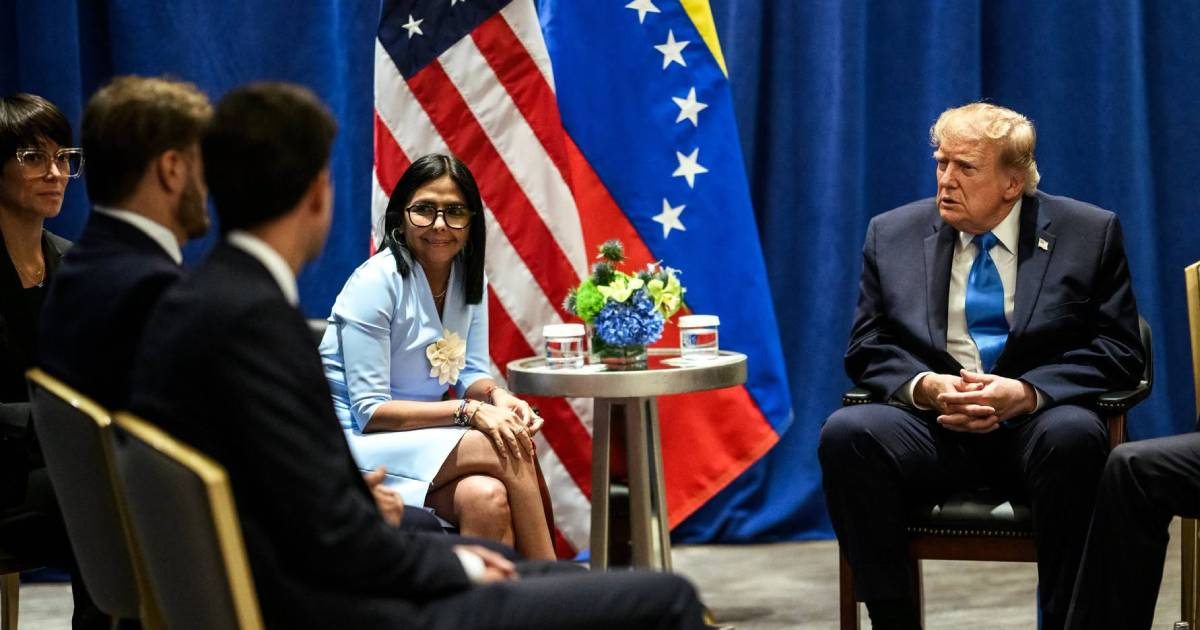
The update on the licenses comes just days after the meeting between President Donald Trump and the acting president of Venezuela, Delcy Rodríguez, held in New York on the sidelines of the UN General Assembly.
Rodríguez described the meeting as "historic" and noted that both discussed a cooperation agenda in strategic areas such as energy, mining, and security. Trump later highlighted the oil cooperation between the two countries and stated that Venezuela was generating significant revenue from the entry of American companies.
Related videos:
Filed under: