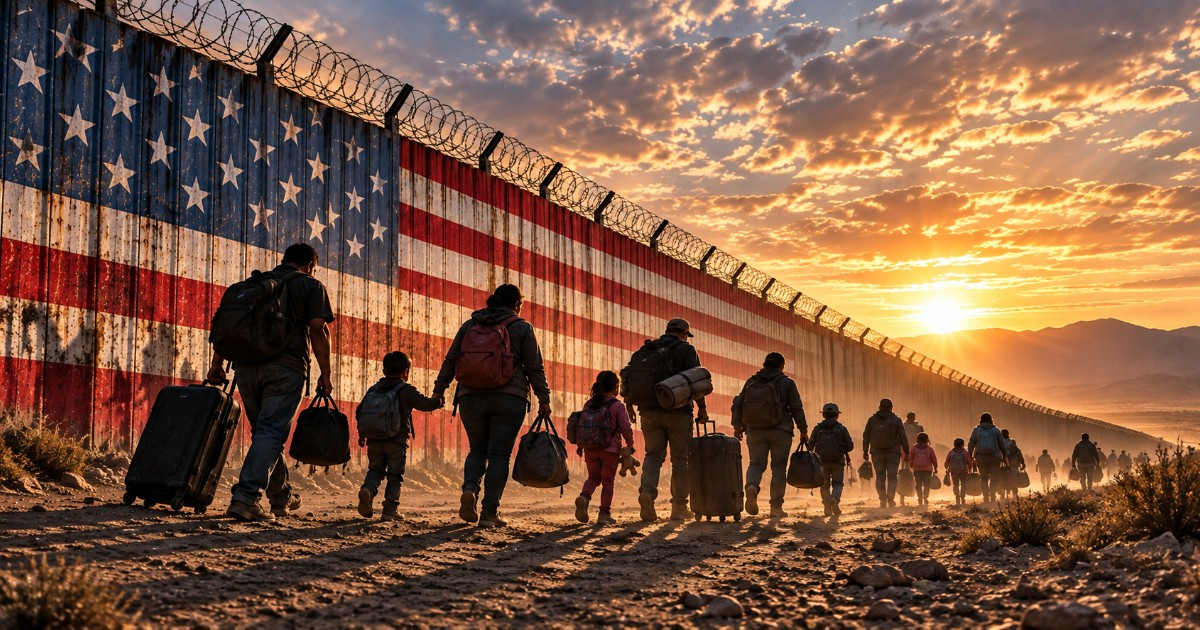
The significant increase in immigration recorded in the United States between 2021 and 2024 contributed to economic growth, boosted the gross domestic product of major metropolitan areas, and had, on net, few adverse effects on native-born workers, according to a new study presented by Brookings Papers on Economic Activity.
The research, conducted by Jennifer Hunt from Rutgers University; Pia Orrenius from the Federal Reserve Bank of Dallas; and Madeline Zavodny from the University of North Florida, analyzed the economic impact of approximately 6.5 million immigrants who arrived in the United States outside the usual legal channels between 2021 and 2024.
The results were released by Brookings Institution on September 23 and presented the following day during the fall conference of Brookings Papers on Economic Activity, a specialized publication in macroeconomics and economic policy.
"An important conclusion from our results is that the U.S. economy appears to have largely absorbed an unprecedented influx of migrants with few adverse economic effects," the authors wrote.
The post-pandemic migration increase added the equivalent of approximately 2% of the U.S. population in 2021 and raised the proportion of foreign-born residents to its highest level in over a century. New York was the primary metropolitan destination, followed by Miami, Los Angeles, Dallas-Fort Worth, Chicago, and Houston.
According to the study, the arrival of immigrants increased the average gross domestic product of the analyzed metropolitan areas by about 1.5%.
Researchers believe that one of the factors was the increase in consumption driven by the new population, and they also suggest that the work performed by the newcomers may have complemented, rather than replaced, the roles of workers born in the United States.
Noticias Telemundo highlighted this Tuesday that the increase in migration was also associated with the creation of 1.6 million jobs in the major metropolitan areas, equivalent to 18% of the positions generated between 2021 and 2024.
However, the balance was not positive across all indicators. The research estimates that the arrival of immigrants may have reduced the average salary of all workers by as much as 1.5%, partly because many of the newcomers took on lower-paying jobs.
However, among workers born in the United States, wages increased by approximately 0.9%, and the employment level remained virtually unchanged, according to the authors.
The study also detected effects on the housing market. The increased demand caused by the new population would have raised rents by 1.4% to 1.6%.
Even so, researchers calculated that the wages of tenants born in the United States grew at a higher rate, increasing by at least 1.6% once accounting for the rise in rent.
The authors warn that some of these effects coincided with an exceptional period in the U.S. economy: the early years following the pandemic were characterized by a rapid recovery, government stimulus, and low interest rates, factors that also influenced employment, wages, and housing.
Another observed element was the change in internal population movements. As the influx of immigrants to certain cities increased, the migration of people already residing in the United States to those same areas decreased, which, according to researchers, helped to distribute economic effects across different metropolitan areas.
The work also analyzed the bus program initiated by Texas and Arizona between April 2022 and June 2024.
About 125,000 immigrants accepted free transfers to Chicago, Denver, Los Angeles, New York, Philadelphia, and Washington D.C.
Venezuelans and Colombians utilized these transfers more frequently, while individuals from other nationalities tended to move to cities where communities from their countries of origin already existed. Cubans and Haitians particularly concentrated in the Miami area, according to the research.
In Denver, which received a proportionally higher number of migrants transported by bus, the study found a short-term decline in the wages of workers born in the United States, an example that the effects were not uniform across cities or labor groups.
The authors emphasize that their results describe an aggregate effect and do not imply that all cities, sectors, or workers experienced the same consequences.
Its central conclusion is that, overall, the U.S. economy absorbed the increase in immigration from 2021 to 2024 with growth in economic activity and no significant reduction in employment among native-born workers.
The results take on special significance in the context of the tightening of the immigration policy under the Trump administration and the debate on the impact of immigrant labor on the U.S. economy.
In August, a report on the economic effects of deportations and ICE operations warned that the reduction of the immigrant workforce was impacting sectors such as construction, agriculture, hospitality, and services.
That analysis cited estimates suggesting that the immigration policies implemented during 2025 would have been associated with the loss of about 668,000 jobs, including between 51,000 and 297,000 positions held by workers born in the United States.
It also gathered a Brookings study on 86 metropolitan areas that calculated that employment remained, on average, 0.73% below what was expected after waves of ICE arrests.
Another previously cited academic study found that migration operations were associated with consumption losses ranging from 3.1 billion to 14 billion dollars, primarily due to a decrease in visits to businesses among immigrant communities fearful of being detained.
Florida is among the states particularly exposed to these effects due to the importance of immigrant workers in sectors such as construction, hospitality, landscaping, and agriculture.
In the southern part of the state, the raids have also reduced foot traffic to businesses in areas with a strong presence of foreign population, according to the cited studies.
Related videos:
Filed under: