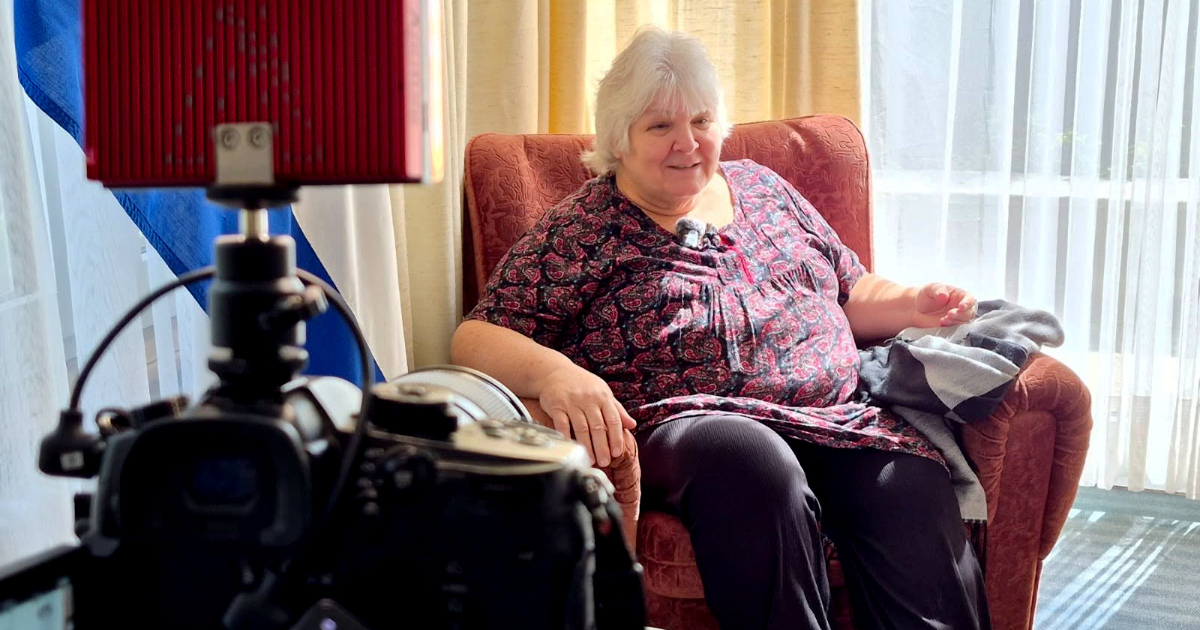
Aleida Guevara March, daughter of Ernesto "Che" Guevara and a well-known advocate of the Cuban regime, defended the Cuban political and economic model this Wednesday in Brussels and rejected the notion that external actors seek to dictate the direction of the island during an event held in the European Parliament against U.S. sanctions.
The intervention took place at the event “Cuba yes, blockade no”, organized by the group The Left in the European Parliament.
The Embassy of Cuba in Belgium and at the European Union and highlighted its participation as a denunciation of the impact of U.S. sanctions on the Cuban population.
"No one else has the right to tell us how we should live", Guevara pointed out, who also stated that the "true freedom" of a people lies in being able to decide what they want to do with their lives.
The Cuban doctor focused a significant part of her speech on holding the United States sanctions responsible for the economic deterioration of the island.
In another post from the diplomatic mission, it stated that and reiterated that the U.S. embargo is one of the main causes of the country's difficulties.
We have been facing economic difficulties for many years, the blockade has been with us practically since the beginning of the Revolution. The economic situation we are experiencing is the harshest, he expressed.
The Embassy also from its intervention focused on the impact of U.S. sanctions and the call for greater international solidarity with Havana.
Guevara went beyond defending the foreign policy of the Cuban government and directly championed the socialist system in place on the island.
According to Diario de Cuba, he described living in a “privilege” socialist society and acknowledged that the authorities make mistakes, although he maintained that these failures become experiences that allow for correction and the pursuit of new solutions.
The daughter of Che also dismissed the idea that overcoming the current crisis involves replacing the political and economic model.
Perfecting our system and moving forward, was stated during the meeting.
His defense of the right of Cubans to decide their future took place in the very European Parliament that had approved a resolution critical of the authorities in Havana just two weeks earlier.
On September 17th, the European Parliament demanded the immediate release of Félix and Saylí Navarro and called for measures against those responsible for human rights violations in Cuba.
Guevara did not reference those political prisoners or the demands of the European Parliament during his speech. His discourse focused on U.S. sanctions, the defense of socialism, and the preservation of the Cuban regime to maintain its current model.
Prensa Latina reported that the event this Wednesday was the first of two days of debates on U.S. sanctions.
Among the participants were the MEPs Marc Botenga, Giorgos Georgiou, and Ilaria Salis, who criticized Washington's policy towards Cuba and called for a more active response from the European Union.
The presence of Guevara in Brussels had been announced a day earlier, when it was reported that she arrived in the Belgian capital to participate in the forum.
The event "Cuba Yes, Blockade No" will continue this Thursday, October 1, with the participation of other political and academic figures critical of U.S. sanctions.
Related videos:
Filed under: