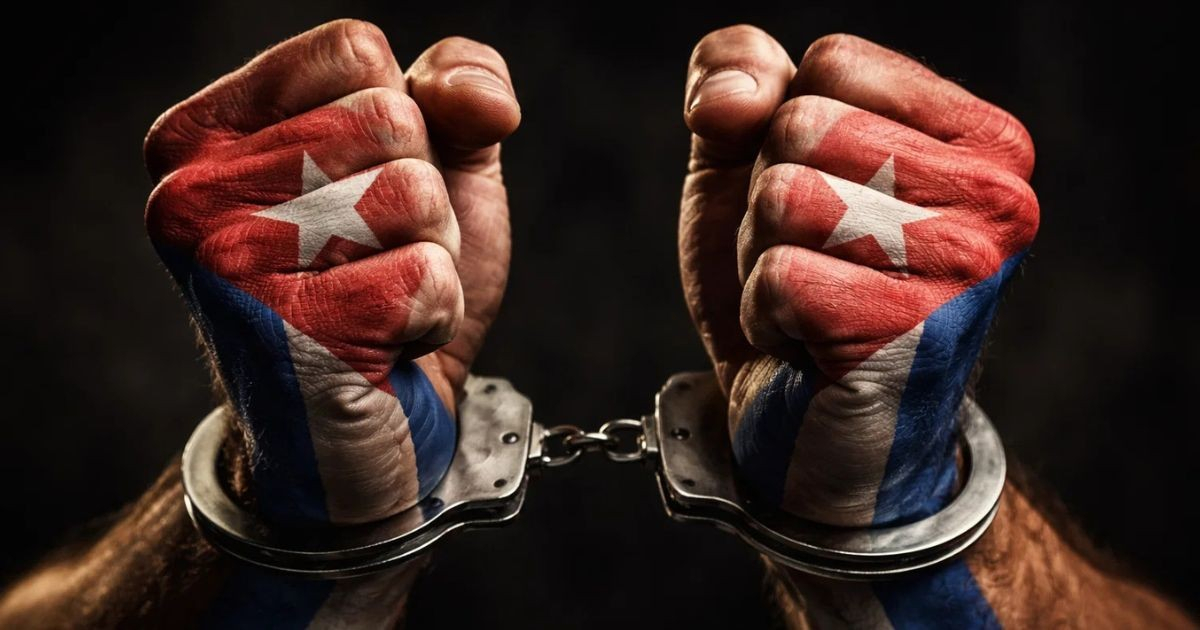
Cuba closed September marked by the deterioration of basic services, an increase in citizen insecurity, and heightened repressive activity: 11 people died in violent incidents, acts of repression increased by 36%, and the country experienced a nationwide blackout, the recovery of which took about 32 hours.
According to the report for September from the Cuban Observatory of Conflicts (OCC), published this Thursday, 663 protests, complaints, and critical expressions were documented during the month amid what is described as a crisis affecting electricity, water, health, food, and other essential services simultaneously.
The OCC also uses a historical series comparable to previous months. Under this method, it recorded 1,147 entries in September, compared to 1,185 in August.
Within that series, repressive acts increased from 100 to 136, a rise of 36%, while the so-called "challenges to the police state" decreased from 291 to 155, a drop of 46.74%.
The contrast was also reflected in the streets. The observatory recorded 26 in-person protests during September, compared to 33 in August and 72 in July.
The OCC itself warns that the reduction in protests should not necessarily be interpreted as a decrease in discontent and suggests, among the possible explanations, the exhaustion of a population forced to invest increasing amounts of time and resources in obtaining food, medicine, transportation, and water.
The decrease in street protests thus coincided with a rise in repressive acts in the comparable series.
Among the episodes recorded by the observatory are the detentions of activists, surveillance of independent journalists, and police actions against individuals who participated in public protests.
One of those expressions of discontent occurred in September in Estrada Palma, in Santa Clara, where residents took to the streets and blocked several roads amid prolonged issues with electricity supply. The reports circulated at that time also noted a police presence in the area.
Electricity was precisely one of the central elements of the month. On September 18, the eighth total disconnection of the National Electroenergetic System registered in 2026 occurred, which, according to the OCC, left about nine million people without power.
The interconnection of all the provinces was not completed until 32 hours later. The Electric Union then reported that, although the transmission system had been re-energized, there were still severe disruptions in service.
The operations chief of the cargo office of the state-owned company explained that the recovery had to be carried out sequentially and pointed out the lack of fuel for thermoelectric generation as one of the challenges in the process.
The electrical collapse had consequences beyond just a lack of power. The OCC documented impacts on water pumping, communications, and sanitation services.
In La Pastorita, Marianao, for example, it gathered reports from neighbors who have been without regular water supply since January, while a resident stated that she paid about 60,000 pesos for a private water truck.
At the same time, citizen insecurity increased by 18.64% in the comparable historical series of the observatory, rising from 177 incidents in August to 210 in September. Using the methodology applied for the detailed monthly record, the OCC counted 157 events within this category.
The report also highlights 11 deaths resulting from violent incidents during September. Among the mentioned cases are the murders of Yusinay Capetillo Martínez, 41 years old, who was killed in Havana during a blackout, and Didiannys Barreto Palmero, 34 years old, who was murdered in Ceballos, Ciego de Ávila. Both cases have been confirmed by independent observatories as femicides.
Violence against women has been particularly significant throughout 2026. By the end of September, independent observers had verified 55 femicides in Cuba, a figure that already surpassed the 49 documented in all of 2025. Furthermore, they were also investigating other potential cases.
The OCC report itself distinguishes between its two accounting methods: the detailed record for September, which compiles 663 events and records 91 repressive acts, and the comparable historical series, used to measure monthly evolution and where the 136 repressive acts are listed. This methodological difference explains why both figures appear in the same report.
Related videos:
Filed under: