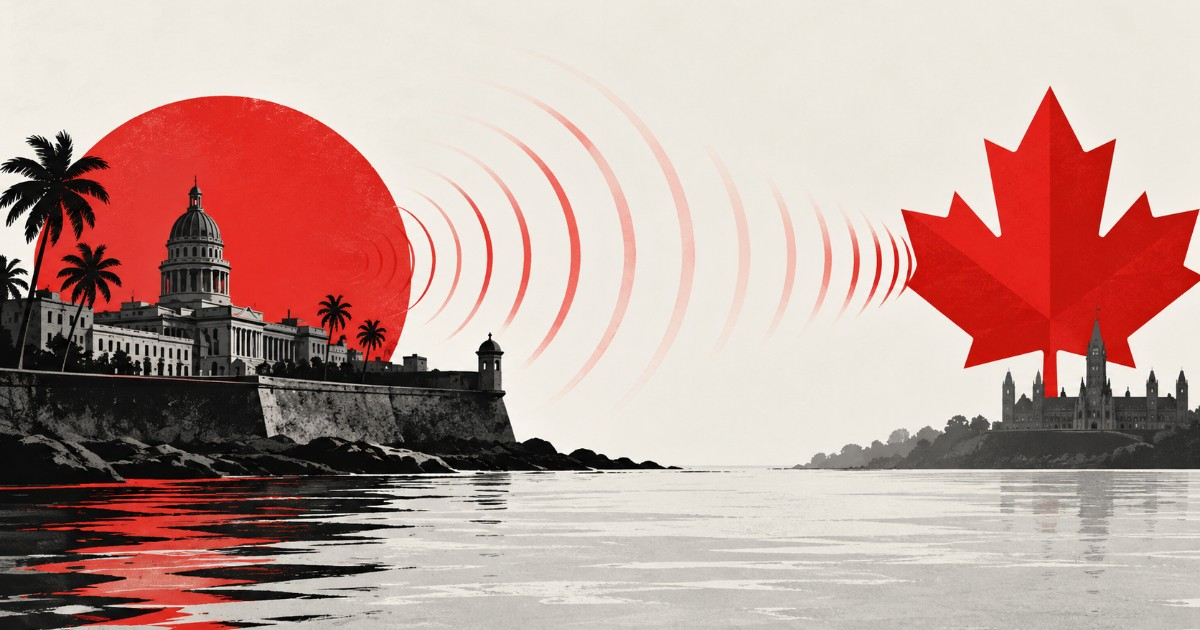
The Prime Minister of Canada, Mark Carney, acknowledged that "new information" has come to light regarding the health incidents known as the Havana Syndrome and stated that he will await a detailed report before deciding what response his government will take.
Carney made the statements on September 29 during a press conference in Vancouver broadcast in full by CPAC, after being asked about the recent revelations regarding the activities of Canadian officials in Cuba and new data emerging in the United States.
"I hope to be informed about the situation. New information has come to light, and I will make a decision afterward," replied the Canadian Prime Minister.
Carney added that the State has an obligation to protect Canadian diplomats working abroad, but did not announce the reopening of the investigation nor confirmed the establishment of a new independent inquiry.
What changed after the latest revelations?
The statement represents Carney's first public pronouncement after new information once again put under scrutiny what transpired in Havana between 2016 and 2018.
CiberCuba reported on September 27 about an investigation by The Globe and Mail based on two anonymous sources, which stated that Canadian diplomatic personnel had gathered information of interest for the United States during those years.
One source stated that an official linked to the Global Security Reporting Program (GSRP) of the Canadian embassy occasionally shared information with U.S. personnel in Havana. Another claimed that communication equipment introduced by the United States under diplomatic cover would have been used from facilities associated with Canada.
The Canadian government has rejected the characterization of the GSRP as a spying program and maintains that its officials are conducting diplomatic activities within the appropriate legal framework.
The official report from Canada reached a different conclusion
So far, the official position of Ottawa is still based on the report published by Global Affairs Canada in August 2024 regarding the so-called "unexplained health incidents" that occurred in Cuba.
After years of medical, environmental, and safety investigations, the Canadian interdepartmental group stated that it found no evidence to attribute the symptoms to a malicious act by a foreign government and also did not identify a common cause that would explain all the cases.
The report, however, made it clear that the Canadian government does not question the authenticity of the symptoms experienced by diplomats and their families, some of whom have reported neurological issues, dizziness, headaches, cognitive difficulties, and other aftereffects for years.
The file was subsequently transferred to the occupational health sector within Global Affairs Canada.
A program situated in a "gray area"
Another official document adds context to the new revelations.
In 2023, the National Security and Intelligence Review Agency (NSIRA), an independent intelligence oversight body in Canada, reviewed the operation of the GSRP.
NSIRA described the program as situated in a “gray area” between traditional diplomatic functions and information gathering linked to intelligence priorities.
The agency also noted that some officials lacked sufficient legal guidance regarding the limits of their activities and recommended strengthening security protocols, oversight, and legal training.
That report did not determine that Canadian officials were engaged in espionage in Cuba, nor did it establish any link between the GSRP and the health issues experienced by the diplomats.
The device that investigates the United States
The questions to Carney also come after investigative journalism in the United States revealed another element that has reignited the debate over the origin of the incidents.
CBS News reported in January that U.S. authorities acquired a portable device capable of emitting pulsed radiofrequency energy at the end of 2024, and the Pentagon has been testing it to determine whether such technology could replicate some of the effects described by affected individuals.
The device would have components of Russian origin, according to sources cited by the network. However, there is currently no official public determination that proves this device was used in Havana, that it caused the symptoms of the diplomats, or that a specific government ordered the incidents.
CiberCuba has followed those investigations and reported in July the first compensation payments made in the United States under the HAVANA Act for affected personnel.
Carney has not yet decided whether there will be a new investigation
The latest revelations have prompted former Canadian intelligence and security officials, cited by The Globe and Mail, to call for an independent review of the case and the government's actions concerning the affected diplomats.
Among the publicly raised possibilities is that the matter be reviewed by the National Security and Intelligence Committee of Parliamentarians, whose members have access to classified information.
For now, the government has not committed to that option.
The Canadian Minister of Foreign Affairs, Anita Anand, requested senior officials in her department to review the file, but her office indicated that this request did not equate to formally ordering the reopening of the 2024 conclusions.
The position of Carney now puts the case at a different stage: the prime minister has acknowledged that there is new information that deserves to be examined and has stated that he will make a decision after receiving a detailed explanation.
This does not yet mean that Canada has changed its conclusions about the origin of the Havana Syndrome, but it does indicate that the issue is back on the table nearly a decade after the first symptoms were reported by American and Canadian diplomats in Cuba.
Related videos:
Filed under: