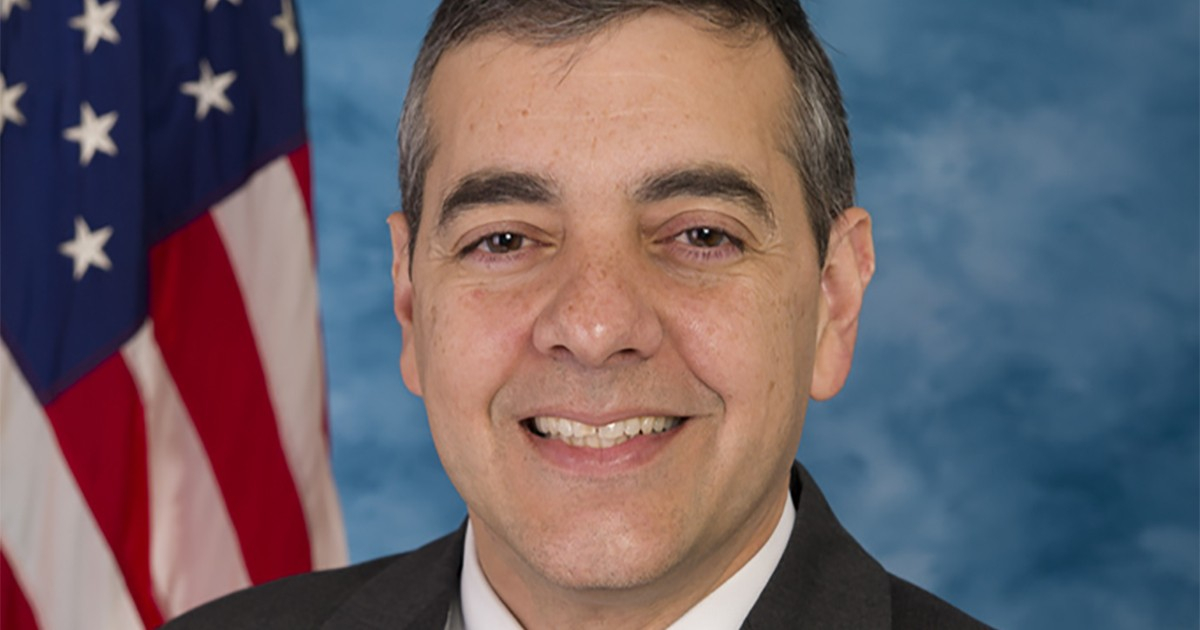
The former Cuban-American congressman David Rivera received a sentence of 10 years in federal prison on Friday after being found guilty of acting as an unregistered agent for the Venezuelan regime, as part of a secret lobbying campaign worth 50 million dollars in favor of Caracas during Donald Trump's first term.
The federal judge Melissa Damian left no room for doubt about her assessment of the case: "It was a matter of greed and betrayal," she stated while delivering her ruling in Miami, noting that the evidence overwhelmingly demonstrated that Rivera acted as an agent of the Venezuelan government.
Before learning her sentence, Rivera made an emotional plea for mercy. In tears, she claimed to have received a cancer diagnosis with a statistical life expectancy of between seven and ten years. "I don't deserve to die in prison," she pleaded before the judge. "My children don’t deserve to be left without a father," she added while crying.
Damian did not back down. With a room full of Cuban Americans, the judge posed a direct question to him: "This room is filled with Cuban Americans who understand what it means to try to escape from a communist regime. How do you think they would feel if you had received that money from the Cuban regime?"
Rivera, 61 years old, had been found guilty in May by a federal jury on all counts: conspiracy to violate the Foreign Agents Registration Act (FARA), money laundering, and four counts of transactions involving property derived from criminal activity.
According to the prosecutor's office, Rivera was recruited by the then Venezuelan chancellor Delcy Rodríguez —now the acting president of Venezuela following the capture of Nicolás Maduro— to use his Republican contacts to get the first Trump administration to lift the sanctions against Caracas.
To hide the scheme, Rivera and her co-defendant, the political consultant Esther Nuhfer, created an encrypted chat group called "MIA" along with the Venezuelan media mogul Raúl Gorrín.
Participants used code names: they referred to Maduro as "the bus driver"; to representative Pete Sessions as "Hat"; to Rodríguez as "the lady in red"; to the payments as "The Light"; and to Secretary of State Marco Rubio—an old friend and former housemate of Rivera in Tallahassee—they nicknamed "Miss Clairol," a play on his last name in Spanish.
The Assistant U.S. Attorney Roger Cruz was emphatic in requesting a severe sentence: "The United States and the public were the true victims of this fraud. He abused his position of trust and betrayed it consistently and repeatedly."
The defense argued that Rivera had no legal obligation to register under FARA, since the three-month contract with PDV USA—PDVSA’s U.S. subsidiary—aimed to attract ExxonMobil back to Venezuela, a business activity that is generally exempt from that regulation.
"David Rivera does not deserve to die in prison for failing to file the FARA registration," stated defense attorney Ed Shohat.
The case also revealed the personal use of funds: Rivera allocated approximately 600,000 dollars from the contract to finance his unsuccessful campaign for the Florida state legislature in 2018 and for personal expenses, while Nuhfer spent about 455,000 dollars on the purchase of a residence in Key Colony Beach. Nuhfer was sentenced to five years in prison last August.
The political paradox of the case did not go unnoticed: Rivera, the son of Cuban exiles and who presented himself for decades as a staunch opponent of the communist regimes in Latin America, ultimately found himself condemned for serving Chavismo.
Rubio testified during the seven-week trial that he was unaware of his friend's connections to Caracas and that he felt betrayed.
Rivera's lawyers plan to appeal the sentence and in June requested a presidential pardon. The former congressman also faces additional federal charges in Washington in a related foreign lobbying case, with a hearing scheduled for October 26.
Related videos:
Filed under: