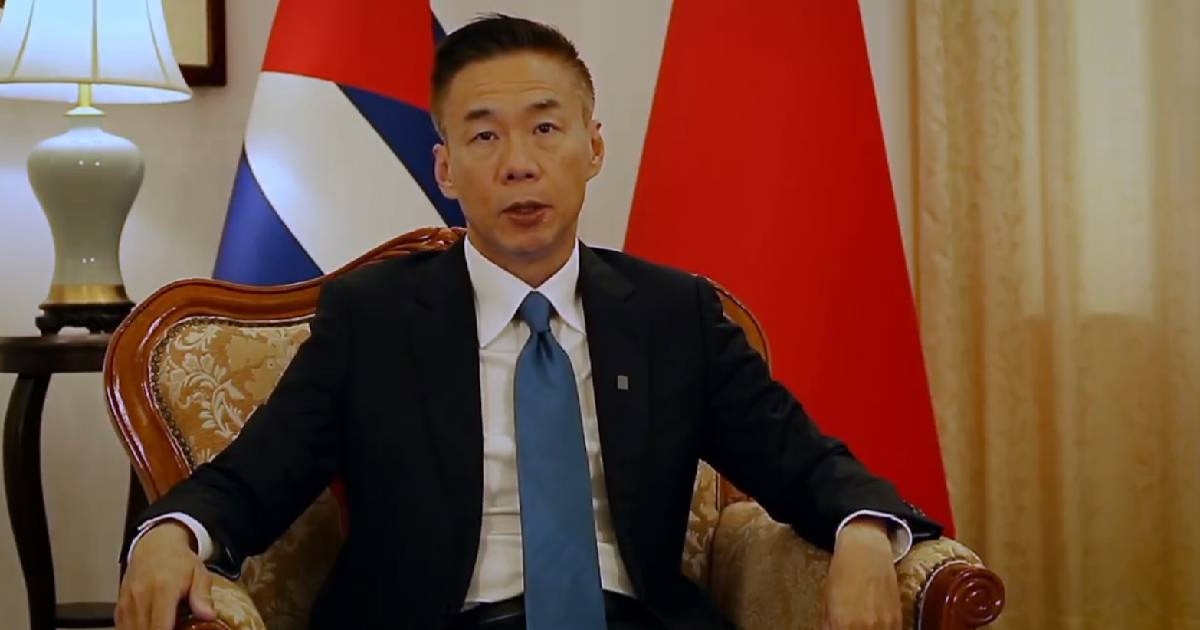
The Chinese ambassador to Cuba, Hua Xin, defended this week in the official portal Cubadebate the role of the market in the economic development of his country, while also announcing new solar projects for the island, which is experiencing a deep energy crisis.
The statements were made on the podcast "Is This the Idea" from Cubadebate, aired on Tuesday, and were reported by the agency EFE and analyzed by The Rio Times.
The diplomat assured that China "will not stand idly by in the face of the difficulties faced by the Cuban people" and reviewed the main energy cooperation projects between the two countries.
In terms of solar energy, it was explained that in 2025, 35 megawatts of photovoltaic parks with Chinese assistance were connected to the National Electric System (SEN). By October, the Cuban government expects to complete an additional 85 megawatts distributed across 15 parks.
The diplomat added that the first batch of materials for a 200-megawatt photovoltaic energy generation and storage project has already arrived in Cuba.
China also made two donations of 5,000 domestic solar systems each, installed in polyclinics, nursing homes, and social centers across the country.
However, the most striking aspect of the interview was the ambassador's explanation of the foundations of Chinese economic development.
Hua noted that one of the pillars is to "allow the market to play a decisive role" in the allocation of resources and to "fully respect the initiative of the people."
The contrast with the Cuban economic model is evident. While Havana's main international ally advocates for the role of the market and the initiative of the populace, the Cuban government keeps 79 economic activities under state control or restriction.
Moreover, the leader Miguel Díaz-Canel has warned that the private sector "cannot become a space for illegal activities, tax evasion, speculation, corruption, or hoarding."
The statements come amid an electrical crisis that has caused the SEN to record eight total disconnections between January and September. On several occasions, the deficits exceeded 2,000 megawatts, and many regions have experienced blackouts lasting over 24 continuous hours.
Photovoltaic projects contribute generation during hours of solar availability, but they do not independently resolve the nighttime deficit or the deterioration of thermal plants.
In Artemisa, making use of all the production from its solar parks only managed to reduce the daily blackout from 22 to 18 hours.
The ambassador also reiterated Beijing's position regarding the U.S. sanctions against Cuba. He stated that China opposes these measures and called on Washington to "immediately cease all hostile actions and interference against Cuba."
Bilateral cooperation also includes an emergency aid of 80 million dollars approved by President Xi Jinping in January, along with the provision of 60,000 tons of rice.
As Cuba faces the deterioration of its energy system, Beijing continues to provide resources and technology to support part of the island's electrical infrastructure.
Related videos:
Filed under: