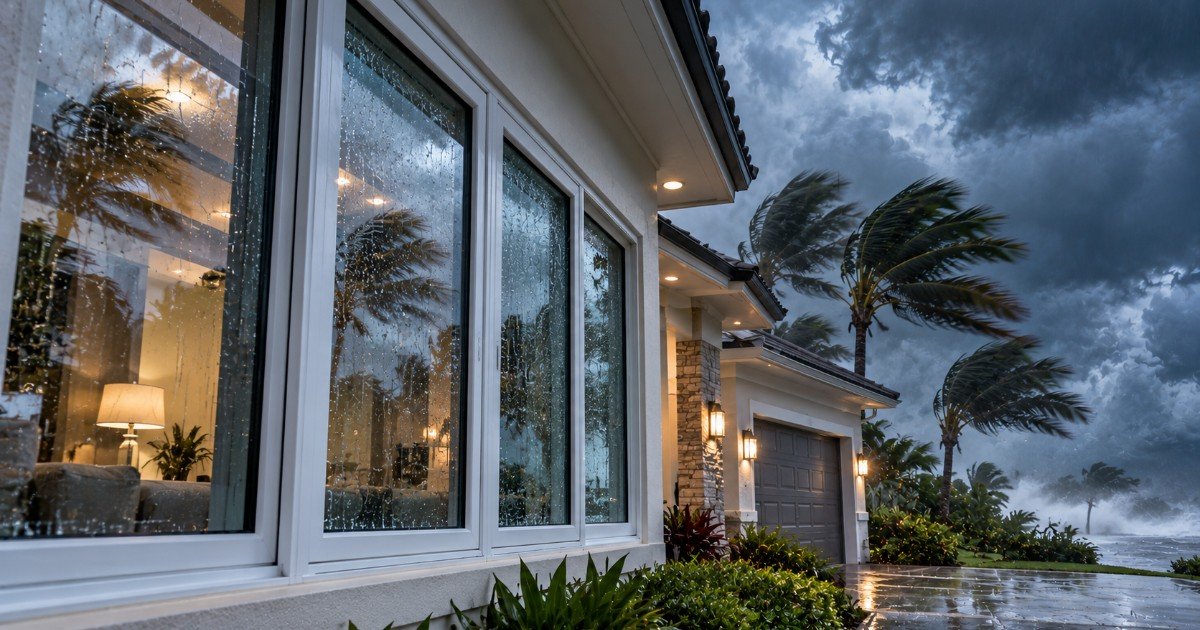
Homeowners in Florida once again have the opportunity to receive up to $10,000 from the state to strengthen their homes against hurricanes, including work on windows, doors, roofs, and other vulnerable points.
The My Safe Florida Home program, managed by the Florida Department of Financial Services, is currently accepting applications and provides free inspections and grants for certain wind mitigation improvements.
Assistance is not provided automatically nor is it available for any type of housing. The owner must meet a series of requirements, undergo an inspection by the program itself, and receive authorization before beginning work.
The information and access to the application process are available on the official My Safe Florida Home site.
Who can apply for assistance?
To initially access the program, the home must be a primary residence occupied by its owner, built on-site, and have the corresponding Florida homestead exemption.
The current rules allow participation for certain independent single-family homes and attached residential properties that meet the program's criteria.
Mobile or prefabricated homes, vacation properties, second residences, and properties used for rental do not qualify through this pathway.
Additionally, to later receive a mitigation grant, the housing must meet additional requirements.
According to the official eligibility rules, the property must have an insured value of 700,000 dollars or less and must have been built before January 1, 2008.
The owner must also have received an initial inspection from My Safe Florida Home within the 24 months prior to the grant application.
Up to 10,000 dollars, but not everyone receives the same assistance
The program currently includes two main types of grants.
The first is the so-called Matching Grant. In this case, Florida contributes 2 dollars for every dollar paid by the owner.
This means that the state can reimburse up to two-thirds of the cost of the improvements, with a state maximum of $10,000.
For example, if an eligible work costs $15,000, the owner could later receive $10,000 and assume the remaining $5,000.
If the project costs 9,000 dollars, the maximum reimbursement would be approximately 6,000 dollars.
In this arrangement, the owner must first pay for the work and then submit a reimbursement request along with the paid invoice.
The amounts and examples can be found in the official My Safe Florida Home grant information.
Special assistance for low-income homeowners
The situation is different for households that qualify as low-income.
These owners can receive up to $10,000 without having to contribute one-third of the cost or front the entire amount for the work.
In these cases, the program covers the actual cost of eligible improvements up to the maximum available limit, always subject to budget appropriations and the availability of funds.
Applications are classified into groups based on age, household size, and income.
Homeowners aged 60 and over with low incomes receive the highest priority, followed by other low-income households, those over 60 with moderate incomes, and finally other homeowners with moderate incomes.
People whose income exceeds the moderate income limit may fall into Group 5. That group may be able to access an inspection if funds are available, but currently is not eligible to receive the grant.
What improvements does the program cover?
My Safe Florida Home does not function as a general grant for remodeling a house.
Only the improvements that are expressly recommended in the initial inspection report are financed.
Currently, there are four main categories of eligible jobs.
The first is the protection of openings, which includes impact-resistant windows, doors, garage doors, and skylights designed to withstand debris driven by strong winds.
Work aimed at reinforcing the connection between the roof and the walls can also be financed through clips or anchoring systems.
Another category allows for improving the attachment of the roof covering through additional nail systems or structural reinforcements.
Finally, the program includes the installation of a secondary barrier against water entry, intended to reduce interior damage if a hurricane rips away part of the exterior covering.
The complete list of eligible jobs can be found in the official program FAQs.
The initial inspection is key
The process begins by creating an account on the official portal and completing a prioritization questionnaire.
The system assigns the owner to a group based on their circumstances and, if they meet the conditions, allows them to request a free wind mitigation inspection.
An authorized inspector assesses the property and determines what specific improvements could enhance its resistance to a hurricane.
Only after receiving that report can the owner begin the grant application phase.
An especially important point is that work should not begin before receiving approval for the grant.
The program itself warns that projects carried out before that authorization may be excluded from reimbursement.
The owner selects the contractor
My Safe Florida Home no longer maintains a mandatory list of licensed contractors.
The owner can choose the company that will carry out the work, but must verify that the contractor has an active licensed certification registered with the Florida Department of Business and Professional Regulation.
During the application, it will be necessary to provide the name and license number of the contractor.
The state program is not responsible for the quality of the work or for the economic agreements between the owner and the selected company.
For that reason, it is advisable to compare budgets and verify the license before signing a contract or handing over any money.
A final inspection before receiving the money
Once the improvements are completed, the house must undergo a second inspection.
The inspector will verify that the initially recommended work has indeed been completed.
Afterward, the owner can submit the corresponding disbursement or reimbursement request.
In the regular mode, you must demonstrate that the invoice has been fully paid.
Low-income beneficiaries follow a different system and do not need to demonstrate that they have covered the full cost of the project upfront.
Can you lower the home insurance?
One of the objectives of the program is that the improvements can also be translated into discounts on homeowners insurance.
However, completing the works does not guarantee a concrete reduction in the premium.
The owner must submit the final inspection report to their insurance company and request a review of the discounts applicable based on the improvements made and the policy purchased.
The cost of homeowners' insurance continues to be a major concern for many homeowners in South Florida, although recently some insurance companies have started to lower their rates.
CiberCuba reported this week that several insurers have approved or announced premium reductions in Miami-Dade, Broward, and Palm Beach, although these discounts depend on each company, property, and policy.
What to do to apply for the $10,000
The first step is to visit MySafeFLHome.com and create an account in the participant portal.
Next, you need to complete the prioritization questionnaire, wait for the assignment of the corresponding group, and request the initial inspection if the system enables that option.
If the report recommends improvements and the owner meets the economic and housing requirements, they will be able to proceed with the grant application.
Only after receiving approval should they hire and carry out the work.
The program reminds that both inspections and grants depend on the funds approved by the Florida Legislature and their availability at the time each application is processed.
For this reason, having the portal open does not guarantee receiving the $10,000, but it does allow eligible homeowners to begin the process of strengthening their homes before future hurricanes.
Related videos:
Filed under: