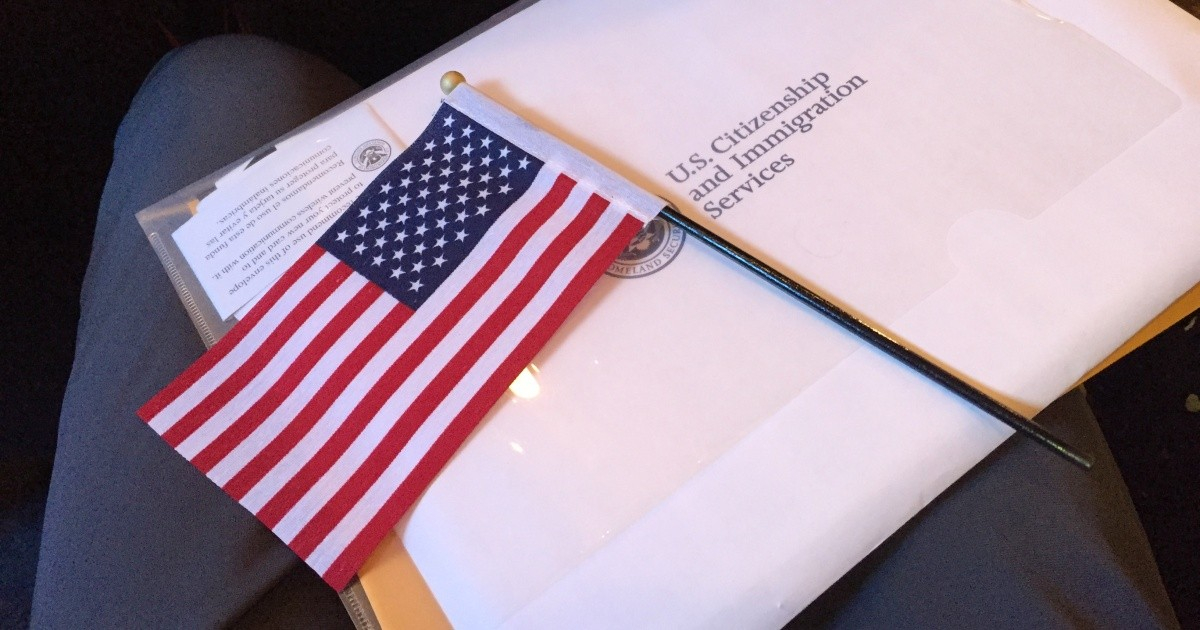
The United States Department of Justice (DOJ) announced this Monday that it has filed lawsuits to revoke U.S. citizenship from 40 naturalized individuals, including two Cubans, in the largest denaturalization offensive announced to date by the current administration of Donald Trump.
The actions were filed in various federal courts between August 21 and October 2, 2026. The DOJ argues that the defendants obtained citizenship illegally or by concealing relevant information and making false statements during their naturalization processes.
The two Cubans included are Javier Marrero Pando, 60 years old and a resident of Athens, Georgia, and Lázaro Eduardo Trujillo Vitón, 40 years old, whose case was presented in the District of Columbia.
The case of Marrero Pando is related to a conviction for aggravated sodomy. According to the Department of Justice, in June 2022 he was found guilty of that crime against a man with special needs and received a life sentence, with the penalty suspended except for 15 years in prison.
During that criminal process, he admitted that in May 2020 he forced the victim to engage in sexual acts against her will. However, when he was interviewed for his naturalization in October of that same year, he stated under oath that he had never committed a crime for which he had not been arrested, according to the lawsuit.
The government presented three arguments against him to request the revocation of his citizenship: illegal acquisition of naturalization, lack of the requirement of good moral character, and false statements during the process.
In the case of Trujillo Vitón, the DOJ claims that he concealed his involvement in a conspiracy to defraud the healthcare system and submit fraudulent claims to Medicare during his naturalization process, for which he was subsequently convicted.
According to the lawsuit, the conduct began before he obtained citizenship and continued during the naturalization process. The government argues that he deliberately concealed those facts and provided false statements that would have affected his eligibility to become a U.S. citizen.
Among the 40 cases is also Johyce Martínez, 52 years old and originally from Venezuela. Authorities state that he entered the United States in 2006 using a fraudulent Cuban birth certificate, subsequently obtained permanent residency through the Cuban Adjustment Act, and maintained that identity when he became a naturalized citizen in 2013.
The announcement delves into a campaign of denaturalization that the Trump administration has intensified during 2026. NBC News had reported that authorities were looking to identify between 100 and 200 potential cases monthly, a figure significantly higher than the usual levels of previous years.
The cases against Marrero Pando and Trujillo Vitón are not the first to involve Cubans. In June, the DOJ filed actions against two other Cuban women linked to fraud cases. That same year, a federal court revoked the citizenship of Mirelys Cabrera Díaz, who was convicted of Medicare fraud.
"The announcement today represents the largest denaturalization effort in modern history," said Attorney General Todd Blanche, adding that the Department of Justice will continue to use this procedure against individuals who, according to the government, concealed information that would have prevented their naturalization.
U.S. legislation allows for the revocation of naturalization if a court determines that it was obtained illegally, through the concealment of a material fact or a deliberate false statement. The filing of a lawsuit does not, by itself, imply the loss of citizenship.
If the courts ultimately order denaturalization, those affected would lose their U.S. citizenship and, depending on their immigration status and the circumstances under which they previously obtained residency, they could be subject to subsequent immigration proceedings, including deportation.
The Department of Justice emphasized that the claims included in the lawsuits are allegations and that there has not yet been a determination of civil liability in these proceedings.
Este caso forma parte de un panorama migratorio en constante cambio. Sigue todas las novedades sobre leyes, procesos y decisiones que afectan a la comunidad latina en
Related videos:
Filed under: