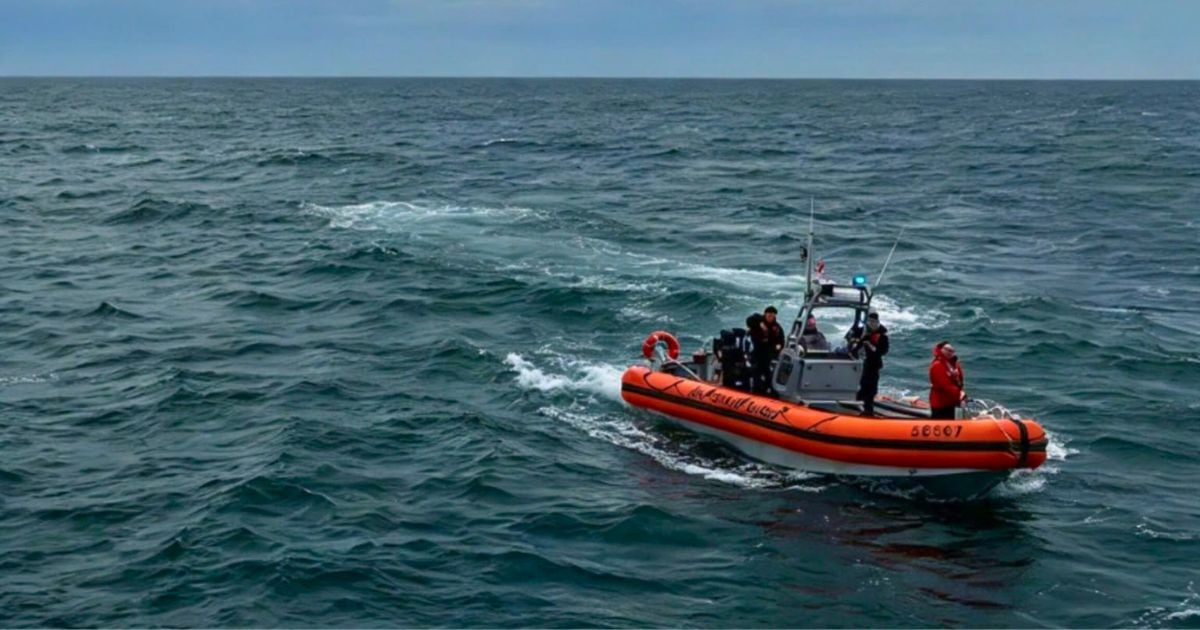
The U.S. Coast Guard suspended on Sunday the search for the six occupants of the missing medical transport aircraft between Bermuda and Boston, after approximately 66 hours of operation and after finding wreckage of the aircraft about 20 miles south of Nantucket, Massachusetts.
The aircraft, a Gulfstream G100 with Canadian registration C-GRJP, was operated by Latitude Air Ambulance, a company specializing in medical evacuations. On board were four Canadians and two citizens of Bermuda: four crew members, one patient, and a family member accompanying them, as confirmed by the company itself and reported by Infobae.
The flight departed from L.F. Wade International Airport in Bermuda on Friday at 11:41 PM local time, heading to Logan International Airport in Boston, where it was scheduled to land at 1:30 AM on Saturday.
Less than two hours after takeoff, records from the FlightAware platform detected that the aircraft descended abruptly from about 7,000 meters in altitude to 3,300 meters in a matter of minutes, after which it disappeared from radar. Around 2:00 a.m., the FAA notified the Coast Guard that contact with the aircraft had been lost.
Mary Schiavo, former Inspector General of the U.S. Department of Transportation and aviation law expert, provided a technical analysis of the incident: "Something went wrong with that severe drop, and they flew into a major storm. It's a terrible place to lose instruments and fly blind." She added that in those conditions, "it's very easy to become disoriented and not know if you're turning, ascending, descending, etc.," she expands in the report.
The Coast Guard deployed HC-144 Ocean Sentry and HC-130 Hercules aircraft, an MH-60 Jayhawk helicopter, a rescue patrol boat, and the fast response vessel William Sparling.
The Coast Guard and the agencies that collaborated in the operation covered 4,445 miles during approximately 66 hours of searching before suspending their efforts on Sunday.
After the suspension of operations, Latitude Air Ambulance reported that the four members of its team, the patient, and the accompanying family member are presumed deceased. The company stated that it will continue to cooperate with authorities in the recovery efforts and in the investigation of the accident.
The incident adds to other recent aviation accidents. In early September, a Piper PA-34 Seneca plane with four people on board —a couple of elderly individuals and their two grandchildren— disappeared en route from the Bahamas to Miami with no survivors found.
Related videos:
Filed under: