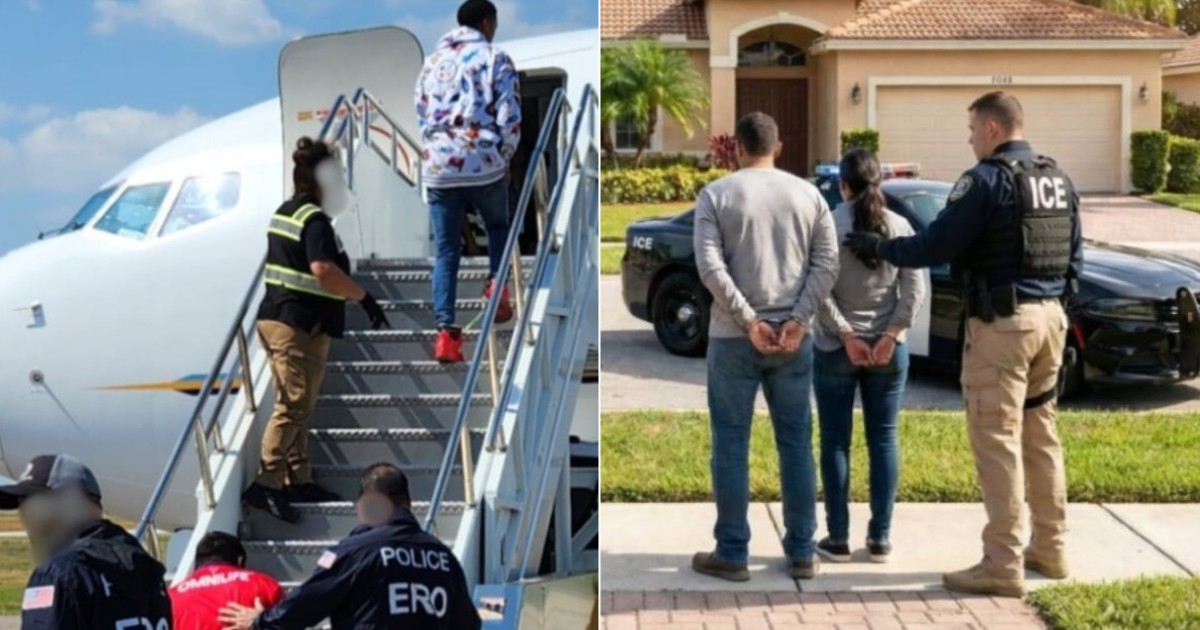
The Board of Immigration Appeals (BIA) in the United States issued a binding precedent decision confirming the Department of Homeland Security's (DHS) right to fine any immigrant who accepts voluntary departure and fails to leave the country within the specified timeframe.
The resolution, known as Matter of R-P-L-, 29 I&N Dec. 859, was signed on August 28, 2026, and published as a binding precedent throughout the U.S. immigration system.
The case that prompted the decision involves a citizen of India who was granted voluntary departure in 2003 — reinstated by the BIA itself in 2004 for an additional 30 days — and never left the country. More than two decades later, DHS notified him of the intention to impose a fine and levied a penalty of $3,000, which the BIA upheld in its ruling.
The panel, composed of judges Volkert (rapporteur), Chaban, and Terrien, established five rules that are now law for all similar cases.
Esta decisión de la BIA puede afectar a muchos cubanos con casos de inmigración abiertos. Sigue de cerca las novedades sobre cortes, multas y procedimientos migratorios en nuestra sección de
First, the notice of sanctions is valid even if it is written only in English: the law does not require translating immigration documents into the immigrant's native language.
Secondly, notifying the registered lawyer is equivalent to notifying the immigrant themselves, even if the lawyer has not personally explained the content of the order to them.
Third, it is not necessary for the violation to be intentional in order to impose the fine: the law does not require proof that the immigrant acted knowingly.
Fourth, having other pending immigration applications—such as an approved family petition—does not automatically suspend the departure deadline nor serve as an excuse to delay leaving.
Fifth, the BIA cannot grant any form of relief on grounds of equity.
The legal basis is section 240B(d) of the Immigration and Nationality Act (INA), which establishes a fine ranging from $1,000 to $5,000 and imposes a 10-year ineligibility for adjustment of status, cancellation of removal, change of status, registration, and any future voluntary departure.
This decision has direct consequences for Cubans in the United States. More and more Cubans detained by ICE or with an I-220A form are facing pressure to accept voluntary departure, and the ruling makes it clear that if they accept it and then do not leave on time, DHS can fine them and bar their reentry to the country for up to a decade.
Immigration lawyers have repeatedly warned about this risk. Attorney Liudmila Marcelo pointed out that accepting voluntary departure to Cuba and then applying for asylum creates an insurmountable legal contradiction: "If I request voluntary departure to Cuba, how can I later claim that I am afraid to return to Cuba? These are the consequences of voluntary departure."
Additionally, Cuba has rejected the entry of Cubans who accepted voluntary departure from the United States, leaving them in legal limbo with no clear solution.
It is important to distinguish this fine from the hefty sanctions outlined in section 274D of the INA—up to $998 per day for failing to depart with a final deportation order—which a federal judge in Boston temporarily suspended at the end of September. The fine for noncompliance with voluntary departure, confirmed by the BIA, was not affected by that suspension and remains fully in effect.
Related videos:
Filed under: