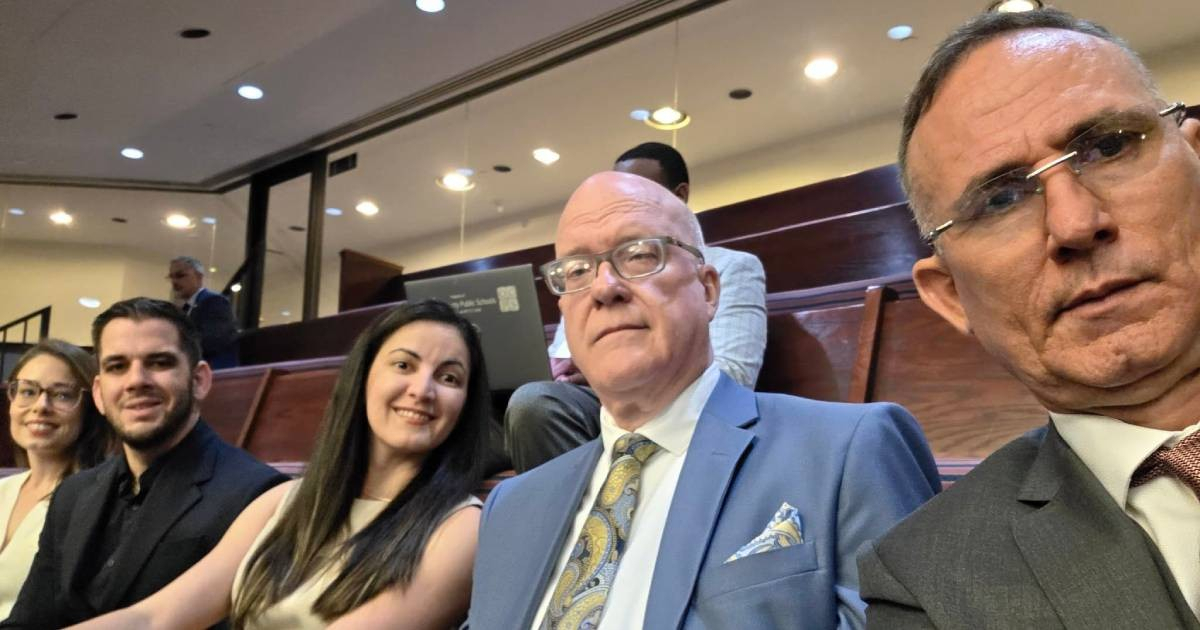
Recently, while conversing with Orlando Gutiérrez Boronat, the general secretary of the Assembly of the Cuban Resistance, about the necessary conditions to make our struggle for freedom truly effective, I came to a conclusion once again: if everyone understood the importance of coordination, interdependence, and cooperation as this veteran fighter does, we would have made much greater progress.
We have fought for decades with extraordinary courage, sacrifice, and heroism. Many compatriots have suffered imprisonment, torture, exile, persecution, and death. However, more than 34 years after the disappearance of the Soviet Union, the Cuban regime remains in power. This compels us to acknowledge an uncomfortable truth: it is not enough to be brave, to be convinced of the righteousness of our cause, or to work tirelessly. We need greater collective intelligence, better methods, more effective coordination, and a constant ability to evaluate and correct our mistakes. I am astonished to see those who today hold a meeting of "enthusiasts" and at the end say: we will meet again in a month. What leader who does not communicate constantly with their team, at any hour, can truly be effective?
To explain what we need, we will use the human body as an example. A healthy, vigorous, resilient, agile body capable of great efforts and achieving significant goals requires much more than strong muscles. It needs physical and mental health, training, nourishment, balance, and the harmonious functioning of its eleven fundamental systems: nervous, circulatory, respiratory, endocrine, digestive, urinary, lymphatic, immune, integumentary, muscular, skeletal, and reproductive.
The top ten allow the organism to function. The reproducer, while not essential for individual survival, ensures the continuity of our species. In our comparison, it represents the need to constantly incorporate new members, develop leaders, and secure generational change.
No system, no matter how important, can replace the others. They all depend on each other.
Let’s imagine that the nervous system, with the brain in charge, declares: I am the one who thinks and coordinates; everyone else is of lesser importance. Or that the circulatory system, led by the heart, believes that, because it pumps the blood that carries oxygen and nutrients, it is the most important and everyone must unconditionally subordinate to it.
What if the respiratory system claims that, as there is no life without oxygen, it can operate independently of the others? Or what if the urinary system, responsible for eliminating waste and regulating the balance of fluids and substances, decides that its work is enough to ensure that the organism can run, jump, work, and achieve great goals? What nonsense!
Without bones to support the body, muscles to move it, organs to produce energy, defenses to protect it, and a nervous system to coordinate its functions, none would achieve much.
The exact same thing happens with the organizations and leaders that we work with for the democratization of Cuba.
We can perform extraordinary work in a specific field, and yet contribute far less than we could to the common goal if we do not coordinate properly with those who carry out other equally necessary tasks. Let's consider the comparisons.
The nervous system represents direction, collective intelligence, and the ability to coordinate. The brain receives information, processes it, and directs responses, while an extensive nervous network communicates between different parts of the body. Our struggle needs clear and shared objectives, collective direction, well-defined individual responsibilities, and effective decision-making mechanisms. However, leading does not mean monopolizing everything: just as in an organism, many responses must occur timely without waiting for instructions for every movement.
The circulatory system represents the communication and transportation of information and resources. Just as blood reaches the organs and tissues, reliable information, knowledge, solidarity, and available means must reach those who need them. An organization that is disconnected from others is like an extremity that receives insufficient blood circulation: it ends up weakening until it can no longer function.
The respiratory system represents our enduring connection with Cuban society. The body takes in oxygen and expels carbon dioxide. Similarly, a civic structure needs to listen to the concerns, needs, and aspirations of the citizens, understand the national reality, and maintain contact with workers, farmers, students, professionals, artists, religious leaders, and communities. Without that living connection to the people, no leadership can fully understand the situation of the country.
The endocrine system represents the principles, values, and mechanisms that regulate collective behavior. Its hormones help coordinate processes, adaptation, and balance. In an organization, ethics, trust, shared commitments, voluntary discipline, and a culture of cooperation play a regulatory role. Without these elements, even a seemingly strong structure can disintegrate due to rivalries, distrust, or personal ambitions.
The digestive system represents the ability to transform resources into results. It is not enough to just consume food; one must process it, absorb its nutrients, and utilize them. Similarly, it is not sufficient to acquire money, equipment, knowledge, or support. These resources must be managed responsibly and turned into training, assistance, documentation of abuses, community work, and tangible outcomes.
The urinary system represents evaluation, error correction, and constant adjustment. The kidneys remove certain waste products and regulate internal balance. A healthy organization must identify and rectify bad practices, ineffective procedures, misinformation, administrative irregularities, and behaviors that are incompatible with its principles. A structure that is never examined or fails to acknowledge its mistakes ends up accumulating them.
The lymphatic and immune systems represent the protection of our members. The body needs defenses against diseases as well as mechanisms for monitoring and response. An effective structure requires intelligence and counterintelligence, training, legal assistance, rigorous documentation of human rights violations, protection of personal information, support for the families of prisoners, and care for those who suffer persecution. All of this must be carried out through responsible, humanitarian procedures that respect individual rights.
The integumentary system, primarily composed of the skin and its associated structures, represents our visible connection to the environment. It provides protection, allows for the perception of stimuli, and helps regulate temperature. Its organizational equivalent would be public communication, transparency, credibility, and the ability to perceive social reactions. The public image must align with actual behavior: it is of little value to proclaim principles that we do not then practice.
The muscular system represents the capacity to act. Muscles allow us to walk, run, lift weights, and perform countless tasks. In our comparison, they represent the people and organizations that turn agreements into effective work: activists, volunteers, community representatives, and specialized teams. A leadership that formulates magnificent plans but lacks the ability to execute them resembles a brain that thinks of running while the body remains motionless.
The skeletal system represents the organizational structure. Bones provide support, protect organs, and, along with muscles, enable movement. We need national, provincial, municipal, and community structures with clear functions, mechanisms for cooperation, democratic rules, and defined responsibilities. Strength does not lie in absolute centralization, but in combining unity of purpose, responsible autonomy, and coordination.
The reproductive system represents the multiplication of participants and the formation of new generations. Every organization needs to rejuvenate, voluntarily incorporate new members, develop skills, and cultivate leaders capable of taking on responsibilities. If a structure relies eternally on the same people, it ages, weakens, and jeopardizes its continuity.
These eleven comparisons allow us to understand why I find the way we are still fighting for Cuba's freedom insufficient. We continue to make progress, but too slowly. Cuba is dying, and we urgently need to save it. There are leaders and organizations that focus all their attention on their own activities, convinced that this is the decisive effort. Some undertake admirable tasks, but they spend very little time building trust, listening to others, coordinating actions, sharing experiences, or creating lasting and effective mechanisms for cooperation.
It's as if the heart demands that the lungs, muscles, and brain submit to its own needs, forgetting that it itself relies on all of them.
This is where the win-win principle, the fourth of the seven habits outlined by Stephen R. Covey in his work The 7 Habits of Highly Effective People, is particularly useful.
True cooperation should not be understood as a competition where one organization gains prominence at the expense of another. We must strive for agreements that strengthen all parties and, above all, benefit the common cause. We should also understand that listening to, understanding, and respecting others does not weaken leadership; it makes it smarter and more effective.
A truly effective structure therefore requires twelve inseparable conditions: shared objectives; collective leadership with individual responsibilities; territorial presence and knowledge of the communities; participation from all social sectors; coordination among independent organizations; swift and reliable communication; rigorous documentation and public communication; protection of participants; ongoing training; well-managed human, material, and financial resources; national and international relations; and constant evaluation and correction.
Likewise, we must understand that work within Cuba and that of the exile community are complementary. Organizations and citizens on the island, the diaspora, human rights defenders, independent journalists, legal experts, international institutions, and solidarity networks possess different capabilities that can mutually enrich each other, while always preserving their autonomy.
But there is another fundamental issue: it is not enough to imagine how things work within Cuba. We must know, study, and constantly evaluate them. We need to distinguish our aspirations from measurable outcomes. We must understand where we are making progress, where we are going backward, which processes work, which fail, and what we need to modify. We should measure our effectiveness by achieved objectives, real participation, organizational capacity, and verifiable results, not merely by speeches delivered, statements published, or meetings held.
The accumulated suffering, the sacrifice of political prisoners, and the heroism of so many compatriots deserve more than admiration: they deserve a continuous effort to enhance our capabilities.
Unity does not mean that we all think alike, belong to a single organization, or must subordinate ourselves to a leader. It means understanding that our differences can coexist with a shared purpose and that none of our abilities, in isolation, can replace the others.
A powerful heart cannot propel a body without muscles. A brilliant mind cannot move it forward without bones. Healthy lungs do not guarantee life if circulation fails. And a courageous organization cannot achieve its greatest goals if it lacks coordination, structure, resources, trust, and the capacity to learn.
Until we conquer freedom and can build a democratic Cuba, we must accept that our task remains unfinished. Not because there has been a lack of commitment, sacrifice, or courage, but because we still need to transform that immense human potential into a more cohesive, participatory, intelligent, dynamic, and effective civic force.
We don't need eleven systems competing to prove which one is the most important.
We need a single great civic body, plural, vigorous, and supportive, in which each system fulfills its function correctly, respects others, and contributes to the functioning of the whole.
Because the strength of an organism lies not in the superiority of one of its organs, but in the harmony with which all work together.
And this is also one of the great lessons we must learn to make our aspiration for a free, democratic, prosperous Cuba that respects human dignity a reality.
Related videos:
Filed under:
Opinion article: Las declaraciones y opiniones expresadas en este artículo son de exclusiva responsabilidad de su autor y no representan necesariamente el punto de vista de CiberCuba.