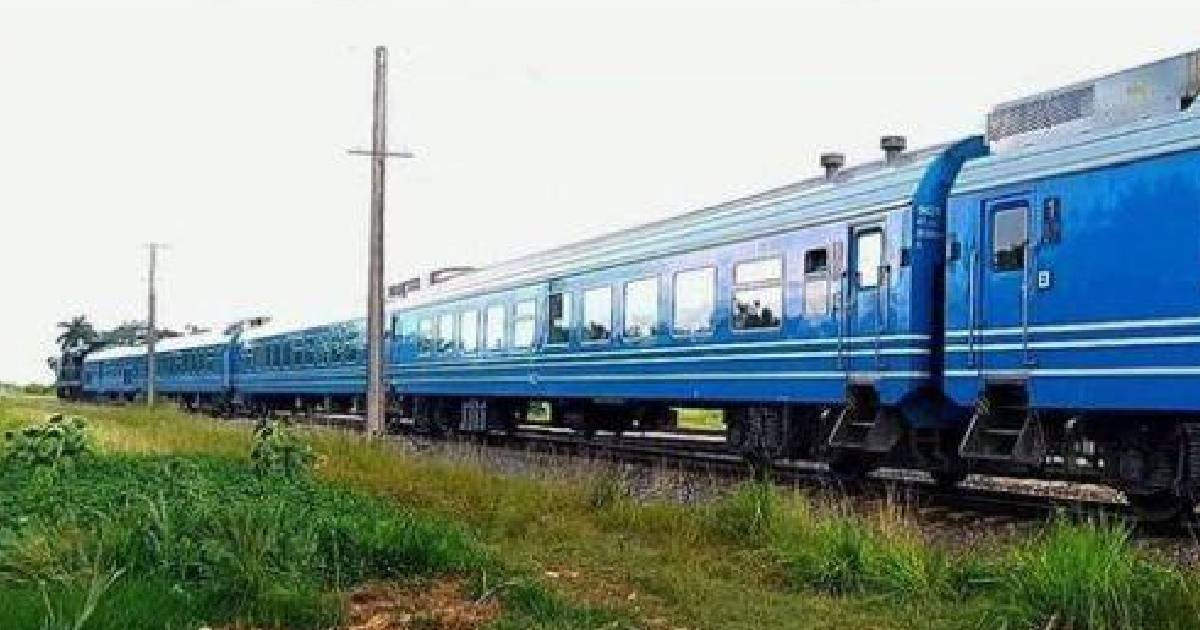
The Guantánamo railway raised the fares for its local and interprovincial routes starting September 28, while its management acknowledges that prices may change again due to fuel costs.
Pedro Durruthy Martínez, Deputy Director of the Cuban Railways Union in Guantánamo, attributed the adjustment to the cost of acquiring fuel and lubricants in foreign currency, reported the official newspaper Venceremos on Thursday.
The executive warned that the rates could vary if the company were to purchase fuel through the private sector. The financing mechanism used is the so-called "select operational card," which allows certain units to buy fuel in foreign currency. Its equivalent in Cuban pesos is included in the ticket price.
Among the interprovincial routes, the Guantánamo-Holguín journey costs 800 pesos (CUP) and operates on Tuesdays and Saturdays. The trip to Santiago de Cuba has a fare of 600 CUP, with departures on Mondays and Fridays.
In local services, trains to Caimanera and Boquerón have two daily departures, costing 40 and 70 CUP, respectively. Routes to Honduras have also been introduced, with two daily frequencies at 100 CUP, and to Cuneira, at 150 CUP.
The Guantánamo-La Luisa railbus runs twice a day and charges 100 CUP, while the urban service to 17 Sur costs 30 CUP. Students and seniors over 65 enjoy a 50% discount, provided they present their identification card.
The national rail service does not experience increases, but maintains a frequency of operation every 16 days. Four departures have been announced for October, two of which are extraordinary. The company will also not offer express trains.
As an alternative, the transport of accompanied cargo of up to six tons will be made available at a price of 13,906 CUP per ton, which includes fare for the companion. Requests must be submitted to the National Route Trains branch located in Pedro Agustín Pérez square.
In July, the monthly operations of national trains dropped by 74%, from 62 services to just 16, with only 12 of the 34 necessary locomotives operational.
In August, the Ministry of Transport itself admitted that even the minimum frequencies could not be guaranteed due to a lack of diesel.
In September, authorities in the easternmost of the Cuban provinces acknowledged that the territory had gone days without receiving state fuel, with over 140 tons of rice and 51 tons of beans stranded at the port of Santiago de Cuba unable to be transported.
The new train fares add to a series of changes in the ticket prices for various train services in the country. The Morón-Camagüey train resumed operations with tickets costing 1,500 CUP, which generated significant public backlash. Meanwhile, the Las Tunas-Camagüey route returned to a price of 600 CUP with three weekly services.
All these figures carry more weight when compared to the national minimum wage of 3,210 CUP, which has been in effect since July 1.
Related videos:
Filed under: