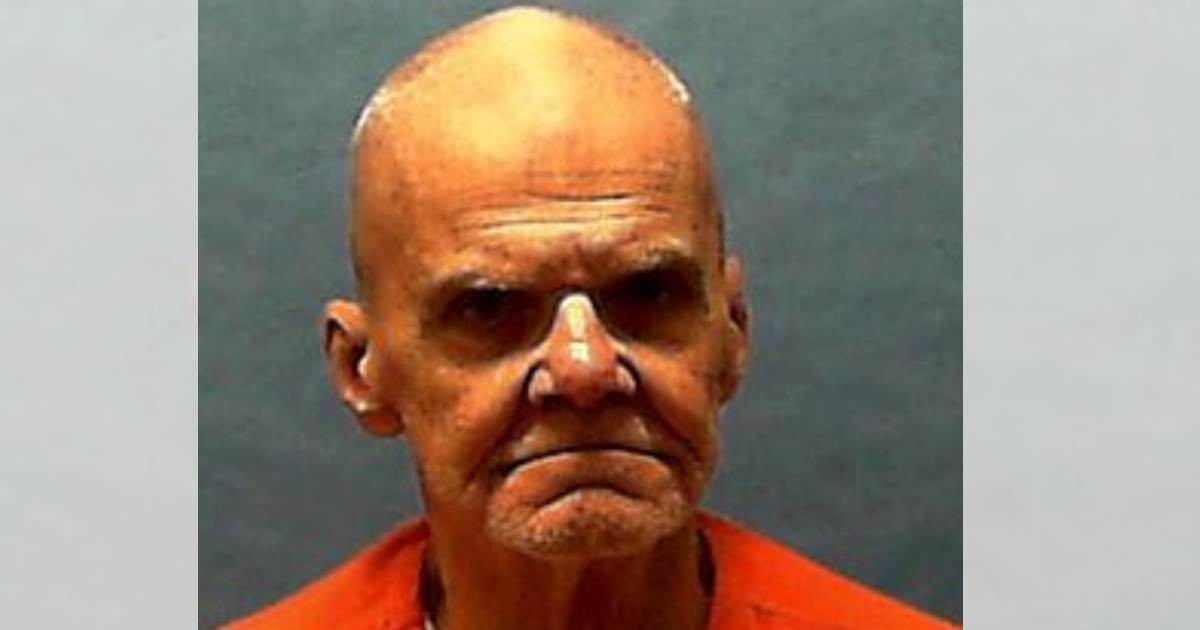
The governor of Florida, Ron DeSantis, withdrew the execution order for William Lee Thompson, 74, on Thursday through a letter addressed to the warden of the Florida State Prison without providing any public reason.
The decision, , came days before Thompson was scheduled to be executed next Tuesday, October 13.
In the letter addressed to the warden Randall Polk, in Raiford, DeSantis succinctly wrote: "I hereby withdraw the execution order that I signed on September 11, 2026, to carry out the sentence of William Lee Thompson." No explanation accompanied that statement.
This is the first time DeSantis has canceled an execution order since he intensified the use of the death penalty in Florida starting in 2025, the year the state executed 19 people, the highest annual number since the reinstatement of the death penalty in 1976. As of 2026, Florida had recorded 16 executions before this date.
Thompson's lawyers had argued in emergency filings that their client suffers from dementia and does not rationally understand either his sentencing or the imminence of his execution, a condition that under Florida law would prevent his execution.
The neuropsychologist Robert Ouaou, hired by the defense, concluded that "Mr. Thompson lacks the mental capacity to understand the nature of his imminent execution and the reasons behind it."
According to defense documents, Thompson did not remember his own medical history —including surgeries that left him with colostomy and ileostomy bags— he was "confused" and "disoriented," believed that "Bush" was still president, and could not verbally respond to questions.
In addition to dementia, Thompson had required urgent medical attention for sepsis, systolic heart failure, severe malnutrition, and pressure ulcers.
At the end of September, more than 100 healthcare professionals signed a letter demanding the execution be canceled.
DeSantis had ordered a psychiatric evaluation on September 17, conducted by three specialists appointed by the state, with the examination taking place on October 1. The results were never made public, and the governor did not clarify whether they influenced his decision.
The Florida Supreme Court rejected the suspension request filed by Thompson on the same Thursday, just hours before DeSantis revoked the order on his own.
Thompson was convicted of the kidnapping, sexual assault, and murder of Sally Ivester, 23 years old, which occurred on March 30, 1976, in a motel room in North Miami Beach.
Along with his accomplice Rocco Surace, he subjected the victim to several hours of assault with a belt chain, blunt objects, and burns from cigarettes. Ivester died from internal bleeding and multiple injuries.
Thompson has spent over 48 years on death row, the fourth longest period of any inmate currently on that row in Florida.
The withdrawal of the order does not equate to a commutation or a pardon: Thompson remains on death row and DeSantis could issue a new order in the future.
Her lawyer, Bri Lacy, expressed relief and requested that the Department of Corrections transfer the inmate to an appropriate medical facility.
The cancellation occurs in a context of increased national scrutiny over the death penalty. At the end of September, Christa Pike survived a failed execution attempt by lethal injection in Tennessee, prompting the governor of that state to suspend all remaining executions for the year.
On October 13, the execution of James Robertson —the other inmate scheduled for that same day along with Thompson— was still proceeding.
Robertson killed his cellmate in 2008 with the deliberate intention of being sent to death row and has not challenged his sentence.
Related videos:
Filed under: