The great scam denounced by the Peruvian writer and politician Eudocio Ravines in his famous book "The Great Scam: The Kremlin's Penetration in Ibero-America," published in Mexico in 1952, still stands 74 years later, in 2026, in the Greater Antilles.
That massive operation of political, ideological, and propaganda deception, which promised social justice, equality, prosperity, and the emancipation of peoples, ultimately resulted in some of the longest and most repressive dictatorships in contemporary history. Today, Cuba serves as a dramatic demonstration of the validity of the allegations made by the Peruvian nearly three-quarters of a century ago.
Eudocio Ravines Pérez was born on May 9, 1897, in Cajamarca, Peru, and died on January 25, 1979, in Mexico City. He was a writer, journalist, political leader, and one of the main organizers of Peruvian communism. Initially linked to the Aprista movement, he later embraced Marxism-Leninism, traveled to the Soviet Union, participated in the activities of the Communist International, and led the Peruvian Communist Party. His direct knowledge of the structures and methods of international communism eventually led him, after years of activism and profound disillusionment, to break away from that ideology and become one of its most vigorous critics.
"The Great Scam" was not written by an enemy of communism who was unaware of its organizations, leaders, and procedures. It was conceived by someone who had once been part of its ranks, defended its principles, and worked to extend its influence across Latin America. Precisely here lies a fundamental part of its historical value: Ravines denounced, from his personal experience, the mechanisms by which an organization that claimed to defend workers ultimately subjected them to the interests of a political elite.
For Ravines, the Communist International, known as the Komintern, was not a truly independent organization of revolutionary parties, but rather an instrument controlled from Moscow to extend Soviet power. National interests, the needs of workers, and the democratic aspirations of peoples were subordinated to the decisions of a foreign leadership.
One of the most revealing complaints in the book is directly related to Cuba and Julio Antonio Mella, a prominent student leader and founder of the first Communist Party of Cuba.
Ravines reports that after the Anti-Imperialist Congress in Brussels in 1927, Mella traveled to Moscow, where the possibility arose for him to be incorporated into the work of the Red International of Trade Unions. His Cuban and Mexican comrades advocated for his stay in the Soviet capital, as they believed that his return to America would expose him to being assassinated by agents of Gerardo Machado.
According to Ravines, the Italian-Argentinian communist leader Vittorio Codovila strongly opposed Mella taking on that responsibility. He accused him of being a petit-bourgeois intellectual, a leader in the style of a caudillo, and undisciplined. The Peruvian attributed this opposition to Codovila's fear that the young Cuban would gain prestige and influence within the international communist leadership.
Ravines reports that Codovila maneuvered to favor another candidate, changing the schedule of a crucial meeting so that Mella's supporters arrived after the voting had already concluded. Ultimately, Mella did not secure the position, returned to Mexico, and was murdered there in January 1929.
The author harshly accused Codovila of having contributed, through his intrigues, to leaving the Cuban communist defenseless against his enemies. Ravines did not present that episode as proof that Stalin had acted against Mella, but rather as a demonstration of the sectarianism, personal rivalries, and lack of scruples that characterized the communist leaders.
The denunciation is particularly significant because Mella was later transformed into one of the great symbols of official Cuban communism. The contrast between the propagandistic exaltation of his figure and the political mistreatment that Ravines attributed to his own comrades merits deep reflection. Much is known about the intrigues and struggles among communist leaders for power.
Another key figure in the book is Iósif Stalin, the Soviet dictator under whose rule a one-party system was established, along with political persecution, forced labor camps, purges, and state terror.
Ravines describes the atmosphere of absolute obedience that surrounded the Soviet leader, the impossibility of questioning his decisions, and the transformation of his figure into an object of a true political cult. Stalin emerged as the infallible leader, whose directives had to be accepted even when they contradicted previously proclaimed principles. Nothing strange for Cubans, right?
Revolutionary discipline thus transformed into submission. Criticism was interpreted as betrayal, and disagreements could lead to expulsions, persecution, imprisonment, or executions.
The book also devotes considerable attention to Mao Zedong and the Chinese communist strategy known as the Yan'an Way. Ravines portrays Mao as a leader who subordinated moral principles to the pursuit of power and advocated the utility of temporary alliances, tactical compromises, and deception to undermine his adversaries.
His accounts of supposed personal encounters with Mao and Stalin should be read critically, as some of them present chronological difficulties in relation to known historical documentation. However, the analysis of the political methods that Ravines attributes to Maoism is one of the central components of his denunciation.
The author asserts that communists could present themselves as defenders of democracy, freedoms, and cooperation with other sectors while preparing the conditions to seize power and subsequently impose their own political monopoly. They continue to do this today and will always do so. It is part of their inherent nature.
This was one of the essential dimensions of the great scam: to use existing freedoms to destroy them once control of the state was achieved. The case of Venezuela is a good example.
Doesn't this complaint find an astonishing correspondence with what happened in Cuba?
Fidel Castro led a movement that promised to overthrow the dictatorship of Fulgencio Batista, restore the 1940 Constitution, and hold free elections. However, after his victory in 1959, plural elections were discarded, political opposition was dismantled, and a one-party communist regime closely tied to the Soviet Union was established.
The promises of freedom led to censorship, confiscations, persecution of dissenters, political imprisonments, executions, and mass exodus. The proclaimed prosperity was replaced by economic stagnation, scarcity, and an increasing reliance on foreign subsidies and support.
As Ravines had reported, a ruling elite claimed the exclusive right to interpret the will of the people and decide their fate. While proclaiming to govern in the name of the workers, they denied them union freedoms, political rights, and real opportunities to hold their leaders accountable.
Systematic lying, propaganda, the creation of enemies, the cult of leadership, and the subordination of justice to the ruling party have become fundamental tools of domination.
What began as a promise of emancipation transformed into a structure of political, economic, and social control.
Certainly, Ravines' trajectory and some of his historical claims are open to discussion. However, the value of his main warning remains: no doctrine that promises to free humanity can justify the stripping away of their rights, the persecution of independent thought, or the conversion of the State into the owner of their existence.
Seventy-four years after the publication of The Great Swindle, Cubans continue to suffer the consequences of a political system that monopolizes power in the name of the people but prevents them from freely choosing their leaders.
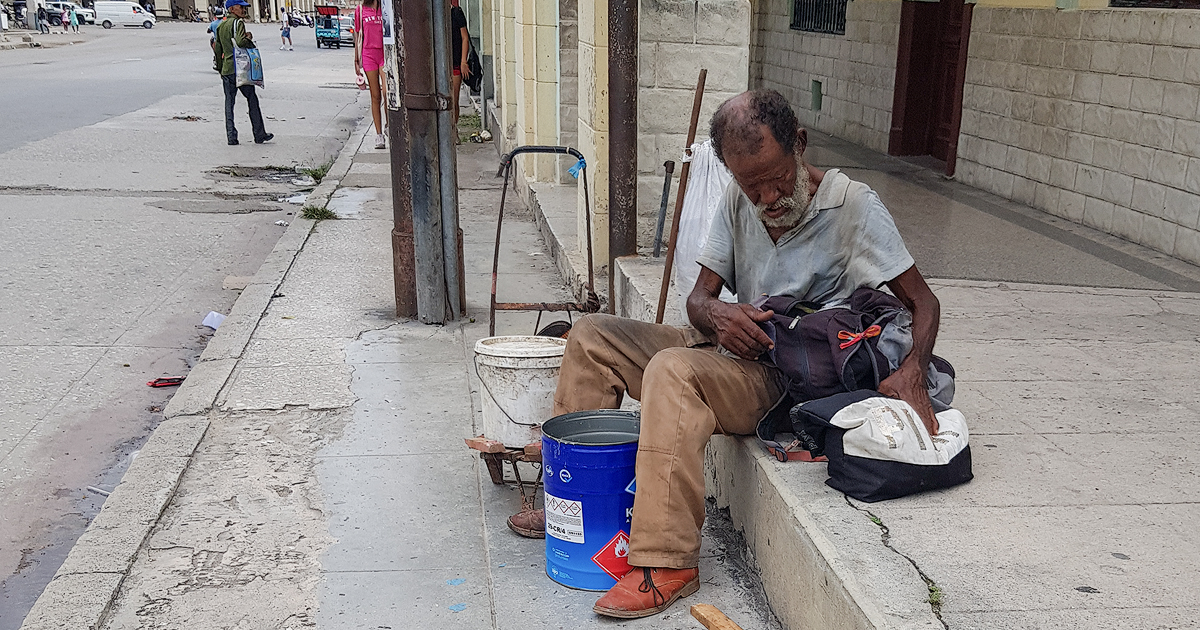
The great scam reported by Eudocio Ravines is not only a thing of the past or found in history books. In Cuba, it remains a painful reality.
And it will only end when we Cubans fight united with determination and courage for the Cuba "With all and for the good of all" dreamed of by Martí. Only then can we fully enjoy freedom, democracy, the rule of law, and the respect for all human rights.
Related videos:
Filed under:
Opinion article: Las declaraciones y opiniones expresadas en este artículo son de exclusiva responsabilidad de su autor y no representan necesariamente el punto de vista de CiberCuba.