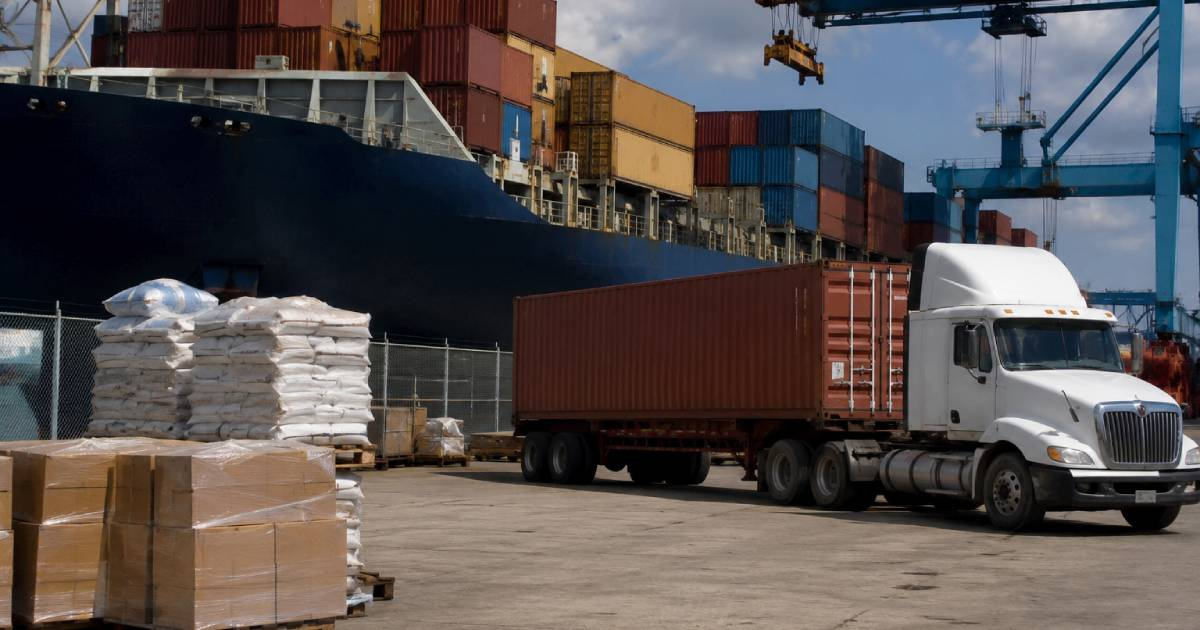
The exports of goods from the United States to Cuba reached 202.5 million dollars in August, the highest monthly value since records began in 1992 and a new peak in trade between the two countries.
The official foreign trade data from the U.S. Census Bureau shows that U.S. goods exports to Cuba increased from 148.9 million dollars in July to 202.5 million in August. In August 2025, they had reached 89.7 million dollars.
In just one month, exports grew by around 36%, while compared to August of last year, the increase was approximately 126%.
The August figure brings the total from January to August to 876.5 million dollars, a number that already surpasses the 809.6 million dollars exported throughout all of 2025.
This means that, with four months left in the year, U.S. sales to Cuba are already 66.9 million dollars above the total for the previous year, which is equivalent to an increase of approximately 8.3%.
An important part of the record in August comes from fuel and other petroleum derivatives.
According to figures published on Thursday by the U.S.-Cuba Trade and Economic Council, the United States exported to Cuba in August $74,863,132 million in fuels and oils.
That amount represents approximately 37% of all U.S. exports to the island during the month.
Between January and August, fuel and oil sales reached 231,744,309 dollars, compared to just 311,558 dollars for all of 2025 and 938,894 dollars in 2024.
Among the most significant shipments in August are the low-sulfur light fuel oils, primarily linked to diesel, totaling about $34,500,000 between Miami and Houston-Galveston.
Unleaded gasoline accounted for approximately 23,800,000 dollars, according to the breakdown published by the Council, while other oils and petroleum derivatives made up a significant portion of the remaining shipments.
The Miami customs district accounted for approximately $49,600,000 of the month's fuel exports, nearly two-thirds of the total, followed by Houston-Galveston, New Orleans, and Tampa.
The strong growth occurs despite the U.S. embargo against Cuba remaining in effect. However, certain categories of products may be exported under exceptions and authorizations outlined in Washington's regulations.
Since February, the Department of Commerce has allowed, through the Support for the Cuban People (SCP) license exception, the export of gas and other petroleum products to eligible Cuban private entities and directly to individual consumers for personal or family use.
That framework excludes operations intended for the Cuban government, the Armed Forces, and other sanctioned state entities.
However, the available trade statistics do not identify the buyers nor allow for determining who ultimately uses each shipment within Cuba, an important distinction when assessing the actual impact of these shipments.
The magnitude of the flow has raised doubts about the extent to which fuel can remain exclusively within the private sector, considering that a significant portion of the storage, distribution, and marketing infrastructure for hydrocarbons on the island is still under state control.
The growth in August extends a trend that had already become clear in July. Data from the U.S. Energy Information Administration showed at that time that shipments of U.S. petroleum products had reached a record of about 103,900 barrels per day.
That July figure corresponded to the physical volume reported by the EIA, while the new August figures released by the U.S. Census Bureau and the U.S.-Cuba Economic and Trade Council mainly reflect the monetary value of exports.
Moreover, the figures of U.S. trade record goods exported from the United States, they do not themselves certify their effective arrival to the final consumer in Cuba.
The change becomes more significant after the interruption of Venezuelan supplies that had supported a considerable part of Cuba's energy consumption for decades. In 2025, Venezuela was sending Cuba between 27,000 and 30,000 barrels per day, according to estimates from Reuters and energy specialist Jorge Piñón.
U.S. exports started in 2026 at minimal levels, but accelerated beginning in March following new authorizations. By July, the volume reported from the United States had significantly surpassed the level that Venezuela supplied the previous year.
The growth in sales is not limited to fuel. Trade with the Cuban private sector has also boosted vehicles, equipment, batteries, and other products. In July, U.S. exports to Cuba had already surpassed $500 million.
Another reflection of that transformation appeared this week: U.S. exports of solar panels to Cuba soared by 1,070%, while those from China experienced a significant decline.
Related videos:
Filed under: