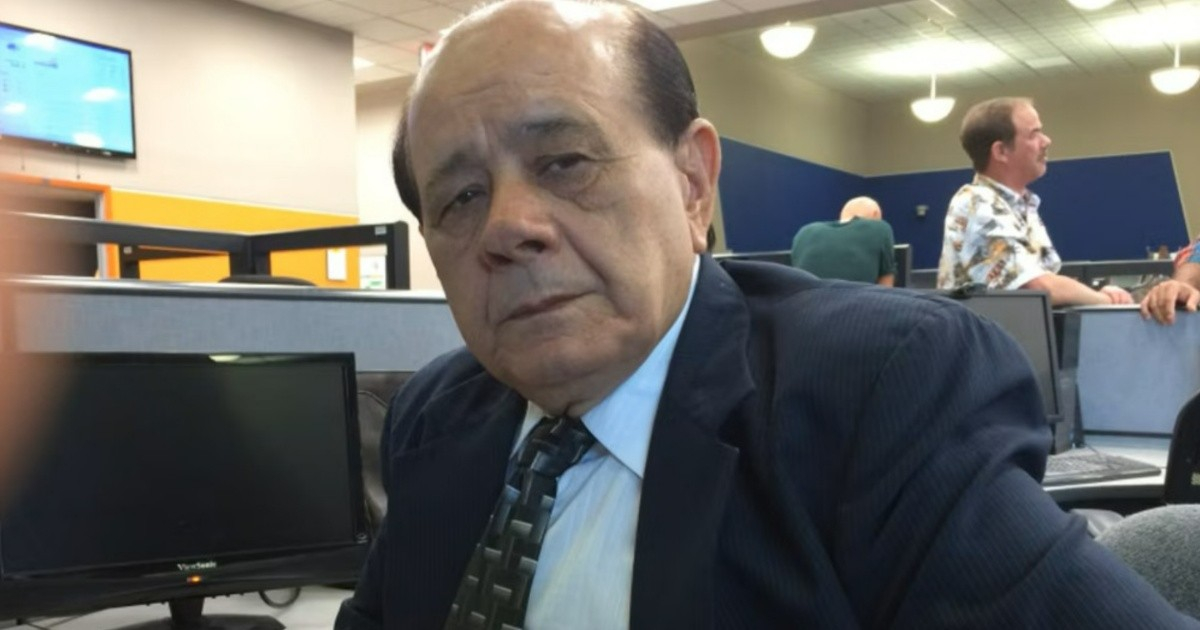
Raúl Borges Álvarez, a Cuban opposition figure and human rights activist who dedicated decades to demanding the freedom of his son, passed away in Havana on Sunday at the age of 86 after more than a month hospitalized at the facility known as La Covadonga.
The president of the Continental Peace Association (ASOPAZCO), Mari Paz Martínez Nieto, confirmed the passing to Radio Martí and remembered Borges as a persistent voice in denouncing the situation of political prisoners in Cuba.
For almost 15 years, Borges maintained constant contact with Martínez Nieto, to whom he sent information about the conditions of his son's incarceration and that of other inmates. "He was the one who sent me reports on how he was doing, what was happening to him and to all those who were in prison at that time, along with his son," recounted the president of ASOPAZCO from Madrid.
Those testimonies, which Martínez Nieto referred to as "Raúl's chronicles," served as a source of documentation for the organization's work. Borges also made efforts with representatives of the Church and U.S. officials to keep attention on his son's case.
President of the Christian Democratic Unity Party of Cuba, Borges made the freedom of Ernesto Borges Pérez a cause he championed for much of his life. Ernesto had been arrested in 1998 while serving as a captain in the Directorate of Counterintelligence of the MININT, accused of attempted espionage for trying to hand over a list of Cuban agents to U.S. diplomats. He was initially sentenced to death, which was later commuted to 30 years in prison.
The long-awaited achievement came on April 24, 2025, when Ernesto was released after nearly 27 years of confinement. It was Raúl himself who announced the news: “We are very happy to have my son home,” he declared at the time. In that same conversation, he expressed sorrow that Ernesto's mother had passed away without seeing him free.
"The day of the departure was a day of celebration because Raúl was already very ill," Martínez Nieto recalled. The meeting between father and son, he added, "was like a revival to celebrate" that reunion.
The last months of Borges were marked by the deterioration of his health and the inability to obtain basic medications. "There was no way to get gauze, there was no way to get the antibiotics he needed," denounced Martínez Nieto. To these shortages were added power outages: "The blackouts left him without the respirator he needed."
ASOP AZCO had helped Borges travel to Spain for humanitarian reasons about 16 years before his death to receive medical care, where he had a heart valve replaced and underwent the placement of four stents.
Martínez Nieto described the efforts of those who accompanied Borges in his final days as "a relentless struggle to provide him with the barest minimum of comfort."
Related videos:
Filed under: