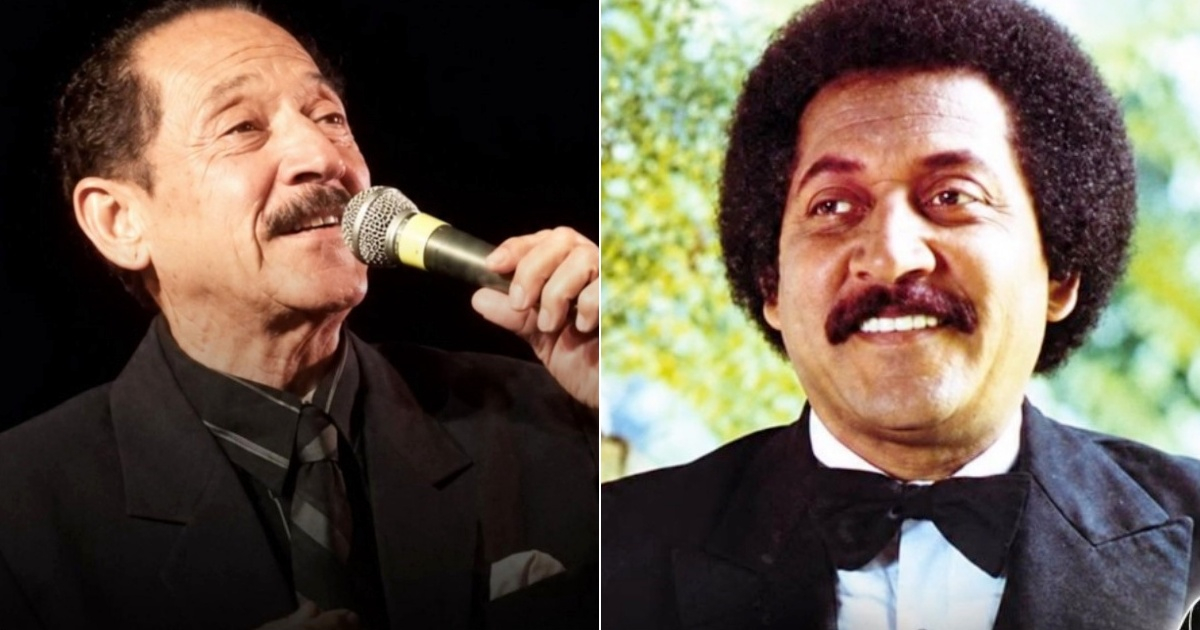
The singer Manolo del Valle, whose real name was Manuel Batista Salgado, passed away on Sunday, October 11, in the United States at the age of 84. Considered one of the iconic voices of Cuban bolero, Del Valle left a mark on several generations of listeners.
The news emerged this Monday through a message posted by the Orquesta Original de Manzanillo on their social media.
The group expressed sadness over the loss, highlighted the talent and artistic legacy of the performer, and extended condolences to family, friends, and colleagues. The singer's death also sparked expressions of sorrow among musicians and admirers of his work.
Del Valle resided in Florida. So far, the causes of his death, the exact location where he passed away, and details about the funeral services have not been disclosed.
The farewell of the Original from Manzanillo
La Original de Manzanillo, the group with which Del Valle wrote much of his history, did not hold back in expressing their farewell.
"Today we find it difficult to find the words. Saying farewell to Manolo del Valle hurts us deeply, because in his voice lives a part of our history and in his departure, we feel a piece of our heart leaving with him.", wrote the orchestra.
The message also emphasized the legacy that the singer leaves to the new generations: "Today we mourn together those who shared the journey with you and those of us who came after, with the pride and responsibility to continue this story. The new generations also feel your absence."
The farewell of Lourdes Libertad
Among the voices that joined in mourning, the Cuban singer Lourdes Libertad, based in Miami, stood out, as she expressed her sorrow on Facebook with words that combine artistic admiration and personal affection.
"I have just received the sad news; the great Manolo del Valle has left us, one of our greatest exponents of Bolero," wrote Libertad, who also reminisced about the years shared with Del Valle on stage.
“I cherish your friendship and the honor of having worked alongside you for many years. Fly high, my friend, I love you,” he added.
A life rooted in Manzanillo
Born on May 7, 1942 in Manzanillo, in what is now Granma province, Del Valle began singing in clubs in his hometown in 1958.
Between the end of 1959 and 1961, he performed in nightclubs in Havana before returning to the eastern part of the country, where he joined the Trío Ideal and later the Trío Los Bohemios.
His career took a definitive turn in 1964, when he joined the Original Orchestra of Manzanillo, founded on December 21, 1963, a notable reference in the popular dance music of Eastern Cuba.
He remained in their ranks for 14 years, performing sones and boleros and winning awards at national festivals.
The bolero singer who conquered Havana
After leaving the granmense group, he established himself in Havana as a solo artist.
He was part of the night club Dos Gardenias since its founding and undertook international tours that broadened his reach beyond Cuban borders.
His repertoire became associated with songs such as "It's Better to Live Like This" and "Jealousy of the Wind and the Sea"—both included in his album from 1981 released by EGREM—, as well as "I Will Not Give Up on Your Love," "Just Mine and That's It," and "Neither Your Bed Nor Your Pillow."
With Manolo del Valle's passing, we lose a voice that made the expression of romantic feelings its expressive territory for almost seven decades. His legacy lives on in the recordings that marked various eras of Cuban romantic music.
Related videos:
Filed under: