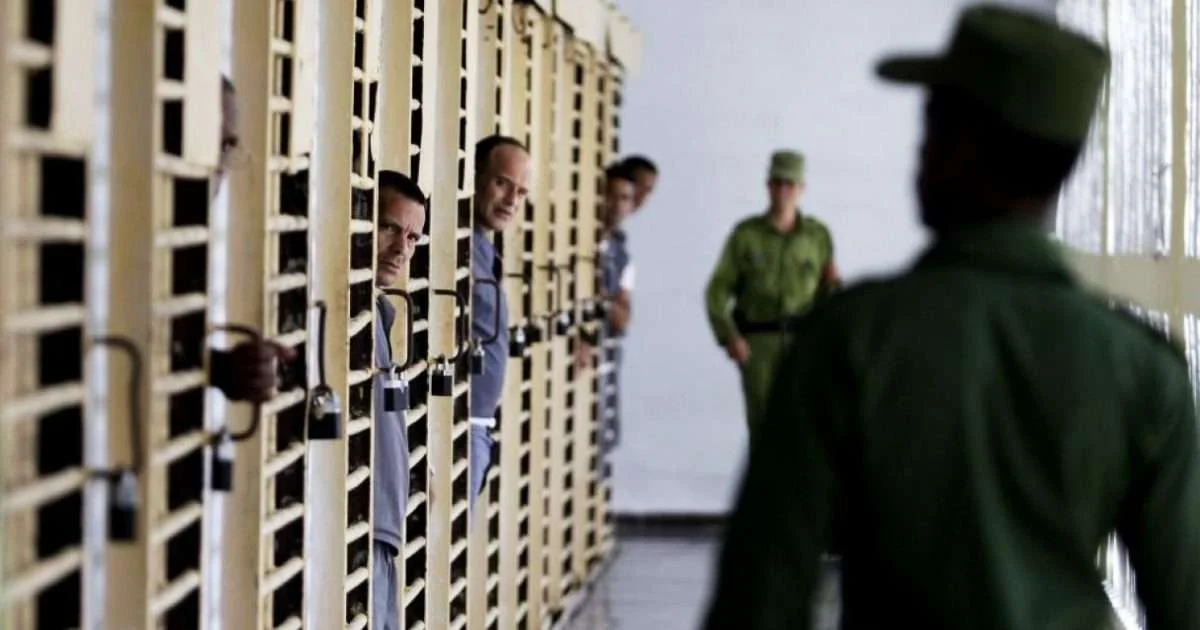
Families of political prisoners in Cuba spend between 20,000 and 60,000 Cuban pesos for each delivery of food and medicine to their incarcerated loved ones, a financial burden that has led some households to take on debt, sell belongings, and cut back on their own food, according to a study published this Monday, October 12, by Cubalex.
The report, titled "Extended Punishment: Needs of Political Prisoners in Cuba and Their Families," includes 28 interviews with the families of individuals incarcerated for political reasons, 25 of whom are women.
The report clearly conveys the idea that prison authorities shift basic responsibilities to the families that should be guaranteed within the prisons, such as sufficient food, medication, hygiene items, bedding, and even potable water.
The organization documented expenses ranging from 20,000 to 60,000 pesos per delivery, although the amount most frequently mentioned falls between 30,000 and 40,000 pesos.
These disbursements correspond to each bag or bundle of supplies that families prepare to take to prison and do not represent a fixed monthly expense or a uniform amount for all households.
The money allocated for food and medicine represents only a portion of the economic effort. The travel costs to visit inmates range from 400 to 15,000 pesos, depending on the distance, with regular expenses between 3,000 and 8,000 pesos, according to the testimonies gathered.
When family members cannot travel, some must pay between 5,000 and 6,000 pesos to third parties to transport the packages. Additionally, there are monthly phone top-ups ranging from 100 to 1,000 pesos to maintain communication with the inmates.
The research indicates that families also take on the purchase of medications, often in the informal market. Among the documented examples is a bottle of carbamazepine, which reached a price of 5,000 Cuban pesos.
To quantify these expenses, Cubalex uses as a reference the average monthly salary of the civil state sector, which was 6,930 pesos in 2025.
A delivery of food and medicine costing between 30,000 and 40,000 pesos is approximately equivalent to 4.3 to 5.8 months of that salary, not including household living expenses.
The consequences are especially challenging for families that do not receive remittances or have consistent financial support. 60% of those interviewed identified economic necessity as their most pressing concern.
Some testimonies describe homes where barely one meal a day is guaranteed. One of the interviewees summarized the sacrifice they make to help their imprisoned family member: “Even if we do not eat, what’s best is for him.”
Cubalex has also documented cases of families who have had to sell their belongings, including a child's crib, to cover the expenses associated with incarceration. Others have stopped bringing food for months after losing the financial assistance they relied on.
Additionally, the collected testimonies describe insufficient rations, difficulties in receiving medical attention, and issues with access to water in various penitentiary facilities. In some cases, families claim that they also have to procure necessary materials for medical procedures.
The distance to the prisons represents another difficulty. The report includes experiences from families who leave their homes at 3:00 in the morning and walk between 12 and 13 kilometers, even with small children in tow, just to have visits that last only two hours.
The burden especially falls on mothers, wives, sisters, and daughters, who must obtain food, medicine, and money for transportation while upholding their domestic responsibilities and caring for other family members.
According to Cubalex, some women also face job-related difficulties and situations of surveillance or threats that they attribute to State Security. The organization reports that these practices exacerbate the economic precariousness of households precisely when they need higher income.
The difficulties also affect minors. The study includes testimonies about emotional distress, academic problems, and material deprivations in households where one or more members are incarcerated.
The research also identifies obstacles to accessing information about the prison conditions of inmates and the legal benefits they may be entitled to, which increases the uncertainty for their families.
In its conclusions, the organization asserts that imprisonment for political reasons has consequences that extend beyond the individual deprived of liberty and directly impacts the economy, health, and stability of their family environment.
The new study addresses an economic dimension of prison conditions that Cubalex has previously investigated. In another report, the organization documented 115 deaths in custody in Cuba between February 2024 and June 2026, with complaints about a lack of medical care and confinement conditions.
Related videos:
Filed under: